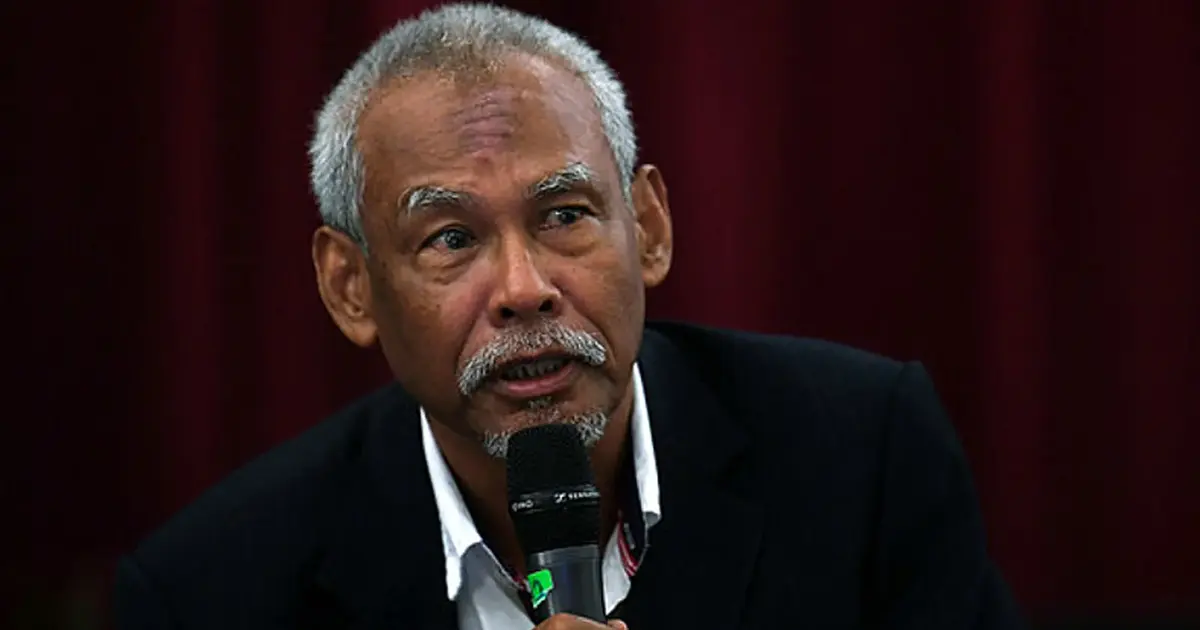
Former Inspector-General of Police Musa Hassan has failed in his legal push to overturn a defamation case initiated by DAP politician Hannah Yeoh after Malaysia's highest court determined that his arguments did not meet the threshold for judicial reconsideration. The apex court's decision effectively closes a significant chapter in a dispute that had touched on fundamental constitutional questions concerning the boundaries between public scrutiny and personal legal remedies available to senior government officials.
The core of Musa Hassan's challenge centred on nine distinct legal propositions submitted for the court's consideration. These questions revolved around whether a public officer—particularly one holding a senior constitutional position—maintains the same right to pursue defamation claims as an ordinary citizen, and whether such legal action inadvertently restricts the broader public interest in freedom of expression and critical discourse. These are substantive constitutional matters that engage with principles of public accountability and the delicate balance between protecting individual reputation and preserving democratic space for commentary on public figures and their conduct.
The apex court's determination that these questions do not warrant a review signal confidence in the existing legal framework governing defamation law as applied to public officials in Malaysia. By declining to engage with Musa Hassan's submission for a full reconsideration, the court has implicitly endorsed the lower court's handling of the matter and the application of established precedent. This approach reflects judicial conservatism on questions that, while philosophically significant, have already been addressed within the Malaysian common law tradition inherited and developed since independence.
For Malaysian readers and observers of constitutional law, the decision carries implications extending beyond the immediate parties. The ruling underscores that public figures, regardless of their official rank or the sensitive nature of their former positions, are not automatically barred from pursuing defamation remedies through the civil courts. This principle maintains consistency with Commonwealth jurisdictions where defamation law protects reputation across social hierarchies, though without the absolute immunities sometimes extended in other democracies. However, the practical burden of proving defamation—establishing falsity, malice, and damage—remains significant, particularly when allegations relate to matters of legitimate public concern.
Hannah Yeoh, who has served as a Member of Parliament and continues to maintain a high public profile as a vocal advocate for democratic accountability and transparency, had initiated the defamation action following statements made by Musa Hassan. The dispute illustrates the contemporary tension within Malaysian politics between senior officials' expectations of protection from criticism and the political culture's evolution toward greater public scrutiny of those wielding state power. Such conflicts are not unique to Malaysia, but they acquire particular salience within the region's ongoing debates about press freedom, political accountability, and the proper scope of judicial intervention in political disputes.
Musa Hassan's tenure as Inspector-General of Police, Malaysia's highest-ranking law enforcement officer, spanned a period marked by significant institutional challenges and broader questions about the police's operational independence and ethical standards. His subsequent involvement in legal disputes reflects a pattern of contestation common among retired senior officials who find themselves subject to public criticism following their departure from office. The defamation suit represents one avenue through which such officials seek to vindicate their reputations and deter further commentary they regard as injurious.
From a procedural standpoint, the apex court's refusal to grant a review application represents the final stage of ordinary appellate remedies available to Musa Hassan. The decision forecloses any further judicial reconsideration of the defamation matter through conventional appeal channels, though theoretical possibilities for review on narrow grounds of procedural irregularity or fresh evidence would remain subject to extremely stringent conditions. Practically, this means the case now stands resolved against his interests at the appellate level, with only the original judgment and intermediate appellate decisions remaining operative.
The case occurs within a broader regional context where several Southeast Asian democracies are grappling with similar questions about balancing the speech rights of those criticising public figures against the reputational interests of officials themselves. Thailand, Indonesia, and the Philippines have all experienced comparable litigation involving former senior officials and political figures, with varying judicial responses reflecting different constitutional commitments and common law developments. Malaysia's approach, as crystallised in this decision, aligns with jurisdiction that maintains robust defamation protections while avoiding categorical immunity doctrines that characterise some Western liberal democracies.
Politically, the outcome will likely be perceived differently across Malaysia's ideological spectrum. Opposition figures and civil society advocates may view the result as appropriately limiting forum-shopping opportunities for powerful officials seeking to use civil litigation as a means of suppressing legitimate political criticism. Conversely, supporters of institutional stability and governmental dignity may interpret the decision as confirming that public officers retain meaningful legal recourse when subjected to false accusations that damage their standing and honour. Both perspectives engage with legitimate concerns about power dynamics, institutional accountability, and the proper functioning of democratic discourse.
The practical implications for Malaysian journalism, political commentary, and civil society advocacy merit careful attention in light of this ruling. Media organisations and political commentators engaging with allegations concerning current or former officials must remain cognisant that such figures retain full access to defamation remedies, with burden of proof—including establishing truth or qualified privilege—resting on defendants. This consideration incentivises greater care in substantiation of claims while operating within the existing legal architecture that permits robust discussion of matters affecting public interest and official conduct.
Going forward, the apex court's decision establishes that constitutional concerns about public officers' access to defamation law do not automatically qualify for reconsideration under applicable legal thresholds. This represents a clear statement that Malaysian jurisprudence will continue developing within the traditional common law framework rather than adopting novel doctrinal innovations that would substantially limit defamation remedies for officials. For Musa Hassan personally, the exhaustion of appellate options concludes one phase of litigation, though the underlying questions about free speech and official accountability remain contested within broader Malaysian society and politics.

