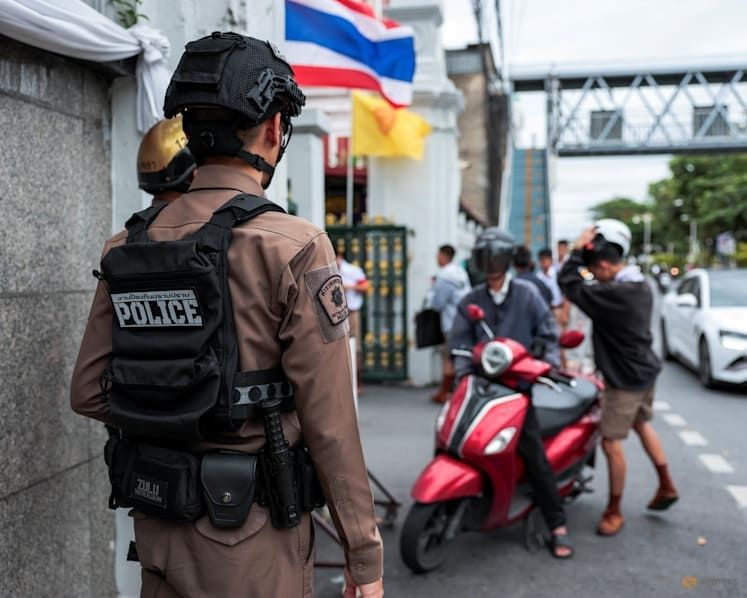
A former member of Thailand's parliament has been taken into police custody on suspicion of firing shots at a local government administrator and his driver in Nonthaburi province, located north of the capital Bangkok. The arrest of Chalong Riewrang follows a series of shooting incidents in the region, prompting renewed concerns about firearm accessibility and violence in the Southeast Asian nation.
Nonthaburi police chief Dejrapee Kongdee confirmed that Chalong was arrested on Monday in connection with the alleged shooting. Officers were investigating the circumstances surrounding the incident while the two victims received medical treatment at a hospital. The chairman of the Nonthaburi local government administration sustained serious injuries in the alleged attack, while the other casualty—the official's driver—was also receiving care, though specific details about his condition were not immediately disclosed.
Police are currently examining potential motives behind the alleged shooting. Local news outlets suggested a private disagreement may have triggered the violence, yet the police chief refrained from elaborating on this line of inquiry. The vague circumstances surrounding the shooting reflect a broader pattern in Thailand where violent disputes occasionally escalate to lethal outcomes, often involving firearms obtained through various channels.
Chalong's political background adds another dimension to the incident. He previously served in parliament as a member of the ruling coalition party led by Prime Minister Anutin Charnvirakul. His arrest marks a significant fall from public office and raises questions about accountability among political figures involved in criminal conduct. The involvement of a former legislator in such a serious allegation underscores the challenges facing Thailand's institutions in maintaining public trust.
The timing of this shooting is particularly troubling for Thailand, coming merely days after a catastrophic school shooting incident in the same province. On Friday, a 14-year-old boy opened fire at his school, first killing the elderly grandparents who raised him at their home in Nonthaburi before proceeding to the educational institution. At the school, he fatally shot six additional individuals before ultimately taking his own life. That tragic event sparked nationwide mourning and intensive discussions about firearm regulations and the psychological factors driving such violence.
Thailand's relationship with firearms presents a complex challenge for policymakers and security officials. The country maintains one of the highest civilian gun ownership rates throughout Southeast Asia, with approximately 10 million firearms estimated to be privately held—a figure that translates to roughly one weapon for every seven inhabitants. This proliferation of guns, whether legally registered or circulating through informal channels, creates an environment where access to lethal weapons remains relatively straightforward for those motivated to acquire them.
The back-to-back shootings have intensified pressure on the Thai government to address longstanding gaps in firearm regulations. Government officials have publicly committed to implementing more stringent gun control measures in the aftermath of Friday's school shooting. However, such pledges have become a recurring pattern in Thai governance, with previous commitments to toughen regulations failing to materially reduce the frequency of shooting incidents. This cycle of promises followed by inadequate implementation reflects both political will limitations and the difficulty of enforcing new laws across Thailand's sprawling geography and diverse communities.
The psychological dimensions of these incidents warrant examination as well. The school shooting perpetrator's targeting of his own grandparents before moving to the school suggests deeply personal trauma and family breakdown. Understanding the root causes—whether mental health deterioration, access to firearms by minors, or environmental stressors—remains essential for developing comprehensive prevention strategies. Thailand's mental health infrastructure and school safety protocols have come under scrutiny as observers question whether adequate support systems exist to identify and assist troubled individuals before violence occurs.
For Malaysian observers and policymakers, the Thai situation serves as an instructive case study. While Malaysia maintains stricter firearms regulations than Thailand, instances of illegal gun ownership and related violence periodically occur. The comparative context illustrates how regulatory frameworks, enforcement capacity, and cultural attitudes toward firearms collectively shape public safety outcomes. Thailand's experience demonstrates that high civilian gun ownership, even when partially regulated, can correlate with elevated violence risks if broader social support systems and enforcement mechanisms prove inadequate.
The arrest of Chalong represents one component of Thailand's immediate response to its current security crisis. Beyond individual prosecutions, however, the nation faces systemic questions about how to reconcile citizens' perceived rights to firearm ownership with public safety imperatives. Effective gun control requires not only legislative changes but also consistent enforcement, public education campaigns, and cross-agency coordination—elements that have historically challenged Thai authorities.
As investigations proceed into both the school shooting and the alleged shooting of the local officials, Thailand's civil society, media, and international observers will scrutinize whether the government translates its stated commitments into substantive policy changes. The credibility of Thai institutions depends partly on demonstrating that recent violence catalyzes genuine reform rather than temporary political responses that fade once immediate public attention subsides. The coming weeks will prove revealing in this regard.

