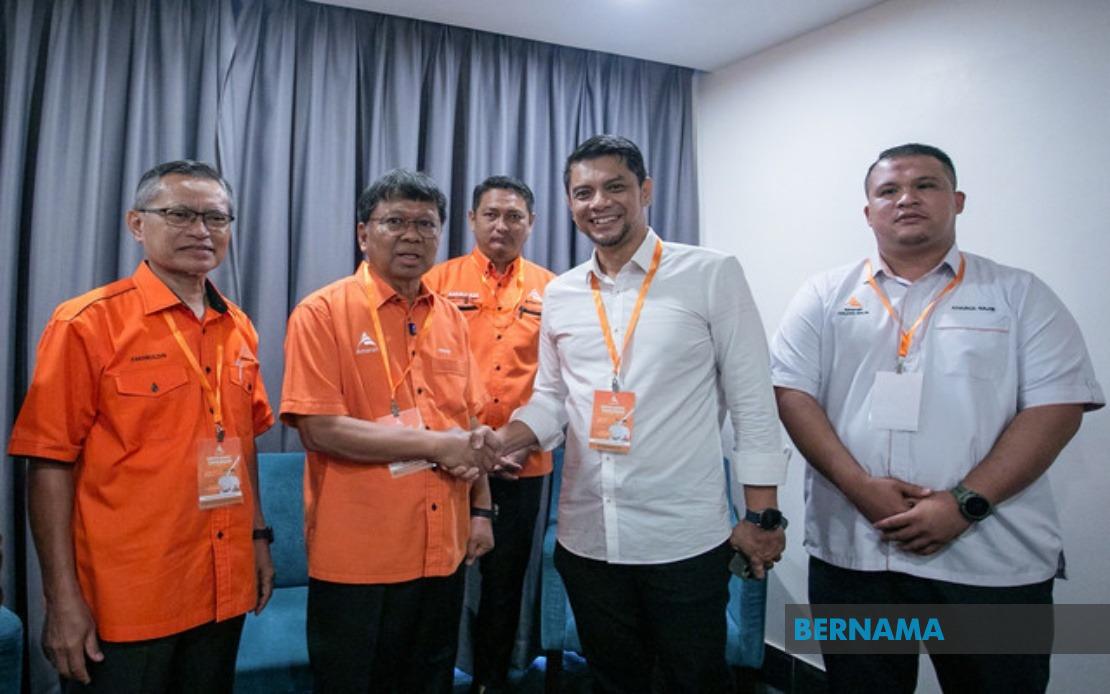
Hasnul Zulkarnain Abd Munaim, the former Titi Serong state assemblyman, has formally rejoined Parti Amanah Negara after an absence spanning nearly six years, marking a significant development in Perak's political landscape. The party's regional leadership approved the readmission at its National Management Meeting and National Leadership Meeting held on June 18, signalling a strategic shift in how Amanah approaches membership applications from those who previously departed.
Perak Amanah chairman Datuk Asmuni Awi announced the development following the party's annual gathering in Tambun on June 21, emphasising that the decision reflected a broader opening by party leadership to consider returning members. According to Asmuni, Hasnul Zulkarnain had communicated his desire to rejoin Amanah on multiple occasions previously, but the political environment had not been conducive to revisiting such applications until now. This recalibration represents a calculated move by the party to capitalise on institutional memory and supporter networks among those who have since moved on.
The timing of Hasnul Zulkarnain's return is noteworthy given the evolving political dynamics across Malaysia and specifically within Perak. Asmuni framed the readmission as part of a deliberate strategy aligned with approaches adopted by other political parties, suggesting that Amanah recognises the value of reintegrating former members whose ideological commitment to the party's core principles remains intact. This pragmatic recalibration may help Amanah strengthen its organisational base in a state where political fortunes have shifted considerably since 2020.
Hasnul Zulkarnain, who previously served as the party's state Youth chief, brings not only electoral experience but also organisational credentials from his tenure in party structures. His acceptance back into the fold comes with public endorsement from the leadership, which characterised the decision as reflecting confidence in his capacity to contribute meaningfully to the party's ongoing work. Such a restoration of trust carries symbolic weight beyond the individual, potentially signalling to other former members that opportunities for reconciliation exist within the party.
The assemblyman's journey through Malaysia's fractious political ecosystem over the past six years illuminates the volatility that has characterised Perak state politics. In March 2020, following the dramatic collapse of the Pakatan Harapan government and the emergence of the Perikatan Nasional coalition, Hasnul Zulkarnain made the decision to exit Amanah and become an independent alongside two colleagues from the Democratic Action Party, Yong Choo Kiong and A. Sivasubramaniam. These departures reflected the existential pressures facing the opposition coalition at that juncture, when the political ground shifted fundamentally beneath their feet.
Just months later, in July 2020, Hasnul Zulkarnain took the next step by joining Bersatu, the Mahathir-affiliated party that had become the dominant force within the PN coalition. This move, while positioned as a pragmatic adjustment to the new political reality, effectively placed him outside Amanah's orbit for the subsequent five and a half years. His willingness to join Bersatu at that moment reflected broader calculations about which coalition would dominate Perak politics in the medium term, decisions that many opposition figures grappled with during that tumultuous period.
The rehabilitation of Hasnul Zulkarnain into Amanah ranks reflects broader structural changes within Malaysian politics since 2020. The return of Pakatan Harapan to federal power following the 2022 general election has reordered political incentives, making alignment with the coalition more attractive for those previously tempted by PN's promises. In Perak specifically, where political control has remained contested, Amanah's receptiveness to returning members may indicate confidence about the party's trajectory and prospects in forthcoming electoral contests.
From a Perak state perspective, the readmission carries implications for how the party positions itself ahead of potential state elections. Hasnul Zulkarnain's track record as a state assemblyman and youth organiser means he brings demonstrable grassroots experience and voter familiarity in constituencies where Amanah operates. His return adds to the party's pool of experienced candidates at a time when consolidating opposition strength in the state remains strategically important, particularly given the competitive nature of Perak politics where no single coalition commands overwhelming dominance.
The decision also reflects Amanah's broader positioning within the Pakatan Harapan coalition. As a newer entrant to Malaysia's political landscape compared to PKR and DAP, Amanah has worked to establish itself as a credible force with distinct religious and values-based messaging. Integrating former members who departed during crisis moments but retained ideological alignment potentially strengthens that positioning by demonstrating the party's capacity to absorb and forgive those who made difficult choices during turbulent times.
Hasnul Zulkarnain's public response to his readmission, expressing gratitude and highlighting leadership confidence in his contributions, establishes a framework for his future engagement within the party structure. Rather than positioning the return as the remedy of past divisions, this framing emphasises forward momentum and renewed partnership. Such messaging matters in Malaysian political culture, where the manner of reconciliation often influences whether such moves prove durable or temporary.
Looking ahead, the precedent established by accepting Hasnul Zulkarnain back may create expectations among other former members who departed under similar circumstances. The party's stated openness to reconsidering applications from those who previously left suggests a deliberate strategy to expand its membership base and organisational reach. Whether this translates into systematic outreach to other former members or remains a selective process calibrated to individual circumstances will likely influence Amanah's positioning in Perak state politics over the coming years.

