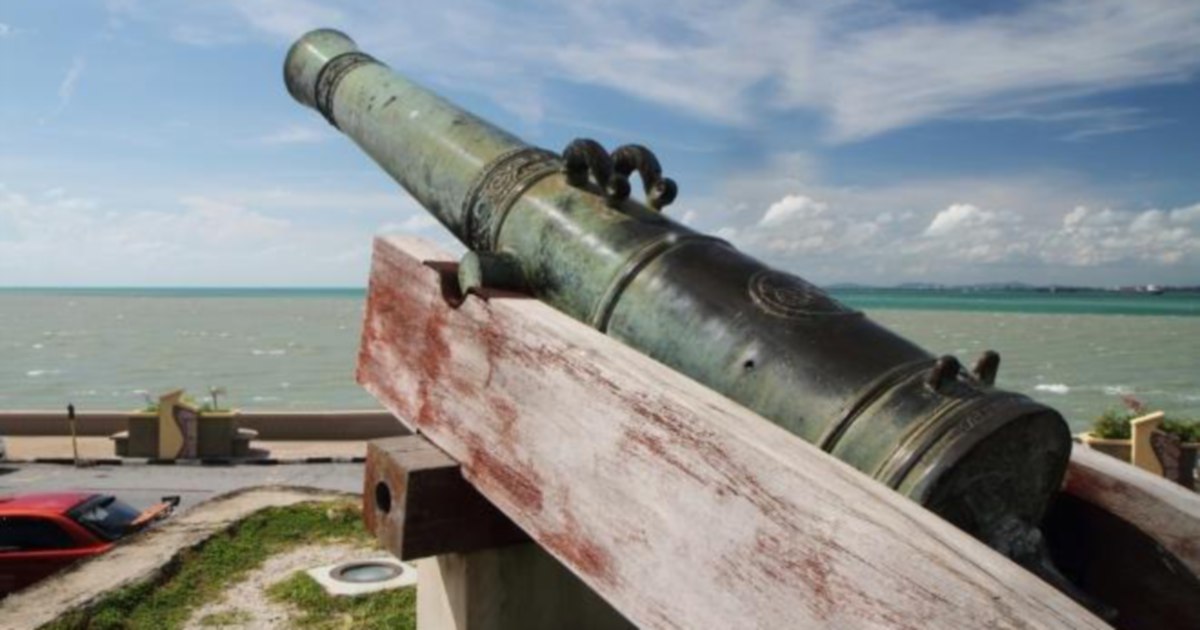
Prime Minister Datuk Seri Anwar Ibrahim has moved to clarify the government's intentions regarding the restoration of Fort Cornwallis in George Town, framing the initiative as a commitment to historical education rather than a celebration of colonial conquest. Speaking during the reopening ceremony, the PM distinguished between acknowledging Malaysia's past and venerating the imperial powers that shaped it, a distinction that has become increasingly important as heritage sites across Southeast Asia undergo renewed scrutiny from citizens concerned about how they represent national identity.
The 18th-century fortress, which was originally established as a British defensive structure during the expansion of colonial trade networks in the region, carries layered significance for modern Malaysia. Fort Cornwallis stands as a tangible reminder of how external forces reshaped the peninsula's political, economic, and social structures over nearly two centuries. By restoring and reopening the site, the government appears to be taking a deliberate approach to confronting this historical chapter rather than allowing it to fade or remain in disrepair. Such an approach reflects a broader maturation in how postcolonial nations in Asia are choosing to engage with remnants of foreign rule.
Anwar's emphasis on the educational dimension addresses a common concern that preserving colonial-era infrastructure might inadvertently romanticise or whitewash the extraction and subordination that characterised imperial rule. The distinction between learning from history and glorifying it is not merely semantic. When cultural institutions, museums, or heritage sites fail to provide proper context and critical analysis, they risk becoming celebratory monuments to conquest rather than spaces for genuine historical reflection. The PM's statement suggests an intention to position Fort Cornwallis within a framework that acknowledges both the historical forces at work and the resilience of Malaysians who navigated and eventually ended that era.
For Malaysian readers and Southeast Asian observers, the conversation about how to treat colonial heritage has significant implications. Across the region, countries like Indonesia, Thailand, and Vietnam have grappled with similar questions about what to preserve, how to interpret it, and whether restoration efforts serve national interests or simply cater to foreign tourism. The Penang site, given its prominence and accessibility to both domestic and international visitors, will inevitably become a touchstone for how Malaysia balances preserving historical authenticity with preventing misinterpretation of its national identity.
The restoration itself required substantial investment and coordination, suggesting the government views the site as worthy of public resources. George Town, home to numerous UNESCO-listed heritage structures, has become a destination where historical preservation and tourism intersect with questions of cultural memory and national narrative. The reopening of Fort Cornwallis therefore occurs within this complex ecosystem where heritage management serves multiple constituencies: educators, tourists, historians, and citizens seeking to understand their own past.
Anwar's defence of the project also carries implicit messages about how Malaysia intends to present itself internationally. A nation confident in its postcolonial identity can afford to acknowledge and display remnants of its subjugation without fearing that doing so diminishes national dignity. Conversely, efforts to obliterate or ignore colonial heritage structures entirely sometimes suggest discomfort with historical complexity. By choosing restoration and transparent educational framing, the government positions Malaysia alongside other mature democracies that treat history as a resource for understanding rather than a source of shame.
The specifics of how Fort Cornwallis will be interpreted—through signage, guided tours, exhibitions, or digital resources—will ultimately determine whether Anwar's stated educational objectives are met. The difference between a site that contextualises colonial history critically and one that merely presents artefacts without analysis can be substantial. Visitors to the reopened fortress will expect clarity about who built it, why, how it functioned within broader imperial systems, and what its existence meant for the communities already inhabiting the peninsula.
Beyond George Town, the Fort Cornwallis conversation reflects broader questions that Malaysian heritage institutions, academic researchers, and cultural planners will continue addressing. As Malaysia develops its tourism industry and invests in cultural infrastructure, decisions about how to represent the nation's history will shape both international perceptions and domestic understanding of national identity. The PM's framing suggests a government willing to engage thoughtfully with difficult historical periods rather than either celebrating or erasing them.
The reopening also occurs at a moment when Malaysian society is increasingly diverse in its composition and generational perspectives on history. Younger Malaysians who have no living memory of the postcolonial transition may encounter Fort Cornwallis with different preoccupations than their grandparents. An educational approach that acknowledges multiple viewpoints and encourages critical thinking about historical causation and consequence may prove more valuable than any single official interpretation. Anwar's intervention, by emphasising learning rather than glorification, signals openness to this kind of intellectual engagement.

