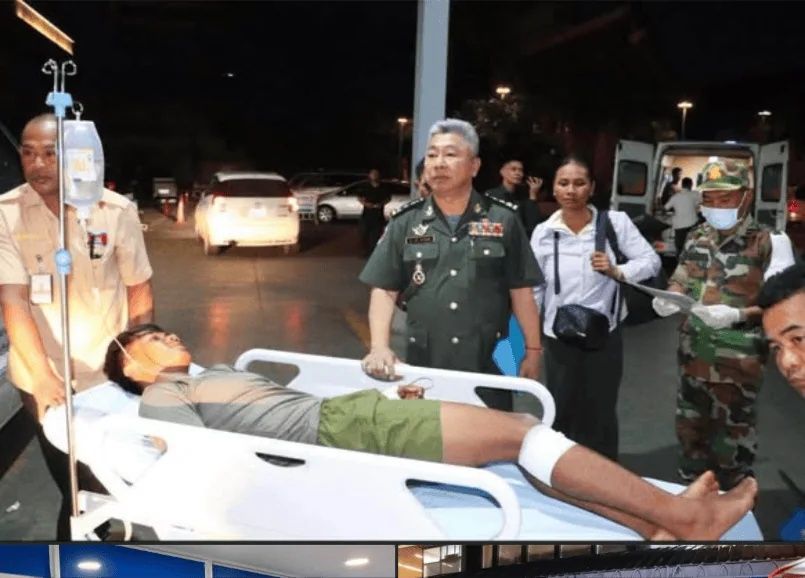
Cambodia's Ministry of National Defence reported Monday that an explosive device detonated along its shared frontier with Thailand, leaving four soldiers injured during a border patrol. The blast occurred at 12:35 p.m. on Sunday in the cashew plantation vicinity of Chouk Kruos and Thma Don villages in Oddar Meanchey province, a strategically sensitive zone that has witnessed sporadic tensions between the neighbouring states. Lieutenant General Maly Socheata, an undersecretary of state and ministry spokeswoman, confirmed the incident and noted that affected troops were receiving medical attention from designated healthcare personnel and relevant support units.
The Cambodia-Thailand border remains one of Southeast Asia's most sensitive flashpoints, with a history of territorial disputes and military clashes. Oddar Meanchey province, situated in the northwest corner of Cambodia, has been a particular zone of concern given its proximity to the Thai border and the presence of disputed demarcation areas. The province's geography, encompassing forest regions and agricultural zones, creates regular opportunities for cross-border military operations and patrols from both nations. Sunday's incident adds to a pattern of sporadic incidents that underscore the fragility of border security arrangements in the region.
Thailand's military response came swiftly, with Army spokesperson Winthai Suvaree issuing a statement on the day of the incident. Thai forces, engaged in their own routine patrol activities on their side of the border, heard the explosion originating from Cambodian territory. The Thai command structure moved rapidly to investigate and clarify its forces' involvement, emphasising that no weapons were discharged and no grenades were deployed by Thai troops stationed in the area. This defensive posturing reflects the sensitivity surrounding border incidents, where accusations of cross-border aggression can rapidly escalate diplomatic tensions.
The Royal Thai Army's investigation concluded that the explosion occurred exclusively within Cambodian territory and resulted from causes unrelated to Thai military actions. This assertion is significant because it establishes from Bangkok's perspective a clear demarcation of responsibility and attempts to preempt potential Cambodian accusations of Thai involvement. Such rapid clarifications have become standard protocol following border incidents, as both nations recognise the potential for miscalculation and misinterpretation to spiral into larger confrontations. The timing of Thailand's statement, issued the same day as the incident, suggests a coordinated approach to damage control.
The nature of the explosive device remains unspecified in official announcements, leaving open questions about its origin and deployment. Border regions along the Cambodia-Thailand frontier contain significant quantities of unexploded ordnance dating from decades of regional conflict, including remnants from the Khmer Rouge era and subsequent civil strife. Mines and improvised devices scattered across these zones continue to pose hazards to civilian populations and military personnel alike. However, the incident's occurrence during an active patrol operation suggests the possibility of either deliberate placement or accidental triggering of existing munitions.
Cambodia's military capabilities and border security infrastructure have expanded considerably over recent years, reflecting both genuine security concerns and broader strategic positioning in Southeast Asia. The country has invested in modernising its armed forces and enhancing border surveillance systems, particularly in the northwest where Thai proximity creates ongoing oversight requirements. Regular patrol operations, such as the one interrupted by Sunday's blast, represent standard practice for maintaining territorial awareness and deterring unauthorised incursion. The four soldiers' injuries underscore the real hazards faced by personnel engaged in such routine but essential security operations.
The incident occurs within the broader context of Cambodia-Thailand relations, which have experienced periods of both cooperation and tension. Bilateral military exchanges and joint border committees exist to manage disputes and prevent escalation, yet incidents continue to occur with regularity. Cambodia, as a smaller military power relative to Thailand, must carefully balance its security concerns with diplomatic considerations. Each border incident carries potential implications for Cambodia's relationships not only with Thailand but with other regional stakeholders monitoring developments closely.
For Malaysian observers and broader Southeast Asian security analysts, this incident reflects persistent vulnerabilities affecting multiple nations sharing land borders in the region. Similar explosive hazards and patrol risks exist along Malaysia's borders with Thailand, and along various other frontier zones throughout the Indo-Pacific. The systematic management of border security, coupled with rapid communication protocols and investigation mechanisms, remains essential for preventing minor incidents from escalating into major diplomatic crises. The response patterns demonstrated by both Cambodia and Thailand, despite underlying tensions, suggest functional mechanisms for crisis communication remain in place.
The medical care provided to the four wounded soldiers represents an important element of the incident's conclusion. Prompt medical intervention can significantly affect long-term recovery outcomes for blast-related injuries, which often involve complex trauma patterns. Cambodia's affirmation that wounded personnel were receiving appropriate care from medical teams suggests functional military medical infrastructure, though the specific facilities involved and injury severity remain undisclosed. As the soldiers recover, the incident will likely fade from immediate headlines, though it contributes to the broader security narrative characterising Southeast Asia's land borders.

