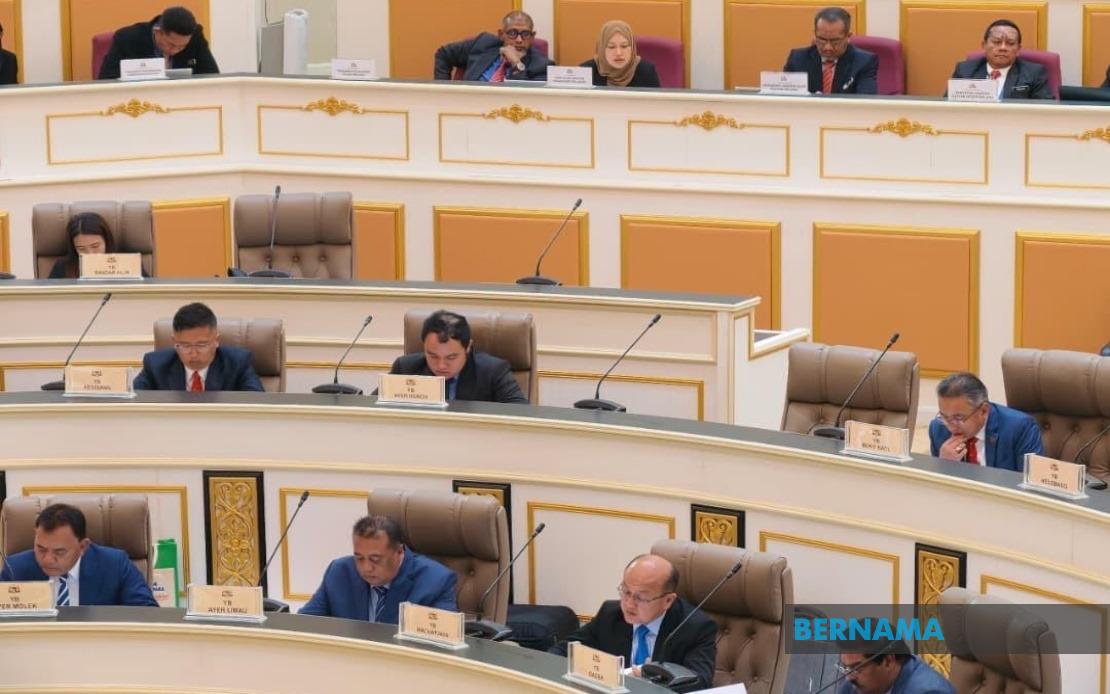
The Melaka State Legislative Assembly witnessed a significant political realignment on July 15 when four Democratic Action Party representatives formally shifted their seating to the opposition benches, cementing a dramatic rupture between the DAP and the ruling Barisan Nasional coalition at the state level. The relocation of Allex Seah Shoo Chin from Kesidang, Low Chee Leong from Kota Laksamana, Leng Chau Yen from Banda Hilir, and Kerk Chee Yee from Ayer Keroh occurred on the final day of assembly proceedings and reflected mounting tensions within the state administration that had crystallised overnight.
The four assemblymen now sit alongside Perikatan Nasional and Independent representatives, a development that fundamentally alters the composition of the Melaka legislature and the balance of executive power. Their departure from the government bloc came after the party announced its immediate withdrawal from the state administration, a decision that reverberates across Malaysia's fractured political landscape at a time when coalition arithmetic increasingly determines governance outcomes. The move underscores the fragility of multi-party alliances in state politics, where individual party interests frequently override broader coalition commitments.
The trigger for this rupture was the Melaka State Legislative Assembly's passage of amendments to the State Constitution that would permit the appointment of nominated assemblymen without electoral mandate. The DAP leadership, under chairman Khoo Poay Tiong, characterised this legislative change as fundamentally incompatible with democratic principles and the mandate of the ballot box. This objection reflects a ideological position the party has maintained consistently across Malaysia's states, where it views nominated positions as subverting the electoral process and concentrating unelected power.
Notably, Adly Zahari, the sole representative from Parti Amanah Negara and chairman of Melaka's Pakatan Harapan coalition, has chosen to remain seated with the government bloc rather than joining the four DAP members in opposition. This split within the PH alliance demonstrates how constitutional amendments and governance disputes can fracture otherwise coordinated coalitions, with different component parties weighing their political calculations and strategic interests differently. Amanah's decision to remain signals either a different assessment of the constitutional amendments' implications or a distinct approach to managing coalition tensions.
The situation gained national attention when Prime Minister Datuk Seri Anwar Ibrahim publicly urged the Melaka DAP to reconsider its position and postpone the withdrawal decision. The Prime Minister's intervention reflects the national implications of state-level coalition instability, particularly given DAP's role as a key component of the federal Pakatan Harapan government. His appeal centred on maintaining governmental focus on development and public welfare rather than internal political disputes, though his plea proved unsuccessful in persuading the Melaka party leadership.
Assembly Speaker Datuk Ibrahim Durum called for decorum and discipline during the sitting, emphasising adherence to parliamentary procedures and conduct standards during what was clearly an emotionally charged day. The Speaker's comments highlighted the formal institutional dimensions of the party realignment, even as the underlying political dynamics reflect deep disagreements about democratic governance and constitutional authority. Such appeals to procedural regularity often serve as pressure valves when substantive political conflicts become acute.
The relocation carries immediate practical consequences for Melaka's governance. The four DAP representatives now voting and sitting with the opposition potentially diminish the Barisan Nasional state government's legislative majority or at minimum its comfortable maneuvering room. With nominated seats potentially entering the picture via constitutional amendment, the already fluid arithmetic of state politics becomes even more unpredictable, potentially creating scenarios where the government requires additional support arrangements.
The constitutional amendment controversy highlights a broader debate across Malaysian states about whether appointed rather than elected representatives strengthen or undermine democratic governance. The DAP's opposition reflects a view common among opposition parties that nominations represent a form of political patronage that circumvents electoral accountability. Supporters of the amendment might argue that nominated members provide representation for specific interests or expertise without electoral viability, though such arguments have gained limited traction in Malaysian political discourse.
This Melaka development occurs within Malaysia's broader context of coalition instability at state level, where minority governments, razor-thin majorities, and multi-party arrangements create perpetual tension. The defection recalls similar episodes in other states where parties have quit coalitions over policy disagreements or governance disputes. Observers of Malaysian politics recognise such incidents as symptomatic of deeper structural challenges in maintaining stable, issue-based coalitions when electoral systems and regional interests fragment political support.
The implications for federal politics warrant consideration, particularly regarding the stability of the Pakatan Harapan government at national level. While Melaka remains a state-level matter, such public breaks within the coalition can weaken perceptions of federal government cohesion and provide ammunition to opposition parties. The Prime Minister's direct involvement suggests his office views the Melaka situation as having consequences beyond state boundaries, though managing coalition tensions involves constant calibration between intervention and deference to state-level autonomy.
The path forward for Melaka governance remains unclear as the dust settles on this realignment. The DAP's departure from the state government and the relocation of four assemblymen to the opposition remove a significant contingent from the ruling coalition, forcing recalculation of political mathematics and potentially necessitating new power-sharing arrangements. Whether the constitutional amendments proceed despite DAP opposition, and how the state government adjusts to its altered parliamentary position, will determine whether this represents a temporary rupture or marks a fundamental restructuring of Melaka's political alignment.

