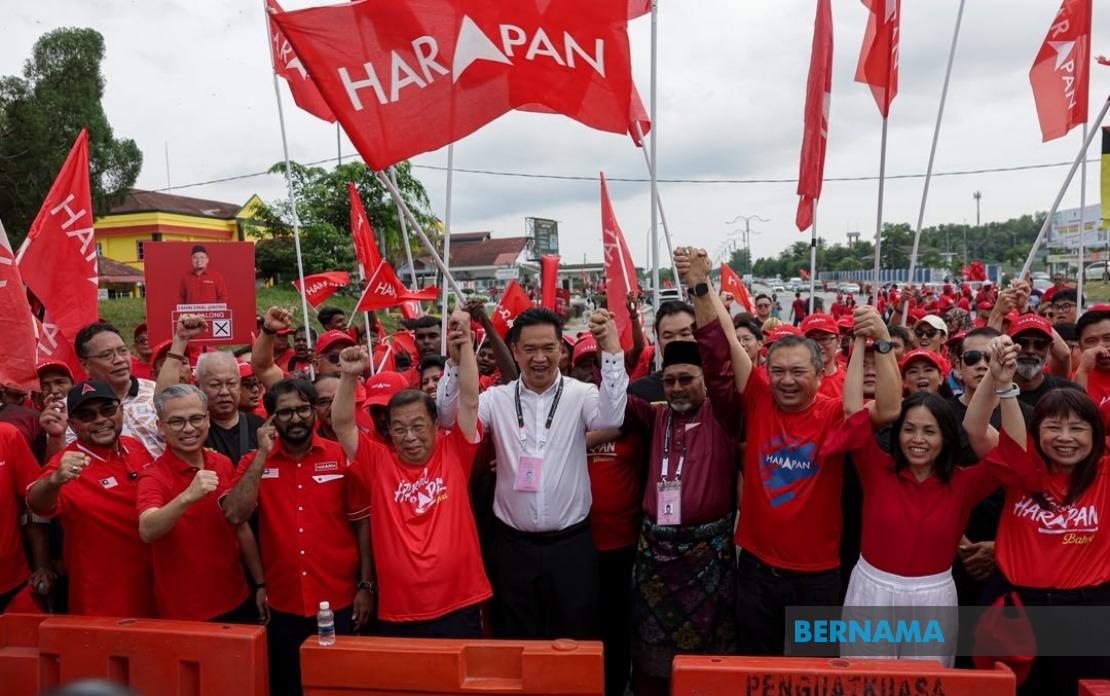
The Jeram Padang state seat has emerged as the flashpoint of the 16th Negeri Sembilan State Election, set to feature a rare four-cornered contest that will test voter preferences across ideological and ethnic lines. Returning officer Amino Agos Suyub confirmed the competitive field after the nomination process concluded on July 18 at the Jempol District and Land Office Hall, making Jeram Padang distinctive within the Jempol state constituency where the other three seats will witness either three-cornered or straight fights.
The battleground in Jeram Padang brings together candidates representing four distinct political movements and constituencies. Pakatan Harapan fields G. Manivannan, who filed nomination papers at 9.17 am, positioning the coalition to defend its ambitions in a heartland seat. The incumbent, Datuk Mohd Zaidy Abdul Kadir from Barisan Nasional, submitted documents at 9.20 am and will leverage the advantage of sitting representation. Parti Pribumi Bersatu Malaysia's R. Sri Sanjeevan entered at 9.09 am, representing the Malay-majority party's push into state-level contests. Most notably, Dayana Dal of Parti Orang Asli Malaysia filed her candidacy at 9.12 am, offering voters an explicitly indigenous choice and bringing historically marginalised Orang Asli voices into the electoral conversation at state level.
The presence of Dayana Dal as Asli's sole representative vying for a seat in this election underscores the growing assertiveness of indigenous political movements in Malaysian electoral politics. While Orang Asli communities have long constituted significant voter blocs in Peninsular Malaysia, dedicated party representation at state level remains uncommon. Manivannan's nomination was notably accompanied by Pakatan Harapan Communications director Datuk Seri Fahmi Fadzil, signalling central coalition attention to this contest, though the four-way split complicates traditional two-coalition arithmetic.
Beyond Jeram Padang, the Jempol constituency presents a varied electoral landscape. The Serting state seat will witness a three-cornered engagement between Yaacob Mahmood representing Pakatan Harapan, incumbent Mohd Fairuz Mohd Isa from Perikatan Nasional, and Muhammad Noraffendy Mohd Salleh known as Affendy Salleh contesting for Bersatu. This contest reflects the fragmentation of opposition politics, where Perikatan Nasional and Bersatu compete for largely overlapping voter bases despite nominal alliance arrangements. The Palong seat follows a similar three-way pattern, with incumbent Datuk Mustapha Nagoor defending his Barisan Nasional position against Muhammad Zahin Zinal Abidin of Pakatan Harapan and Rebin Birham of Bersatu.
In marked contrast, Bahau will experience a comparatively straightforward two-candidate race, pitting incumbent Teo Kok Seong of the Democratic Action Party—representing Pakatan Harapan—against Chong Fui Ming of the Malaysian Chinese Association, contesting for Barisan Nasional. This direct confrontation avoids the complications that splinter candidacies introduce, allowing voters a clearer binary choice. The DAP's incumbency advantage in Bahau, a seat where the party has maintained presence, may prove decisive against the MCA challenge, particularly given broader patterns of Chinese urban voter support for opposition parties in recent Malaysian elections.
The proliferation of three and four-cornered contests across Jempol reflects the increasingly crowded Malaysian political landscape following the rise of Perikatan Nasional and the continued ambitions of Bersatu as an independent force rather than subordinate coalition partner. Traditional two-coalition contests have given way to multi-polar competition where regional parties, indigenous movements, and splinter factions compete simultaneously. This fragmentation can advantage well-organised machinery and concentrated vote bases, but creates unpredictability for major parties accustomed to linear two-coalition calculations.
From a Malaysian electoral perspective, the Jeram Padang configuration represents a microcosm of broader shifts in voter behaviour and party competition. The four-way split suggests electorate appetite for alternatives beyond established Pakatan Harapan and Barisan Nasional frameworks. Whether this reflects principled voter choice or protest against both major coalitions remains unclear until results materialise. For Pakatan Harapan, defending against Barisan Nasional while containing Bersatu's poaching efforts presents a tactical challenge, particularly given Bersatu's historical claim to bumiputera-centric politics that can appeal to Malay-majority constituencies.
Barisan Nasional's incumbent advantage in Jeram Padang carries weight, but the four-way split fragments anti-incumbent sentiment and could either protect or undermine the sitting member depending on how opposition votes distribute. Datuk Mohd Zaidy's experience and incumbent machinery versus Manivannan's Pakatan backing will likely dominate the contest's dynamic, though Dayana Dal's indigenous candidacy potentially carves a distinct constituency. The nomination of candidates who understand community-specific concerns and maintain ground networks typically outweighs national-level party dynamics in state elections.
The Electoral Commission has scheduled early voting for July 28, providing an extended electoral window that affects campaign pacing and ground mobilisation timelines. Polling day on August 1 will determine whether the four-cornered Jeram Padang contest produces an outright victory for any candidate or a fractionalised result reflecting the dispersed voter preferences that multi-way contests often generate. The Negeri Sembilan state election will offer significant signals about post-2022 Malaysian electoral trajectories and whether coalition politics is stabilising or fragmenting further.
For Malaysian and Southeast Asian political observers, the Negeri Sembilan contest demonstrates how electoral competition has evolved beyond predictable two-coalition binaries toward more complex, multi-candidate scenarios where minor parties, regional movements, and protest votes can substantially influence outcomes. The Jempol constituency exemplifies this transition vividly across its four seats, each configured differently yet reflecting similar underlying pressures reshaping Malaysian democracy and power distribution.

