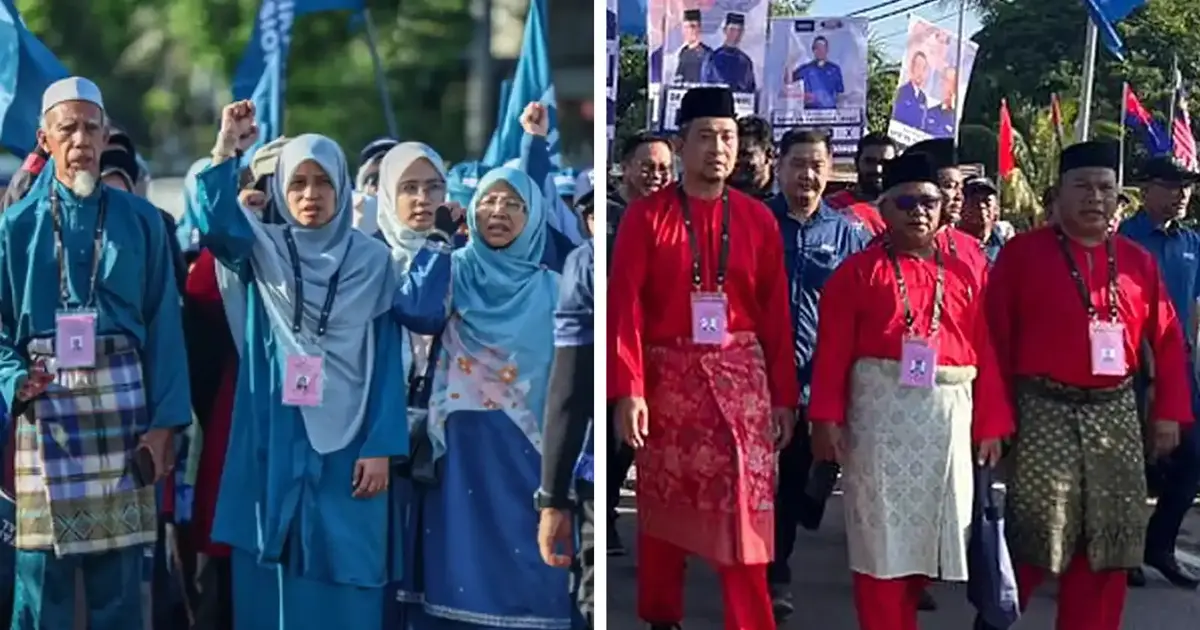
The upcoming Johor state election has exposed a fundamental weakness in Perikatan Nasional's political machinery: the inability of its two largest components, PAS and Bersatu, to present a unified front. Political analysts are increasingly concerned that this public discord will translate into diminished voter enthusiasm, as the electorate receives conflicting messages and competing appeals across the campaign trail.
The coalition's internal tensions have become impossible to ignore, with the two parties pursuing largely separate campaign strategies rather than leveraging their combined organisational strength. For voters already fatigued by Malaysia's fractious political landscape, the spectacle of coalition partners essentially running individual campaigns risks reinforcing perceptions of opportunism and disunity. This matters particularly in Johor, where the electorate has demonstrated sophisticated voting behaviour and punishes perceived weakness in opposition coalitions.
Analysts point out that voter confidence depends heavily on coherence and clarity of messaging. When a coalition's principal parties appear to be working at cross purposes, even if they ultimately support the same candidates, the underlying message to voters becomes ambiguous. This ambiguity creates space for opposing coalitions to dominate the narrative and frame the election around Perikatan Nasional's problems rather than its policy platform. In a competitive three-way contest that increasingly defines Malaysian politics, such strategic disadvantage can prove decisive.
The historical precedent is instructive. Previous elections where opposition coalitions appeared fractured—whether Pakatan Harapan in 2023 or earlier incarnations—saw measurable declines in voter turnout among their supposed base. This phenomenon extends beyond mere symbolism; it reflects genuine uncertainty among voters about whether supporting coalition candidates serves their interests or merely perpetuates internal squabbling at their expense. Johor voters, having witnessed various coalition experiments over successive elections, are particularly sensitive to signs of instability.
PAS and Bersatu bring distinct ideological appeal and organisational reach to Perikatan Nasional. PAS maintains deep grassroots networks, particularly in rural areas, and commands loyalty among segments of the Muslim-majority electorate. Bersatu, despite its smaller membership, brings the prestige associated with former Prime Minister Mahathir Mohamad's political machinery and continues to attract urban professionals and former Umno members. When these assets operate in isolation rather than synergy, both become less effective.
The timing of campaign fragmentation proves particularly damaging in Johor's specific context. The state has emerged as genuinely competitive terrain, where neither Barisan Nasional nor Pakatan Harapan commands overwhelming structural advantage. Into this fluid environment steps Perikatan Nasional with weakened credibility, unable to convince voters that it represents a stable, coherent alternative. Early election dynamics often set patterns that persist through campaign cycles, meaning initial impressions of disunity could prove difficult to overcome as voting day approaches.
Voter confidence, once eroded, proves difficult to restore within a single election cycle. Surveys consistently demonstrate that Malaysian voters weight coalition stability heavily when deciding electoral choices, particularly among swing voters who might otherwise be persuadable. These floating voters, who often determine election outcomes in competitive constituencies, respond to signals of weakness by hedging their support or abstaining entirely. Perikatan Nasional's public divisions supply precisely the sort of warning signals that push persuadable voters toward established, more stable alternatives.
The coalition's leadership faces a strategic dilemma: whether to attempt last-minute reconciliation that risks appearing reactive and improvised, or to persist with divided campaign operations while hoping internal problems remain beneath voter consciousness. Both approaches carry substantial risks. A hasty unity effort might highlight existing tensions and generate media narratives about forced cooperation. Conversely, accepting visible division concedes narrative control to opponents and essentially acknowledges internal problems that campaign messaging cannot overcome.
Southeast Asian political analysts note that Malaysia's coalition politics operate within increasingly narrow margins, where marginal shifts in voter confidence translate directly into seat counts. In Johor's mixed constituencies spanning urban, rural, and industrial areas, Perikatan Nasional would normally leverage its dual base to competitive advantage. Instead, fragmentation forces each party to compete partially against the other for supporter attention and resources, reducing overall coalition efficiency at crucial junctures. This self-imposed handicap becomes particularly consequential when facing better-coordinated opponents.
The broader implications extend beyond Johor itself. If Perikatan Nasional struggles during this state election due to internal discord, the pattern establishes precedent for future campaigns. Malaysian political actors closely observe how coalitions perform under stress, using such examples to inform their own strategic calculations about alliance formation and maintenance. A Johor outcome reflecting voter punishment for coalition disunity sends clear signals about the electoral price of internal division, potentially affecting how political parties approach cooperation in subsequent contests.
Government and opposition strategists are watching closely to see whether Perikatan Nasional can overcome its structural weaknesses through effective campaign messaging, or whether voter scepticism about coalition coherence proves too substantial to overcome through conventional political communication. The answer will likely shape Malaysian electoral competition well beyond Johor's borders and influence how parties calculate the costs and benefits of coalition membership in future elections.

