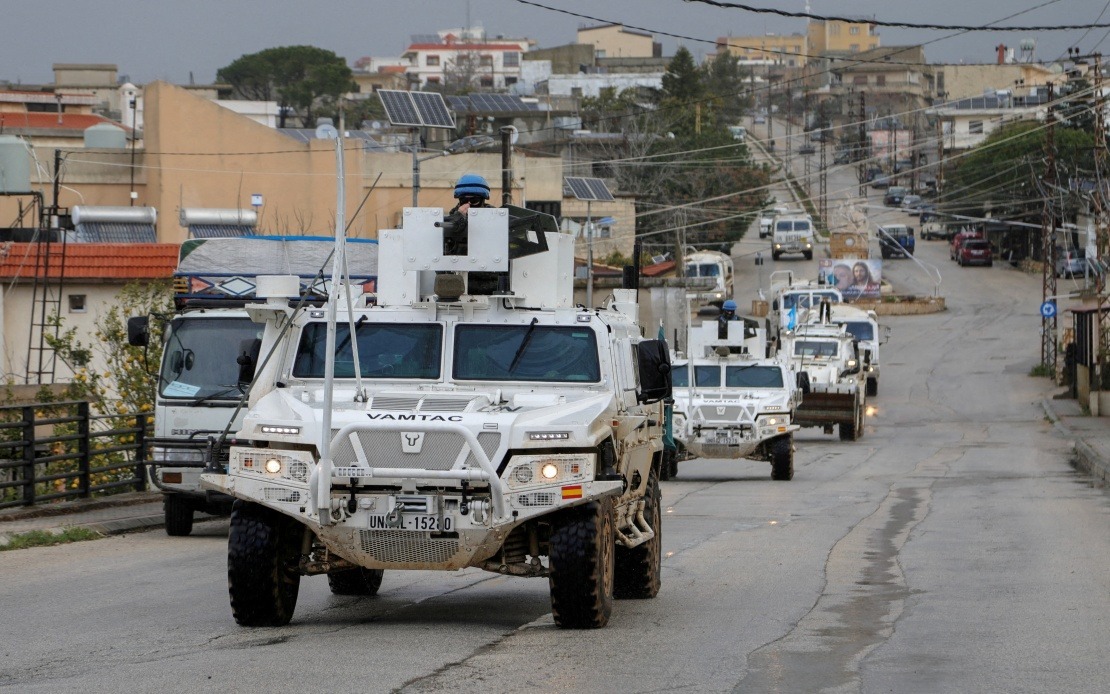
France and Italy have committed to forming a multinational coalition designed to stabilise Lebanon once the United Nations Interim Force in Lebanon concludes its three-decade presence at year-end, French President Emmanuel Macron announced during talks with Italian Prime Minister Giorgia Meloni in Antibes this week. The initiative represents a significant diplomatic effort by two major European powers to prevent the eastern Mediterranean nation from descending into instability following UNIFIL's departure, a transition that carries substantial implications for regional security architecture across the Middle East and for international peacekeeping operations globally.
Macron framed the coalition as essential to safeguarding Lebanese state sovereignty and strengthening the nation's military capabilities during a critical transition period. The proposed arrangement would operate under the oversight of both the European Union and the United Nations, ensuring that the international response remains coordinated and legitimate under established multilateral frameworks. This coordination emphasis reflects recognition that unilateral or loosely structured interventions could themselves provoke tensions among regional stakeholders with competing interests in Lebanon's stability and future direction.
The Italian Prime Minister reinforced Paris's position by emphasising the dangers inherent in allowing a security vacuum to emerge once UNIFIL's peacekeepers depart. Meloni characterised such a gap as potentially "extremely dangerous," signalling Rome's assessment that Lebanon's fragile institutions and security apparatus remain insufficient to manage internal stability or external threats independently. This shared European concern underscores growing anxiety that Lebanon's chronic political dysfunction, combined with the presence of powerful armed actors outside state control, creates conditions where instability could rapidly metastasise into broader regional conflict.
UNIFIL's imminent withdrawal stems from Security Council Resolution 2790, which mandates that the peacekeeping force cease operations on December 31 and complete full personnel withdrawal within twelve months thereafter. The organisation has maintained a presence in southern Lebanon since 1978, initially deployed following Israeli military operations and subsequently serving as a buffer between Israel and Lebanese territory controlled by Hezbollah. The three-decade mission, though often criticised for limited effectiveness in preventing armed incidents, has nonetheless provided a degree of international deterrence and monitoring capacity that its absence would remove entirely.
The coalition proposal carries particular significance for Southeast Asia and countries like Malaysia, as it exemplifies how European powers are recalibrating their security roles in regions beyond their immediate periphery. The Lebanese situation demonstrates how middle powers increasingly feel compelled to address distant crises perceived as affecting global stability and international order. Malaysia, as a major Muslim-majority nation and active UN participant, may find itself navigating requests to contribute personnel, resources, or political support to such arrangements, necessitating careful calibration of its foreign policy positions.
Lebanon's underlying challenges extend far beyond UNIFIL's presence or absence. The nation grapples with severe economic collapse, political paralysis rooted in confessional system dysfunction, and the pervasive influence of Hezbollah, which simultaneously functions as a political party, social service provider, and military organisation. These structural realities mean that even a well-resourced multinational coalition faces formidable obstacles in promoting stability or strengthening legitimate state institutions. The European initiative, however well-intentioned, cannot address Lebanon's fundamental governance deficits or resolve the ideological and geopolitical tensions that animate its various factions.
The timing of the French-Italian initiative reflects broader anxieties about escalating Israeli-Hezbollah tensions, which have intensified following the October 2023 outbreak of conflict between Israel and Hamas in Gaza. Border incidents and rocket fire have punctuated the period, raising fears that the collapse of UNIFIL's deterrent presence could trigger major conflagration. A European-led coalition might struggle to command the same deterrent authority as a UN mission, potentially limiting its effectiveness in preventing hostile actors from exploiting the transition period.
Regional powers, particularly those with influence over Lebanese actors, will likely scrutinise the coalition's composition and mandate carefully. The United States, Saudi Arabia, Iran, and Syria all maintain significant interests in Lebanon's trajectory, and their perspectives on a European-led arrangement could determine its viability. The coalition's success will partly depend on whether it gains sufficient acceptance among Lebanese political factions and whether regional powers view it as a neutral stabilisation mechanism rather than a vehicle for advancing particular geopolitical interests.
From an international peacekeeping perspective, the French-Italian coalition represents an attempt to address the growing challenge of transitions when UN missions conclude. As peacekeeping operations increasingly face resource constraints and mandate limitations, the question of what mechanisms replace them remains inadequately resolved. A successful European coalition in Lebanon could establish a model for similar arrangements elsewhere, though the specific factors favouring such an approach in the Lebanese context may not transfer readily to other post-conflict or fragile state environments.
The coalition framework also raises questions about burden-sharing and sustainability. Maintaining a substantial international military and civilian presence requires sustained political will, financial commitment, and personnel willing to operate in a genuinely dangerous environment. Whether France and Italy can mobilise sufficient international support and maintain domestic backing for what could become a long-term commitment remains uncertain, particularly given competing security priorities in Europe itself and the continent's experience with challenging Middle Eastern interventions.
For Malaysia and other Southeast Asian nations, the developments in Lebanon and the European response merit close observation as precedents for managing transitions in international security arrangements. As nations with stakes in maritime security, counterterrorism cooperation, and regional stability, Southeast Asian countries increasingly participate in multilateral arrangements addressing global security challenges. The Lebanese coalition initiative offers lessons—both positive and cautionary—about how such arrangements function, their limitations, and the conditions necessary for effectiveness.

