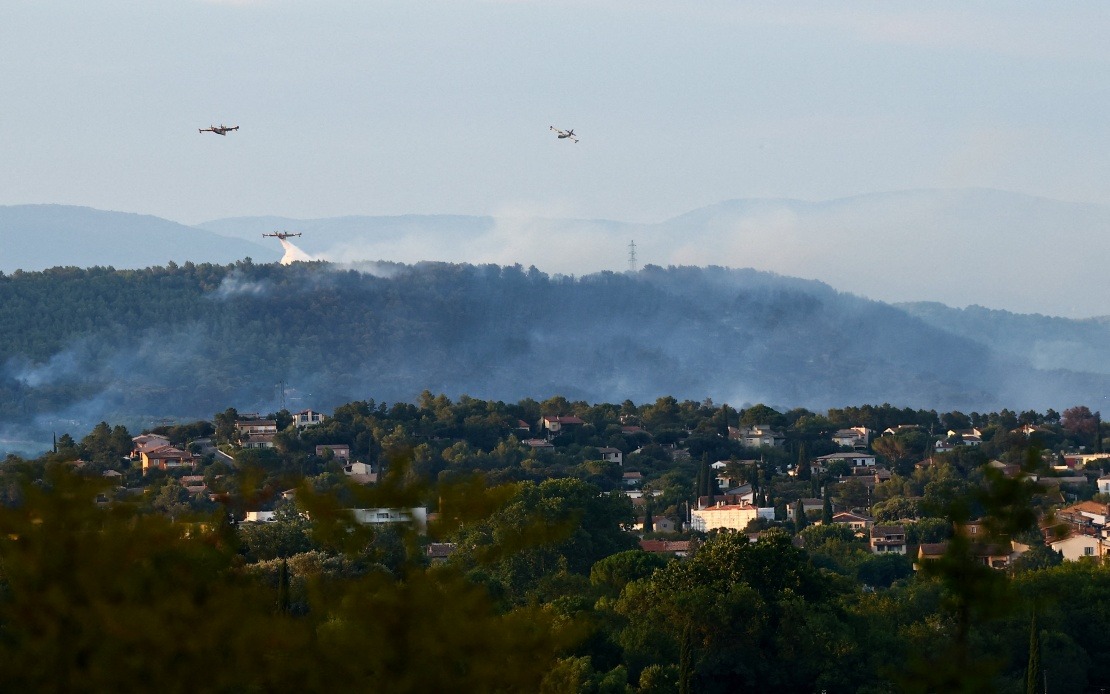
France is grappling with a wildfire emergency of historic proportions, with nearly 40,000 hectares of forest and vegetation consumed by flames since the beginning of 2026. French Interior Minister Laurent Nunez disclosed the alarming figure on Monday, revealing that the nation's fire crisis has escalated dramatically compared to the previous year's damage. The relentless pace of destruction, marked by fresh blazes erupting daily across the country, underscores the severity of a natural disaster that threatens to reshape France's landscape and strain its emergency response capabilities.
The scale of this year's wildfire devastation stands in sharp contrast to historical patterns, with damage figures already exceeding comparable periods in recent memory. Minister Nunez's statement carries particular weight given that fires continue to ignite with troubling frequency, suggesting that total damage may climb even higher before summer reaches its peak. This trajectory has alarmed government officials and environmental specialists, prompting intensive efforts to contain the expanding crisis before it inflicts further economic and ecological harm.
French President Emmanuel Macron characterised the situation in mid-July as the worst wildfire season the nation has endured since the conclusion of World War II, a stark acknowledgment of the disaster's unprecedented nature. This presidential assessment carries significant implications for France's disaster management infrastructure and its capacity to respond to climate-driven emergencies. The comparison to the post-1945 era serves as a sobering reminder that modern France, despite advances in firefighting technology and coordination, faces challenges that exceed the scale and intensity of incidents from previous decades.
Meteorological conditions have created an environment uniquely hostile to forest preservation. By late June, France's national weather service issued high-alert warnings across 72 of the nation's 96 departments—a record-breaking concentration that highlighted the geographical scope of the crisis. This unprecedented coverage of weather alerts indicated that dangerous conditions were not isolated to specific regions but rather represented a systematic climatic emergency affecting the vast majority of French territory.
Temperature readings have been brutally elevated, with thermometers approaching 40 degrees Celsius in many locations and exceeding that threshold in particularly vulnerable areas. Such extreme heat creates ideal conditions for fire propagation and intensification, drying vegetation and reducing moisture content to levels where even minor ignition sources can trigger major conflagrations. The combination of prolonged heat exposure and low humidity has transformed large swathes of French landscape into tinderboxes awaiting only a spark.
For Malaysia and Southeast Asian nations, France's wildfire crisis carries instructive implications. The region faces its own climate vulnerabilities, including severe heat waves and extended dry seasons that create conditions remarkably similar to those now devastating French forests. The incidents across Southeast Asia in recent years—particularly the 2015 Indonesian forest fires that blanketed the region in hazardous haze—demonstrate that tropical and subtropical nations are equally susceptible to catastrophic wildfire events. France's struggle to contain this emergency under modern firefighting systems and institutional frameworks suggests that even well-resourced nations find themselves challenged by climate-amplified natural disasters.
The underlying cause animating this crisis is exceptional heat wave activity, a phenomenon increasingly associated with climate change and shifting atmospheric patterns. Heat waves are becoming more frequent, more intense, and more prolonged across the Northern Hemisphere, creating seasonal conditions that escalate wildfire risk substantially. Scientists have documented correlations between rising global temperatures and the expansion of fire seasons, with implications extending far beyond France to every continent and climate zone.
The daily emergence of new fires points to a phenomenon where initial containment efforts remain overwhelmed by fresh ignitions, suggesting that the total number of active fire incidents at any given moment may exceed the capacity of available firefighting resources. This cascading emergency, where new crises emerge faster than existing ones can be resolved, exemplifies the compounding nature of climate-driven disasters. It raises uncomfortable questions about resource sufficiency and whether traditional emergency response architectures can adapt to the accelerated pace of environmental crises.
The economic ramifications of nearly 40,000 hectares of forest loss extend beyond immediate fire suppression costs. Destroyed timber represents lost commercial value, damaged ecosystems require restoration investment, and communities in fire-affected regions face displacement and livelihood disruption. France's agricultural and forestry sectors will likely experience measurable economic contraction from the season's accumulated damage, with secondary effects rippling through supply chains and regional economies dependent on natural resource extraction and processing.
Looking forward, France faces critical decisions regarding disaster preparedness and climate adaptation. The 2026 wildfire season, even if contained at current levels, will likely spur governmental review of firefighting resource allocation, early warning systems, and coordination mechanisms between departments and neighbouring nations. The European Union may examine cross-border fire management protocols, particularly as climate change creates wildfire threats that do not respect national boundaries and require coordinated multinational responses.
For Malaysian policymakers and regional observers, France's experience underscores the necessity of treating climate resilience not as optional environmental policy but as essential national security infrastructure. The capacity to prevent, contain, and recover from large-scale natural disasters increasingly determines a nation's stability and prosperity. Southeast Asia's position in tropical regions with monsoon patterns and seasonal drought periods means that the region cannot assume immunity from fire crises of comparable magnitude.

