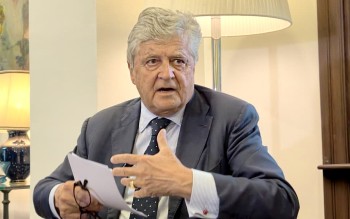
France has extended an invitation to Malaysia to explore civil nuclear energy as a cornerstone of the nation's future energy transition, marking a significant moment in bilateral technological and economic cooperation. During his inaugural official visit to Kuala Lumpur, French Minister Delegate for Foreign Trade and Economic Attractiveness Nicolas Forissier underscored his country's readiness to share decades of nuclear expertise and technical knowledge should Malaysia's government determine that atomic power fits within its long-term decarbonisation roadmap. The overture arrives as Malaysia remains in the midst of evaluating nuclear energy's viability through domestic policy discussions and public debate, a process that Forissier acknowledged as the appropriate pathway for such a consequential decision.
Forissier's emphasis on France's experience stems from a compelling track record: approximately 60 per cent of France's electricity generation derives from nuclear sources, with the remainder supplied by renewable capacity including solar and wind installations. This energy profile has positioned France among the world's lowest-carbon electricity producers, a distinction that carries particular relevance for Malaysia as Southeast Asian nations face mounting international pressure to decarbonise their economies and meet climate commitments. The French minister articulated that nuclear power represents one of the most effective mechanisms for generating large-scale electricity while eliminating carbon emissions, thereby addressing the dual challenge of rising energy demand and environmental responsibility that confronts developing and middle-income economies across the region.
Crucially, Forissier stressed that any partnership would depend entirely on Malaysia's autonomous decision-making process. He noted that Malaysian government representatives have engaged constructively on the topic during recent discussions, indicating genuine consideration rather than passive interest. However, he made clear that the French position is supportive without being prescriptive—France stands prepared to mobilise its resources and expertise should Malaysia proceed, but acknowledges that domestic deliberation and political consensus must precede commitment. This measured approach reflects the sensitivity surrounding nuclear energy development in Southeast Asia, where public perception, regulatory frameworks, and competing energy priorities vary significantly across national boundaries.
The prospect of nuclear collaboration carries profound implications for Malaysia's energy security and industrial development trajectory. Nuclear facilities represent century-scale infrastructure investments requiring sustained technical competency, regulatory oversight, and financial commitment spanning 50 to 80 years of operational life. Forissier explicitly articulated this reality, suggesting that any partnership would need to embody long-term institutional stability and knowledge transfer beyond the typical bilateral technology-sharing arrangements. For Malaysia, this presents both opportunity and obligation: the potential to diversify its energy base and reduce reliance on fossil fuels, coupled with the necessity to build enduring regulatory institutions and technical workforce capacity capable of managing nuclear facilities safely and efficiently.
Forissier's visit carried additional strategic weight beyond the nuclear energy discussion. He led a delegation comprising representatives from more than 20 French companies, signalling substantial French commercial interest in deepening economic engagement with Malaysia across multiple sectors. This broad-based business participation indicates that France views Malaysia not merely as a potential nuclear partner but as a cornerstone market within Southeast Asia's expanding economic landscape. The delegation's composition suggests intentions to explore opportunities in defence, technology, industrial manufacturing, and renewable energy—domains where French firms possess competitive advantages and where Malaysian market demand continues to accelerate.
The timing of this engagement occurs within a context of demonstrably strengthened France-Malaysia bilateral relations. Recent high-level diplomatic exchanges have created momentum that Forissier's visit amplifies and extends. The Malaysian Defence Minister's March 2025 inspection of the French aircraft carrier exemplified defence cooperation deepening, while Prime Minister Datuk Seri Anwar Ibrahim's July 3-4 visit to Paris represented significant political engagement at the apex of governmental hierarchy. These interactions collectively suggest that both capitals view expanding partnership as mutually beneficial and strategically aligned with broader foreign policy objectives. For Malaysia, enhanced relations with a permanent UN Security Council member and major European power diversifies its international partnerships beyond traditional regional alignments.
Malaysia's energy landscape currently relies substantially on natural gas and coal-fired generation, with renewable capacity growing incrementally but remaining modest in aggregate contribution. The introduction of nuclear generation would represent a fundamental reorientation of energy infrastructure planning and necessitate substantial public investment in regulatory institutions, grid modernisation, and technical education. Regional precedents exist—Vietnam, Thailand, and Indonesia have all examined or pursued nuclear development—though implementation timelines have frequently extended well beyond initial projections. For Malaysia specifically, nuclear integration would complement rather than replace renewable energy expansion, potentially creating a diversified, resilient energy portfolio capable of supporting industrial growth and rising household consumption simultaneously.
The nuclear energy debate now occurring within Malaysian policymaking circles involves multiple stakeholder communities: government technocrats and energy planners, environmental constituencies, public health advocates, and academic institutions. Forissier's acknowledgment that Malaysia requires space for these deliberations demonstrates French understanding that social license and political consensus constitute prerequisites for nuclear development rather than obstacles to overcome through external pressure. This diplomatic sensitivity contrasts with some historical approaches where external powers advanced nuclear technology adoption without adequate domestic buy-in. By positioning France as a supportive partner available when Malaysia reaches autonomous conclusions, Forissier has crafted an approach more likely to generate sustainable cooperation than aggressive promotion.
From a broader Southeast Asian perspective, France's nuclear overture to Malaysia reflects the continent's growing centrality to global energy transition discussions. Southeast Asia's combined energy demand continues expanding as manufacturing relocates from China and incomes rise across the region. Simultaneously, climate imperatives demand that this growth trajectory diverge from carbon-intensive pathways established during Western industrialisation. France's nuclear offering addresses this fundamental tension directly, proposing a proven technology pathway employed successfully across developed economies. However, Southeast Asian nations maintain considerable latitude in selecting between nuclear, accelerated renewable deployment, regional power grid integration, and energy efficiency investments as their primary decarbonisation mechanisms.
For Malaysia specifically, the French proposal arrives amid broader energy policy recalibration under the current administration. The government has articulated climate commitments and renewable energy targets while simultaneously considering diverse pathways to meet rising electricity demand sustainably. Nuclear energy remains politically contentious domestically, with constituencies expressing legitimate concerns regarding waste management, accident risk, and appropriate regulatory infrastructure. France's openness to supporting Malaysia through technical assistance and institutional development potentially addresses some concerns, though ultimately Malaysian society must achieve internal consensus regarding nuclear energy's role before procurement and construction commence.
The economic dimensions of potential nuclear cooperation merit careful Malaysian analysis. French companies would likely compete for reactor supply contracts, equipment provision, and operational support services—highly valuable contracts spanning decades. Conversely, Malaysian participation could generate employment in construction, operations, maintenance, and regulatory functions while potentially catalysing broader industrial development through technology transfer and skills development. The balance between foreign direct investment benefits and domestic capacity-building outcomes remains subject to negotiation terms, contractual structures, and Malaysian government capacity to extract maximum value from partnership arrangements.
Moving forward, Malaysia's evaluation of the nuclear option will necessarily incorporate technical, economic, environmental, and social dimensions while engaging international partners including France, the International Atomic Energy Agency, and other nations with relevant expertise. The French government's willingness to participate in this process constructively and transparently supports Malaysia's decision-making capacity. Whether Malaysia ultimately incorporates nuclear energy within its energy mix depends on outcomes of ongoing domestic deliberation, cost-benefit assessments compared to alternative decarbonisation pathways, and public acceptance of associated risks and infrastructure requirements. France's positioning as a reliable technical partner standing ready to assist represents a meaningful contribution to Malaysia's energy future, regardless of the eventual strategic direction chosen.

