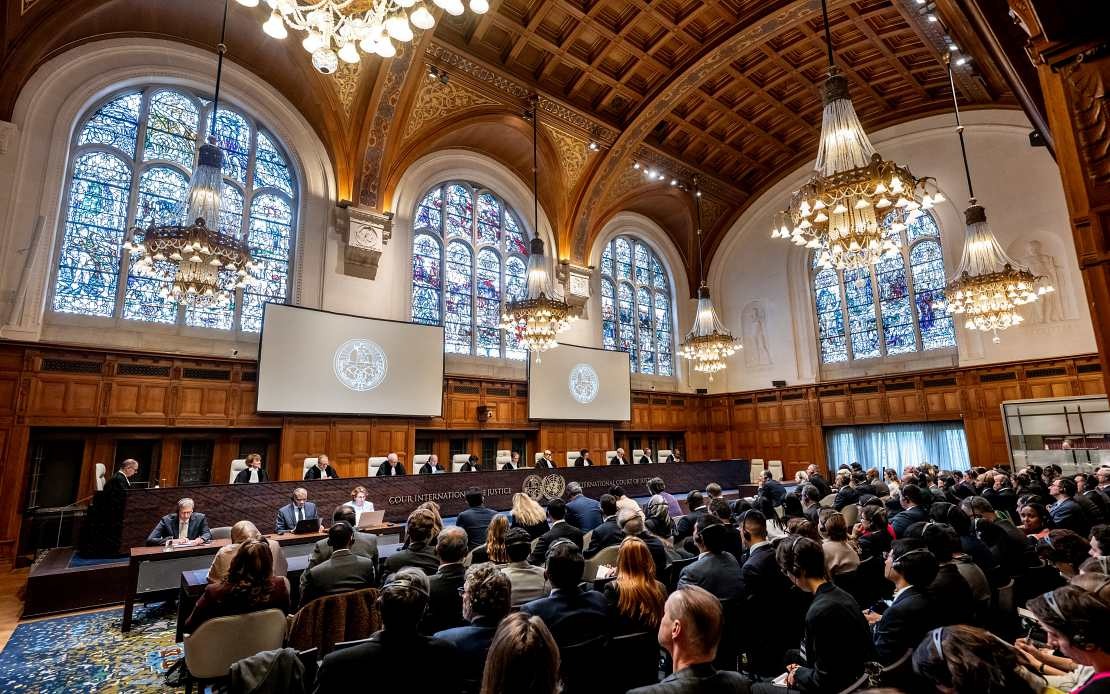
France has doubled down on its commitment to the International Criminal Court, directly contradicting assertions from Washington that the The Hague-based institution represents a threat to state sovereignty. The French Foreign Ministry's response came after US Secretary of State Marco Rubio levelled fresh criticism at the tribunal, signalling an escalating diplomatic confrontation over the court's international legitimacy and scope of authority.
Pascal Confavreux, speaking on behalf of the French Foreign Ministry, dismissed the American characterisation of the ICC as fundamentally misguided. He emphasised that the court's prosecutorial mandate targets individuals accused of the world's gravest criminal acts—not state institutions themselves—and therefore poses no inherent danger to national governance structures. This distinction lies at the heart of the dispute: while the US argues the ICC threatens American independence, France contends the institution functions precisely as intended, holding perpetrators of atrocities accountable rather than criminalising sovereign governments.
The French position reinforces Europe's broader diplomatic alignment with the ICC framework. France, as a founding signatory and active supporter, views the court as an essential instrument for combating impunity in cases involving genocide, war crimes, crimes against humanity, and aggression. Confavreux reiterated this commitment in unequivocal terms, noting that France's support remains unwavering despite external pressure and that the court's institutional resilience must be maintained.
A particularly pointed element of the French response addressed what officials characterised as concerning behaviour by certain states. Confavreux condemned attacks and threats directed at ICC personnel, judges, and other individuals involved in the tribunal's operations, labelling such conduct "unacceptable." This rhetorical move implicitly referenced Washington's confrontational posture while elevating the safety of court staff as a matter of international principle.
The backdrop to this exchange reflects a widening ideological gulf between the United States and the multilateral legal order that many nations, particularly in Europe, have embraced. The Trump administration's returned hostility toward the ICC represents a dramatic reversal of the Obama-era approach and signals the US intends to mount an active campaign against the institution. Secretary of State Rubio announced that Washington would actively lobby other nations to withdraw from the court—a move that could destabilise the tribunal's legitimacy and membership base.
Beyond rhetorical criticism, the US State Department has initiated a formal diplomatic initiative designed to restrict what Washington characterises as the ICC's overreach regarding American interests. This strategy suggests a multi-pronged approach: public messaging about sovereignty concerns, direct diplomatic pressure on member states, and institutional efforts to constrain the court's practical capabilities. For a tribunal dependent on state cooperation for arrest warrants and enforcement, such American opposition carries real operational consequences.
The ICC's institutional foundation, established in 2002, rests on the premise that international law transcends national boundaries when confronting humanity's most egregious violations. The court emerged from post-Cold War consensus that tribunals for Yugoslavia, Rwanda, and Cambodia had demonstrated the necessity of accountable judicial mechanisms. Yet the US has consistently maintained scepticism toward surrendering any citizens to external prosecution, and this discomfort has only intensified under successive administrations.
A crucial asymmetry defines this dispute: the United States remains outside the ICC framework entirely, never having ratified the Rome Statute that established the court. This non-membership status affords Washington rhetorical flexibility—the US can criticise the institution without facing direct consequences for withdrawal. By contrast, member states like France confront a genuine strategic choice between alignment with the court and accommodation of American pressure. France's unambiguous reaffirmation suggests Paris has calculated that defending multilateral institutions serves long-term European interests better than capitulating to Washington's demands.
For Southeast Asian observers, this transatlantic dispute carries implications beyond Europe. Several nations in the region, including Cambodia and Bangladesh, have engaged with or considered ICC mechanisms in addressing mass atrocities. The degree to which the court survives American antagonism and maintains operational independence will shape developing nations' confidence in international justice systems. If American pressure succeeds in substantially weakening the ICC, smaller nations might conclude that multilateral institutions cannot reliably function without great-power consensus—a sobering lesson for regional dispute resolution mechanisms.
France's vocal opposition to the American position also reflects European concerns about preserving institutional autonomy from Washington's unilateral preferences. As the US continues asserting its vision of international law—one where American exceptionalism permits selective engagement—European powers increasingly view defending multilateral institutions as integral to their own strategic independence. The French response thus functions simultaneously as defence of an international court and as assertion of European agency in shaping global governance structures.
The practical consequences of this diplomatic contest remain uncertain. Whether other nations heed the American call to withdraw, or follow France's example of steadfast support, will determine the ICC's trajectory. What appears clear is that the tribunal now exists at the intersection of a fundamental disagreement about international law's proper role and scope.

