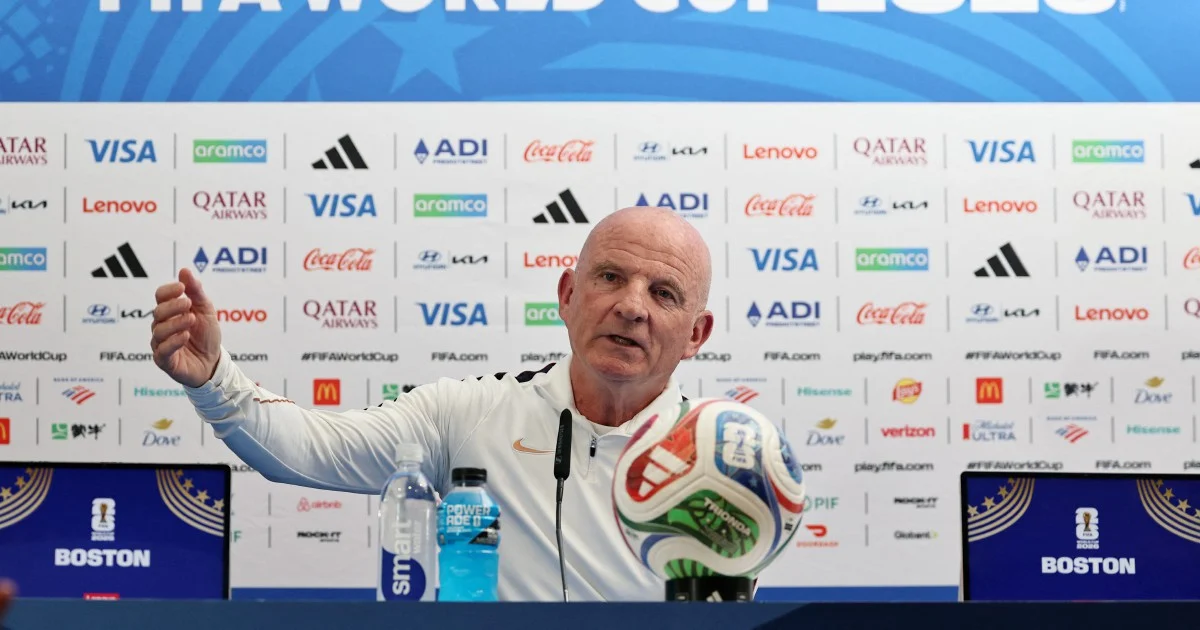
France heads into their critical Group I encounter against Norway on Friday with far more at stake than merely three points. The 2018 World Cup champions, already assured of knockout stage progression after two victories, are pursuing the top spot in their group not purely for sporting pride but to secure a significant logistical advantage that could prove decisive in their tournament bid. Assistant coach Guy Stephan, filling in for manager Didier Deschamps who returned to France following his mother's death, emphasized the practical realities underpinning the French team's tactical ambitions in remarks to reporters on Thursday.
The geography of American football venues creates an unusual competitive dynamic in this tournament. Should France finish atop Group I, they would base themselves in the Northeastern United States, remaining close to their current headquarters near Boston, home to the New England Patriots' stadium. Conversely, a second-place finish would condemn them to exhausting journeys spanning thousands of kilometres, with potential knockout matches staged in cities such as Dallas, Houston, Miami and Atlanta. For a tournament being contested across a continental landmass, the difference between staying put and constant relocation carries profound implications for team recovery, training consistency, and player morale as the competition intensifies.
Stephan articulated the environmental challenges layered atop the travel question. The temperature variations across different American regions could significantly impact player conditioning and adaptation. Remaining in the temperate Northeast through the quarter-final stage would eliminate the need for athletes to acclimate to the sweltering heat of Southern cities, preserving energy reserves precisely when tactical freshness becomes paramount. These considerations transform the theoretical importance of finishing first into a tangible competitive advantage that could influence match outcomes during knockout football, where marginal gains accumulate into tournament success.
Both France and Norway arrive at their Friday showdown undefeated, having secured consecutive victories that already guarantee their participation in the next stage. France's superior goal difference provides them with mathematical comfort—they require merely a draw to secure top spot—while Norway faces the necessity of a positive result to claim the group's crown. This asymmetry reflects the French side's superior performance across their opening matches, though Norway's consistency has proven resilient enough to remain very much in contention heading into the finale.
The French squad faces composition challenges as they prepare for the encounter. Central defender William Saliba will be unavailable for selection, while striker Marcus Thuram has been struggling with calf discomfort that threatens to limit his effectiveness. These absences force Stephan and his coaching staff to recalibrate their tactical approach, potentially affecting both defensive solidity and attacking potency during a match where France can control their destiny through a modest result.
Deschamps' absence adds an unconventional dimension to the team's preparation and in-match management. The World Cup-winning manager, instrumental in France's 2018 triumph in Russia, remains in France observing funeral proceedings for his mother. Stephan confirmed that communication between the coaching staff in Boston and Deschamps would be minimal on Friday itself, with the assistant coach assuming full operational responsibility during the match. Yet the interim leadership structure has proven effective thus far, with Stephan maintaining regular contact with Deschamps through telephone discussions while executing the team's strategic vision independently.
Stephan's comments reveal the manner in which tournament logistics have evolved to become integral components of competitive planning in modern international football. The sprawling American landscape transforms what might appear as peripheral administrative matters into substantive sporting considerations. Recovery protocols, training-ground familiarity, accommodation adjustments, and staff resource allocation all intersect with the physical and psychological demands of knockout competition. French football's technical sophistication extends to recognizing that managing these environmental factors could determine whether they progress from the quarter-finals onward.
The psychological dimension should not be underestimated either. A team maintaining its base and routine gains confidence from familiarity, reduced disruption, and the ability to concentrate entirely on football rather than managing constant relocation. For players approaching the competition's business end, such stability becomes increasingly valuable as fatigue accumulates and concentration levels require protection from unnecessary external stresses.
For Southeast Asian observers following international football's premier competition, the France-Norway encounter exemplifies how modern tournaments operate within increasingly complex operational frameworks. The interplay between sporting ambition and logistical reality reflects football's professionalization, where marginal advantages compound across an extended tournament. France's pursuit of group leadership serves their broader objective of capturing a third World Cup title, and every strategic advantage—including the seemingly mundane question of where the team trains and recovers—contributes to that ultimate mission.

