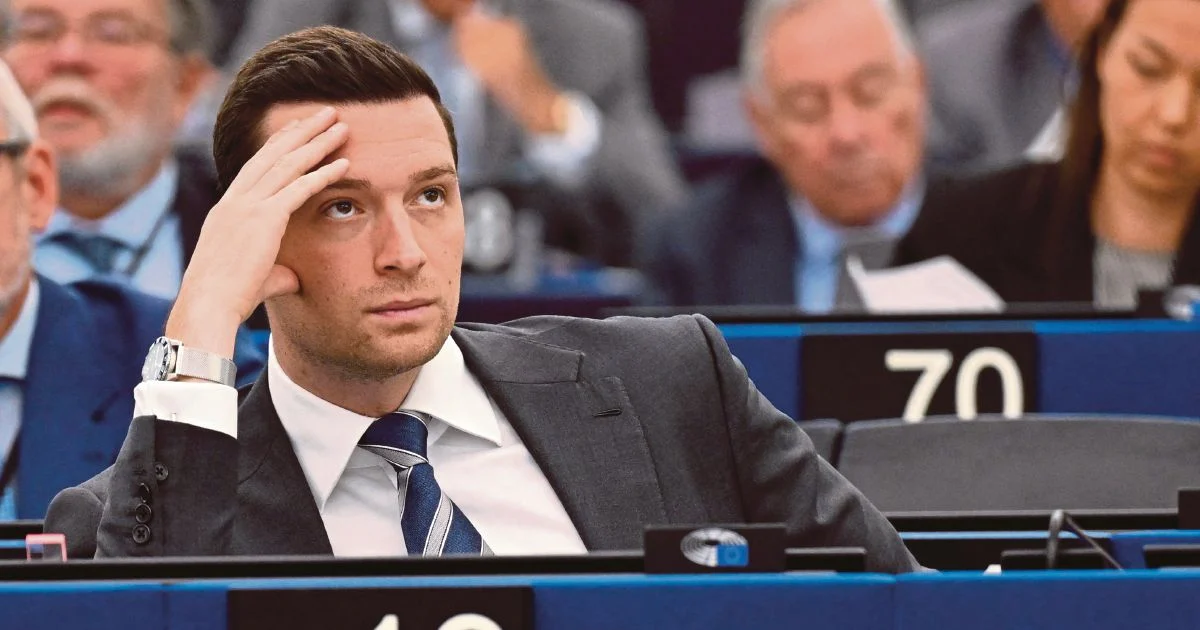
A French anti-corruption watchdog has moved to initiate an investigation into allegations that Jordan Bardella, the prominent far-right politician widely expected to lead France's political landscape in coming elections, previously held a non-existent position as an assistant in the European Parliament. The development represents a fresh challenge for Bardella, whose National Rally party has built considerable support in recent years despite persistent criticism over governance standards and ethical conduct.
The corruption monitor announced its intention to examine claims that Bardella was on the European Parliament's payroll for a role that had little substantive work attached to it, if such duties existed at all. This practice of hiring nominal assistants with inflated salaries has long been a contentious issue within EU institutions, where misuse of parliamentary staff allowances has periodically surfaced as a scandal damaging the credibility of European lawmakers across the political spectrum.
Bardella's National Rally has rejected the accusations outright, dismissing the watchdog's initiative as a politically motivated attack designed to undermine their candidate ahead of forthcoming elections. The party's response reflects the increasingly polarized nature of French politics, where investigations into political figures are frequently framed by supporters and opponents through a lens of partisan advantage rather than institutional concern. Such defensive reactions are typical in a climate where trust in independent oversight mechanisms has become strained along ideological lines.
The allegation arrives at a particularly significant moment for Bardella and his movement. Having established the National Rally as France's strongest opposition force and beneficiary of widespread public discontent with traditional centrist and centre-left politics, Bardella represents a genuine pivot in French electoral dynamics. Any credibility damage from corruption allegations could shift momentum ahead of crucial legislative contests, particularly as European debates intensify around standards of political conduct.
European Parliament assistant positions have become synonymous with budgetary irregularities and organizational opacity. MEPs receive allowances to employ staff members, but oversight mechanisms have historically been weak, allowing some lawmakers to effectively draw salaries for positions with minimal work or, in alleged egregious cases, entirely fabricated roles. This systemic vulnerability has affected politicians across mainstream parties as well, suggesting corruption concerns transcend typical left-right divisions within European politics.
For Malaysia and Southeast Asia, the Bardella situation offers relevant lessons about institutional resilience and anti-corruption enforcement. Despite France's advanced democratic institutions and supposedly robust oversight mechanisms, the ability to sustain questionable employment practices within the European Parliament demonstrates how structural vulnerabilities can persist even in mature democracies. This underscores the importance of continuous investment in transparent financial systems and independent accountability mechanisms—priorities equally critical for developing nations strengthening their governance frameworks.
The investigation itself will likely prove complex and lengthy, typical of European corruption probes that require coordinating across multiple jurisdictions and institutional hierarchies. The European Parliament maintains its own internal investigation systems, but cooperation between national anti-corruption bodies and EU institutions often moves slowly, particularly when sensitive political figures are involved. This procedural complexity means Bardella's situation may not reach definitive resolution quickly, potentially leaving the allegations as a shadow over his political profile throughout the election cycle.
The broader political implications extend beyond Bardella himself. As parties across Europe navigate heightened public sensitivity to corruption and ethical governance, leaders face intensified pressure to demonstrate clean conduct. The far-right has historically positioned itself as a challenger to what it characterizes as a corrupt establishment, making any allegations of misconduct against its own figures particularly damaging to that narrative. Bardella's need to simultaneously contest the accusations while maintaining his outsider credentials creates a delicate political balancing act.
Barrella's position within European far-right movements also shapes international dimensions of this controversy. The National Rally maintains connections with similar parties across the continent, and ethical questions affecting prominent figures reverberates through transnational political networks. Should the investigation substantiate the allegations, it could influence broader European discussions about standards for populist leaders and reinforce criticism that anti-establishment movements prioritize power acquisition over institutional reform.
Meanwhile, French voters must weigh how seriously to treat corruption allegations when evaluating political candidates. Public opinion research suggests voters remain concerned about governance standards, yet electoral outcomes across democracies indicate such concerns sometimes rank below other priorities like economic policy or immigration. How the Bardella case influences voter calculations will reveal much about contemporary French political values and whether ethical governance remains a decisive factor in determining electoral outcomes or remains secondary to other campaign messages.

