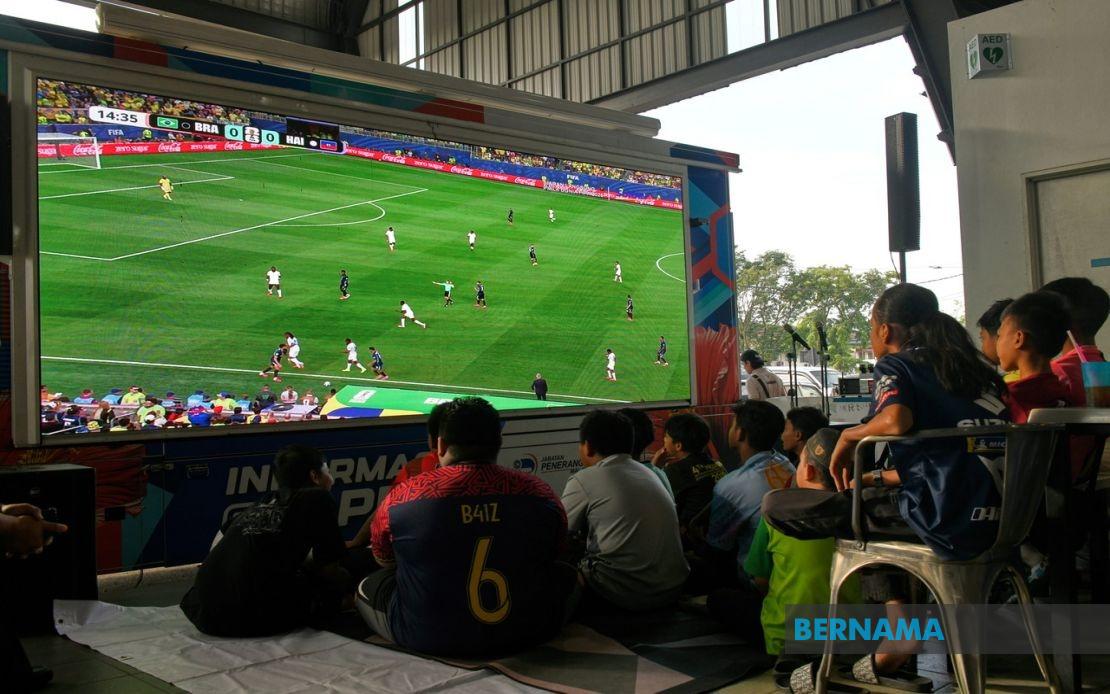
The government's decision to make 2026 FIFA World Cup matches freely accessible through Radio Televisyen Malaysia (RTM) and Unifi TV is generating tangible relief for restaurant operators and the broader public, according to Communications Minister Datuk Fahmi Fadzil. Speaking in Butterworth after observing the Brazil versus Haiti match at a local food court, Fahmi underscored how this initiative addresses a longstanding burden on businesses reliant on international sporting events to draw customers. The Malaysian Muslim Restaurant Owners Association has voiced strong approval, noting substantial savings for food and beverage operators who previously faced hefty licensing fees to broadcast premium sporting content.
For many traders in the sector, access to free broadcasts represents a watershed moment. One restaurant operator shared with the minister that this marks the first occasion in over twenty years that he has been able to screen World Cup fixtures without incurring broadcast licensing costs. This perspective reveals the accumulated financial pressure the food and beverage industry has endured during successive World Cup tournaments. By removing the transmission barrier, the government has effectively democratised access to one of global sport's most anticipated events, a shift with implications beyond entertainment. Traders can now invest those savings into product quality, competitive pricing, or staff wages rather than funnelling resources to pay-television operators.
The availability of matches across multiple platforms—RTM's traditional television service, the RTMKlik streaming portal, and Unifi TV's digital offerings—demonstrates a comprehensive approach to content distribution. This multi-channel strategy ensures that geographical location, demographic status, or technological access does not prevent Malaysians from following their favourite teams. The breadth of availability is particularly significant for a nation where television penetration and internet connectivity vary considerably across urban and rural areas. Fahmi's framing of this initiative as a cost-reduction mechanism for ordinary citizens acknowledges the broader economic pressures facing households in an inflationary environment.
The minister's visit to the Seberang Jaya Public Market served purposes beyond symbolic support. By spending time alongside traders and observing their operations firsthand, Fahmi gathered direct intelligence on business conditions affecting Malaysia's informal and small-business economy. These food court operators and stall owners represent a critical segment of the workforce, yet their operational realities are frequently disconnected from policy-making conducted in ministerial offices. The conversation revealed ongoing challenges stemming from global supply chain disruptions and geopolitical instability, particularly the reverberations of regional conflicts on input costs and commodity pricing.
The minister specifically highlighted how the West Asia conflict continues to inflate costs for certain goods flowing through Malaysian supply chains. Though largely shielded from direct military involvement, Malaysia remains vulnerable to price shocks originating from Middle Eastern instability affecting petroleum products, shipping routes, and manufacturing inputs. For food traders operating on thin margins, such inflationary pressures compound the already-difficult task of maintaining profitability whilst serving price-sensitive customers. Fahmi's acknowledgement of this external pressure suggests the government recognises that domestic policy initiatives, whilst valuable, operate within global economic constraints beyond national control.
The initiative also carries a broader social dimension reflecting contemporary policy thinking about public welfare during major sporting events. Historically, premium sports broadcasting has functioned as a luxury commodity accessible primarily to affluent households or commercial establishments willing to pay subscription fees. By providing free access, Malaysia's approach aligns with growing international recognition that cultural participation—including following major international competitions—should not be restricted by income level. This democratisation of access has implications for social cohesion and national sentiment during tournaments that generate collective excitement and pride.
Fahmi's advocacy for increased ground-level engagement by government officials suggests an attempt to reorient ministerial practice toward community-based insight gathering. His appeal for MPs and state assemblymen to spend more time observing trader conditions and public circumstances directly indicates awareness that information flowing through formal bureaucratic channels may miss nuanced challenges facing businesses. This call for greater visibility by elected representatives reflects perhaps a recognition that policies formulated without such grounding risk missing their intended impact or generating unintended consequences for the intended beneficiaries.
The timing of this World Cup initiative matters contextually. The 2026 tournament will be jointly hosted by the United States, Canada, and Mexico, making it the first World Cup with expanded participation and a genuinely North American focus. For Malaysian fans and traders, the broadcast timing will be considerably more convenient than previous tournaments held in distant time zones. Early scheduling combined with free access creates an optimal environment for sustained viewership, which translates to consistent customer traffic for food and beverage operators during match periods. Traders can strategically plan promotional activities and staffing around broadcast schedules, knowing they face no unexpected licensing surcharges.
The economic multiplier effects warrant consideration beyond immediate broadcast access. When traders can afford to screen matches without additional costs, they may invest in complementary services—enhanced seating, improved food offerings, promotional pricing—that attract broader clientele. These secondary investments create employment and stimulate local economic activity. For a nation facing moderate growth challenges and seeking to strengthen community-level commerce, such linkages between a single government initiative and cascading economic benefits represent the kind of targeted intervention capable of generating meaningful impact on small businesses.
Looking ahead, the sustainability and expansion of this free-broadcast model depends on RTM and Unifi TV's capacity to manage the technical and infrastructure demands of global tournament broadcasting. The government will need to ensure adequate streaming server capacity, redundancy systems, and quality standards to prevent service disruptions that might undermine public confidence in the initiative. Additionally, ongoing engagement with trader associations and food business representatives will help the government understand whether the initiative achieves its objectives of attracting customers and stabilising operating costs throughout the tournament period.
This initiative ultimately reflects a pragmatic recognition that major sporting events influence consumer behaviour and spending patterns. By removing a traditional cost barrier, the government has created conditions enabling a broader cross-section of Malaysians to participate in the World Cup experience communally. For traders, the elimination of broadcast fees represents tangible financial relief in a period of compressed margins. For the government, demonstrating responsiveness to sector-specific challenges builds credibility and potentially strengthens relationships with commercial associations whose members reach hundreds of thousands of workers and consumers across Malaysia.

