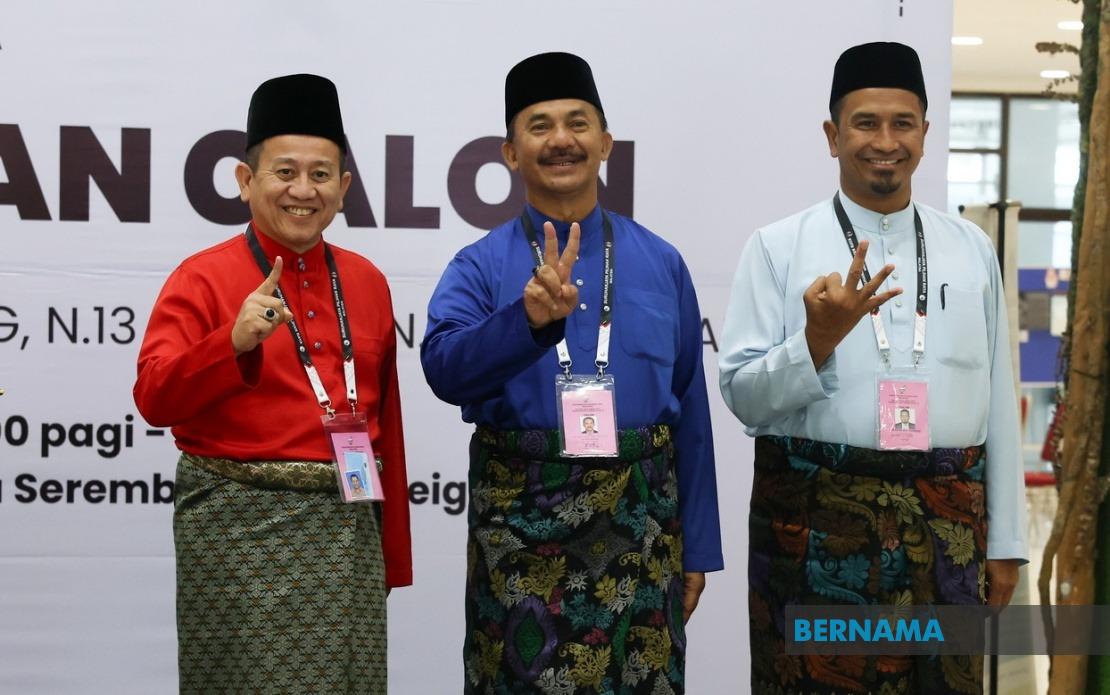
The 16th Negeri Sembilan State Election is shaping up as a contest between political experience and fresh perspectives, with major coalitions strategically blending veteran campaigners and newcomers across the 36 State Legislative Assembly seats. Following the close of nominations on July 18, a total of 103 candidates have been confirmed to contest, drawn from multiple parties, independents, and smaller political movements, creating one of the most competitive electoral landscapes the state has witnessed in recent years.
Pakatan Harapan's decision to field 24 new candidates alongside 12 established figures demonstrates the coalition's attempt to broaden its appeal beyond traditional support bases while maintaining continuity through seasoned politicians. The inclusion of proven heavyweight performers such as DAP Secretary-General and Transport Minister Anthony Loke, who will contest the Chennah seat, provides the coalition with recognizable faces capable of attracting media attention and consolidating voter confidence. Simultaneously, the promotion of two dozen newcomers signals PH's willingness to invest in long-term political infrastructure and respond to voter appetite for alternative voices within the governing coalition.
Negeri Sembilan PH Chairman Datuk Seri Aminuddin Harun's strategic repositioning from the Sekamat seat to Linggi represents a calculated move to strengthen PH's foothold in a potentially competitive constituency, suggesting internal assessments of shifting electoral dynamics within the state. This type of mid-career relocation by senior party figures often precedes broader organisational shifts and can indicate where coalitions expect the most intense competition. The Harapan strategy appears designed to maximize returns from its established networks while simultaneously testing ground among voter segments that might be swayed by newcomer candidates unburdened by prior parliamentary records.
Barisan Nasional's approach reveals a more conservative refreshment strategy, with 13 new candidates fielded from a total of 25 candidates contesting across the state. This represents a lower proportion of newcomers compared to PH, suggesting BN's reliance on institutional incumbency advantages and the staying power of established political machinery. Foreign Minister Datuk Seri Mohamad Hasan's defence of the Rantau seat underscores BN's confidence in retaining traditional strongholds, while the repositioning of Datuk Ismail Lasim from Senaling to Juasseh suggests internal confidence in shifting seat performance. Meanwhile, Negeri Sembilan BN Chairman Datuk Seri Jalaluddin Alias's campaign in Pertang, a seat won in the previous 2023 election, indicates BN's strategic priority on consolidating recent gains rather than aggressive expansion.
Perikatan Nasional's participation across 11 seats through its component parties—PAS, Gerakan, Wawasan, and MIPP—creates a fragmented challenger narrative that could complicate vote-splitting dynamics across multiple constituencies. This multi-party approach within PN, while theoretically maximising reach, creates vulnerabilities to tactical voting and potential coordination failures that have historically plagued multi-party electoral coalitions in Malaysian state politics. The presence of Perikatan's various component parties indicates the coalition views Negeri Sembilan as a battleground where incremental gains across disparate constituencies could accumulate into meaningful parliamentary gains.
Perbezaan Bersatu's decision to contest using its own party logo rather than the Perikatan Nasional banner employed during the 2023 state election signals a significant reconfiguration of opposition political architecture within the state. Information Chief Datuk Tun Faisal Ismail Aziz's inclusion among 24 Bersatu candidates demonstrates the party's commitment to building independent electoral machinery, while Negeri Sembilan Chairman Hanifah Abu Bakar's defence of the Labu seat represents continuity. This separation from Perikatan's formal coalition structure may reflect national-level tensions within opposition coalitions or strategic calculations that operating independently allows for greater flexibility in post-election coalition negotiations.
The presence of smaller parties and independent candidates—including Parti Berjasa, Parti Orang Asli Malaysia, Parti Sosialis Malaysia, and four independent candidates—adds complexity to what might otherwise be a three-way coalition contest. While such fringe participants rarely capture enough support to alter overall electoral outcomes, their presence can create spoiler dynamics in closely contested marginal seats where vote distribution might determine final results. In Malaysian state elections, independent candidates increasingly represent either dissident party members testing personal popularity or local community figures seeking to challenge established party machinery through grassroots mobilisation.
The age range among candidates—from 70-year-old Datuk Abd Latiff A Tambi (PH candidate, Gemencheh) to 23-year-old Leevineshwaraan Murugan (Bersatu candidate, Sri Tanjung)—reflects broader demographic tensions within Malaysian politics between political establishments seeking to retain control and younger activists pushing for accelerated generational transition. This generational spread is particularly pronounced in Negeri Sembilan, where demographic composition and rural-urban electoral divides create distinct voting patterns across different age cohorts. The prominence of younger candidates within Bersatu's slate suggests that party's strategic targeting of demographics alienated by longer-established coalition structures.
The Electoral Commission's scheduling of early voting for July 28 and main polling for August 1 creates a compressed campaign window of approximately ten days from nomination close to main election day. This truncated timeline inherently advantages established parties with existing organisational infrastructure and recognizable candidates, potentially disadvantaging newer candidates or smaller parties requiring greater campaign investment to build public awareness. Malaysian voters' relatively high degree of electoral volatility in recent state elections suggests that rapid campaign momentum and last-minute persuasion campaigns can still influence outcomes despite structural advantages enjoyed by larger coalitions.
For Malaysian observers, Negeri Sembilan's electoral mathematics remain significant within the broader context of federal coalition stability. Should opposition coalitions capture meaningful gains or mount stronger-than-expected challenges to BN dominance, such results could provide strategic indicators regarding national-level political realignment and voter sentiment patterns that might inform subsequent federal-level negotiations or electoral strategies. Conversely, consolidation of BN control despite fresh opposition candidate deployments would reinforce perceptions of ruling coalition durability within peninsular Malay-majority states.
The influx of new political faces across Negeri Sembilan's 36 assembly constituencies represents more than merely generational succession or routine candidate rotation. It reflects profound uncertainty within Malaysian political coalitions about optimal strategies for capturing shifting voter preferences, with different political movements making distinct wagers about whether electoral success derives from institutional continuity or transformative personnel changes. The results on August 1 will provide crucial data regarding which strategic approach—PH's aggressive newcomer deployment, BN's incumbency protection, or PN's fragmented challenge—generates superior electoral returns in an important peninsular state.

