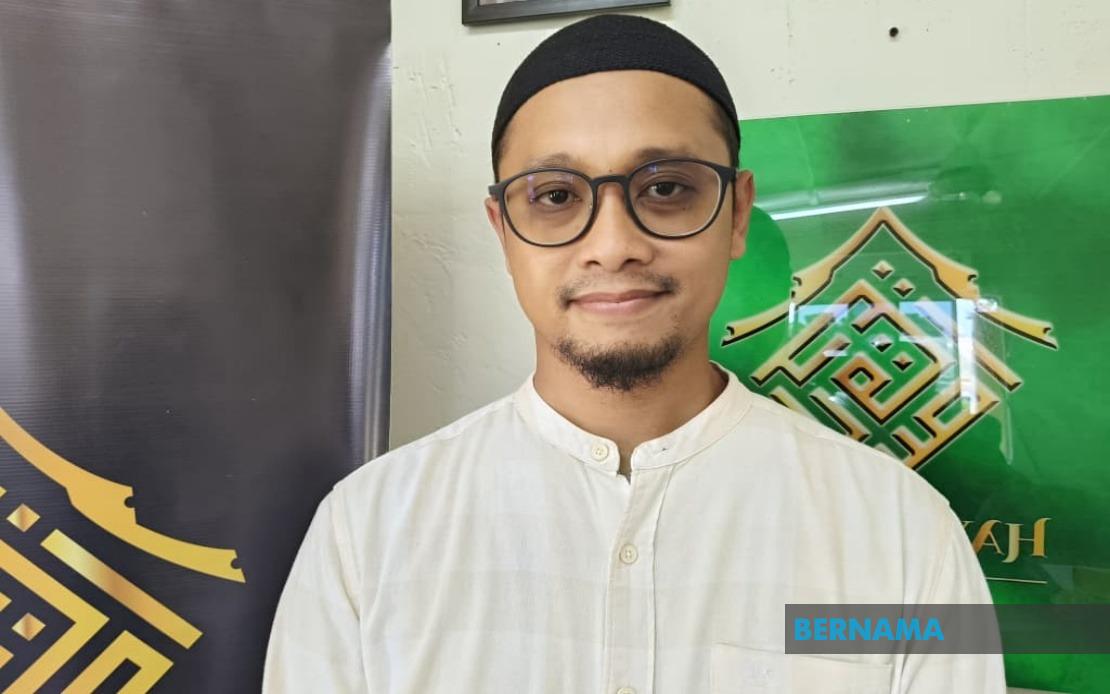
Mohd Rasli Hassan's trajectory from street-level drug dependency to qualified rehabilitation professional offers a compelling narrative about redemption and institutional support within Malaysia's expanding addiction recovery ecosystem. Now 52, the Kelantan-born coach represents a growing category of reformed individuals who are formalising their lived experience into certified expertise, shifting the conversation around drug rehabilitation beyond mere abstinence toward active contribution and social reintegration.
The transformation crystallised when Mohd Rasli completed the Academy in Industry (ADI) programme at Rumah Rakan Islah, a private rehabilitation facility located in Setiu, Terengganu. The one-year initiative, which concluded last year, culminated in him receiving a Professional Diploma in Drug Addiction Recovery Coaching, a qualification that simultaneously validates his personal recovery journey and positions him as an evidence-informed practitioner within the country's drug counselling landscape. This credentialing matters considerably in Malaysia's health and social services sectors, where professionalisation of peer support remains an evolving frontier.
Mohd Rasli's addiction narrative began alarmingly early. He initiated drug use at age eleven in Pasir Mas, Kelantan, a detail that underscores the predatory nature of substance dependency in Malaysia's lower-income communities. His family remained unaware for nearly a decade until police intervention forced the issue into the open. Subsequent placement at the Kuala Terengganu branch of the National Anti-Drug Agency (AADK) provided institutional scaffolding for his initial recovery, a seven-month engagement that proved consequential enough to set him on a parallel track toward peer support work. Between 2017 and 2024, he operated as a peer support counsellor at Rumah Rakan Islah before advancing into the coaching role he currently occupies.
What distinguishes the ADI programme from conventional rehabilitation protocols is its integration of vocational and agricultural training alongside therapeutic intervention. Rather than treating addiction recovery and economic reintegration as separate challenges, the curriculum bundles them into a unified learning experience. Participants acquire practical skills in agricultural production—potentially viable income streams in Terengganu's rural economy—whilst simultaneously processing the psychological and social dimensions of recovery. This dual-axis approach recognises a fundamental truth often overlooked in policy discussions: sustained sobriety requires not merely abstinence but economic viability and purposeful engagement.
The stringency of participant selection reflects institutional seriousness about programme outcomes. Candidates must demonstrate more than five years of continuous recovery and manifest explicit commitment to work and ongoing education. These thresholds filter for individuals whose motivation appears solidified rather than tentative, maximising the probability of successful completion and subsequent employment. Ten participants have already earned diplomas through the programme, a modest cohort that nonetheless signals proof of concept for a model that could scale across Malaysia's rehabilitation sector if funding and institutional coordination materialise.
Muhammad Anas Mohd Nasar, academic director and manager of Rumah Rakan Islah, contextualises the ADI initiative within the centre's institutional evolution since establishment in 2011. He emphasises that the techniques embedded in the programme's six modules—encompassing rehabilitation methodologies, therapeutic approaches, and occupational competencies—had long been practised informally within the facility. The innovation consisted of systematising tacit knowledge into documented, modular curricula compatible with Malaysia Productivity Corporation (MPC) standards. This documentation process proves crucial: it transforms experiential wisdom into teachable content, enabling replication across different facilities and contributing to sector-wide professionalisation.
The programme's philosophical underpinning rests on a recognition that participants possess intrinsic capacity for transformation provided they access appropriately structured support. Mohd Rasli's articulation of this principle carries particular weight given his personal archaeology of failure and recovery. His assertion that "everyone deserves a second chance" transcends motivational cliché when voiced by someone who experienced incarceration, institutionalisation, and the long grinding work of rebuilding identity post-addiction. The programme validated his internal conviction that past pharmaceutical dependency need not determine future trajectory, a message with implications far beyond Setiu's boundaries.
The institutional landscape surrounding Rumah Rakan Islah extends beyond the centre's immediate operations. Collaboration with the Malaysia Productivity Corporation situates addiction recovery within broader skills development frameworks, whilst partnerships with Universiti Sains Islam Malaysia (USIM) and Universiti Putra Malaysia (UPM) through the Malaysian Substance Abuse Council (MASAC) anchor the work within academic rigour and evidence-based practice. These connections suggest an emerging ecosystem where drug rehabilitation, vocational training, and higher education institutions function as integrated actors rather than siloed entities. Such integration remains nascent in Malaysia but could substantially amplify intervention effectiveness if replicated systematically.
Mohd Rasli's progression from peer counsellor to diploma-holder to active coach demonstrates feasible career pathways within Malaysia's addiction services infrastructure. For individuals in recovery, the existence of such trajectories—particularly those conferring professional credentials and stable employment—constitutes powerful incentive for sustained engagement with treatment systems. Currently, many recovered individuals encounter severe labour market discrimination that marginalises them despite their rehabilitation. Formalised coaching roles within centres like Rumah Rakan Islah create legitimate professional niches where lived experience becomes occupational asset rather than permanent stigma.
The implications resonate across Southeast Asia's broader drug policy landscape. Malaysia's approach of coupling peer expertise with formal credentialling, vocational skill-building, and therapeutic integration represents a practical middle path between purely punitive prohibition and minimalist harm reduction frameworks. As regional nations grapple with persistent substance dependency amid constrained public health budgets, the ADI model offers a replicable template for extracting maximal utility from existing institutional assets—particularly the experiential knowledge resident within rehabilitation practitioners themselves.
Looking forward, scaling models like the ADI programme depends partly on governmental recognition that investment in recovery infrastructure generates measurable returns. Former addicts who transition into coached and employed status typically demonstrate lower recidivism rates whilst contributing tax revenue and reducing public health burdens compared to perpetually unemployed populations cycling through enforcement systems. Mohd Rasli Hassan's personal success story, whilst heartening, constitutes merely one data point. Systematic expansion of similar pathways across Malaysia's rehabilitation sector would constitute a genuine strategic reorientation toward recovery-as-livelihood rather than recovery-as-palliative.

