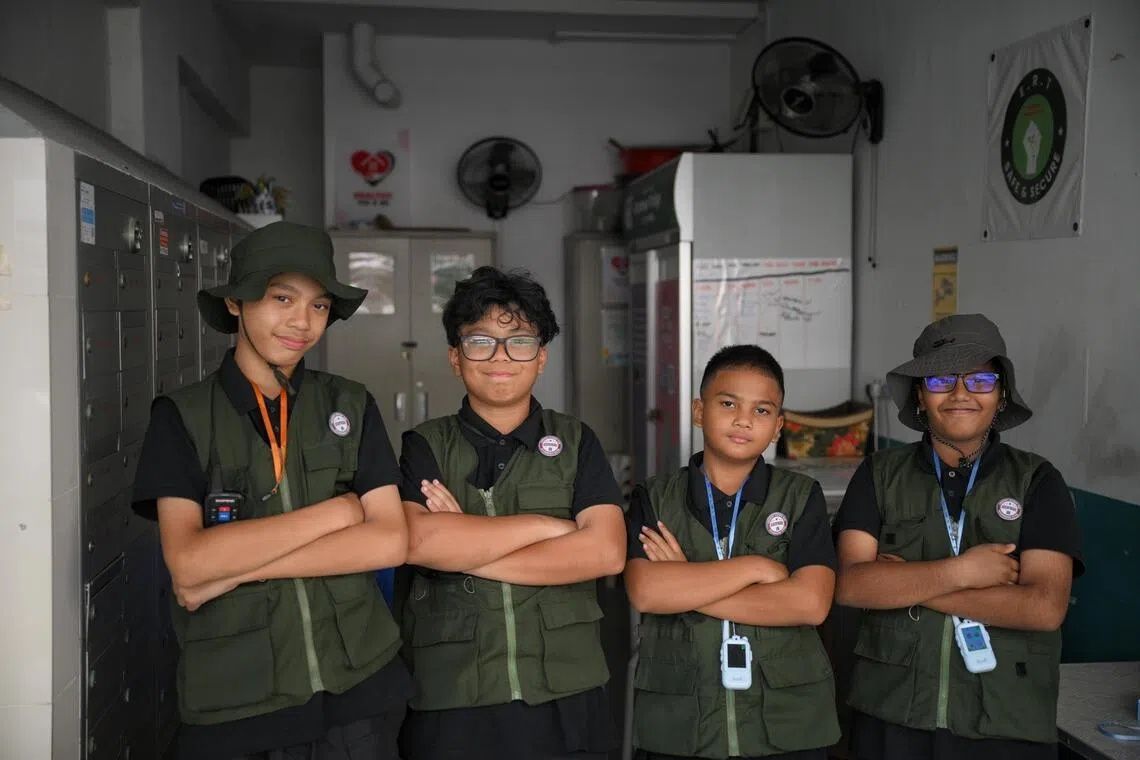
What began as one 12-year-old's frustration with a depleted community fridge has evolved into a full-fledged neighbourhood watch operation run entirely by primary school children. Rafieq Sahin Rafizal could not accept that strangers were repeatedly emptying a refrigerator stocked with free milk and drinks intended for children from low-income families in the Lengkok Bahru estate. Rather than simply stand guard over the appliance, he transformed his concern into something far more ambitious: a daily patrol team dedicated to keeping his community safe and functional.
Today, Rafieq works alongside three school friends—Aaron Sarandev, Al-Mirza Danish, and Didie Andiqa Muhaimin—who together comprise the Emergency Response Team LB. The boys, aged between 11 and 14, conduct regular rounds through their neighbourhood, documenting problems that residents might overlook. Their vigilance extends beyond preventing theft from the community fridge. They photograph evidence of illegal dumping, instances of vandalism, and dangerously charged personal mobility devices left in common areas where they pose fire risks. Each discovery is reported to Rafieq's mother, Marlina Yased, who then escalates these matters to the appropriate estate management personnel for resolution.
The initiative commenced in August 2025, and within months the boys demonstrated their utility to the community in ways that went far beyond their original remit. They have assisted an elderly resident with mobility challenges to transport groceries to her home, intervened to calm disputes between children, and once detected a troubling odour emanating from a flat. When they reported this to Marlina, she notified estate cleaners and other residents alerted police. The authorities subsequently discovered the decomposed remains of an elderly man who had died inside the unit—a sobering discovery that underscored the genuine value of having vigilant eyes and ears patrolling the estate regularly.
The boys' efforts have not gone unnoticed at the national level. In August 2026, all four members of the Emergency Response Team LB will participate in Singapore's National Day Parade, featured in a segment honouring Singaporeans who contribute to making the nation a better place. For Rafieq, Aaron, Al-Mirza, and Didie, this represents a watershed moment—their inaugural appearance at the annual parade, recognition that their grassroots initiative has captured the imagination of those overseeing the country's flagship civic celebration.
The story of this neighbourhood team cannot be separated from Marlina's earlier creation of the community fridge itself. In 2023, the 48-year-old homemaker, supported by sponsors, installed the refrigerator at the void deck of her two-room rental flat at Block 59 Lengkok Bahru, responding to the economic hardship faced by many neighbours in her precinct. She deliberately established two separate cooling units: one secured with a lock for general provisions, and another left open and stocked exclusively with milk and drinks that children could collect before school. When residents began pilfering the supply intended for young pupils, rather than abandoning the initiative, Marlina and Rafieq conceived a more constructive response—one that would harness youthful energy and community spirit.
MarLina's strategic thinking proved crucial in shaping the project's direction. Instead of positioning her son as a static guardian of the fridge, she encouraged him and his peers to become active community participants. Her vision was to establish a recognizable presence—young people whom neighbours could approach for assistance, whether that meant helping elderly residents with shopping or identifying environmental and safety hazards during their daily rounds. The boys don matching vests bearing their names and the team's logo before each patrol, lending them visibility and legitimacy within the estate. They operate in pairs, covering up to six blocks per day, and maintain communication with Marlina and a 21-year-old volunteer named Fahmidah Farihullah via walkie-talkies, ensuring oversight and coordination.
The operation once encompassed seven members, though the active roster has contracted to four—a reflection perhaps of the demands placed on schoolchildren balancing homework, leisure, and civic responsibility. Rafieq named the team by drawing inspiration from Singapore's Emergency Response Team, the police unit that handles high-risk interventions. The boys view their daily patrols as a deliberate allocation of time: a commitment to devote roughly one hour each afternoon, after returning from school, to community service rather than pure recreation. Didie, for instance, joined the initiative because he felt he had nothing productive to occupy his time and welcomed the opportunity to be part of something meaningful.
Community reception has been mixed but increasingly positive. Early sceptics questioned whether young boys could meaningfully contribute to neighbourhood safety, but demonstrated results have gradually won over doubters. Nasha Asrin, a 27-year-old mother of five living in Lengkok Bahru, expressed relief at seeing the boys engaged in purposeful activity rather than loitering idly throughout the estate. Aaron has reported that the experience of daily patrols has instilled in him a stronger sense of responsibility and the discipline to persevere even on days when motivation flags. Perhaps most tellingly, Marlina has observed tangible changes in some of the boys she mentors and guides. Their mothers have reported improved school attendance and enhanced concentration—suggesting that this neighbourhood initiative may be generating developmental benefits extending well beyond estate boundaries.
The Emergency Response Team LB exemplifies a form of hyper-local civic engagement increasingly rare in urbanized societies. Rather than waiting for municipal authorities to address every community problem, or resigning themselves to disorder, residents—particularly young ones—have chosen proactive stewardship. In the context of Singapore's dense public housing landscape and its emphasis on collective responsibility, the boys' work represents both continuity with established values and an innovative reinterpretation of how children can meaningfully participate in maintaining their immediate environment. Their upcoming appearance at the National Day Parade signals official recognition that grassroots initiatives, even those originating from schoolyard conversations and parental problem-solving, merit celebration as contributions to national cohesion and social stability.

