Suresh Sallay, a retired major general who built a career advising global institutions on counter-terrorism strategy, has become an unlikely symbol of the troubling questions that still surround Sri Lanka's deadliest peacetime attack. The island's former intelligence chief was arrested in February under anti-terrorism provisions and now faces allegations that he masterminded the Easter bombings of April 21, 2019—a claim that represents a dramatic inversion of the official narrative that dominated immediately after the tragedy. With his next court hearing scheduled for July 10, Sallay remains detained without formal charges, denying involvement while his legal team prepares a defence against what many observers regard as an extraordinary accusation.
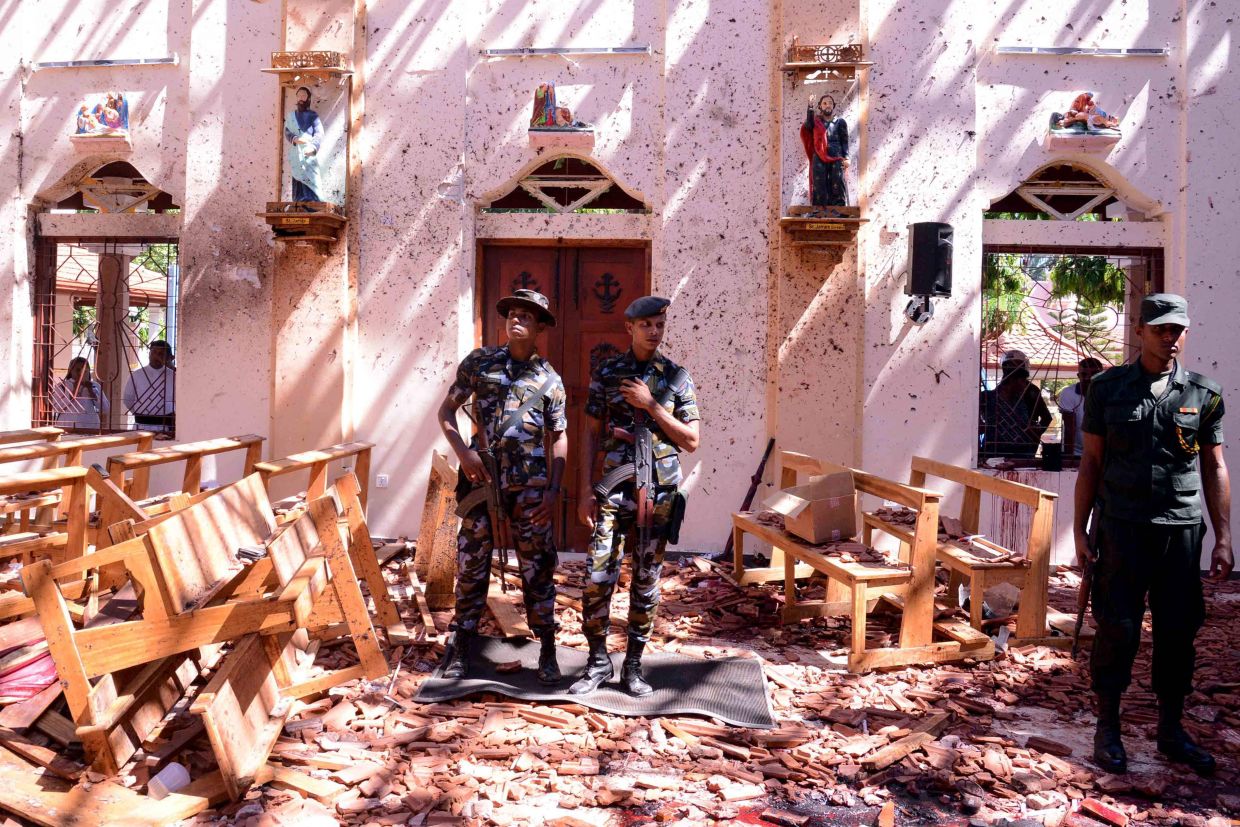
The Easter bombings themselves left an indelible mark on Sri Lanka and the wider region. Nearly 280 civilians perished in coordinated attacks on three luxury hotels and three churches across Colombo and other cities, while more than 500 others sustained injuries. Among the dead were 45 foreigners—Australians, British, Chinese, Danes, Dutch, Japanese and Americans, many visiting the country during the holiday period. For a nation still recovering from decades of internal conflict, the scale of the carnage shocked the population and exposed vulnerabilities in Sri Lanka's security architecture at a moment when the government had claimed a new era of peace and stability.
Initially, authorities attributed the bombings to Sunni Muslim extremists inspired by the Islamic State group. This narrative aligned with then-President Gotabaya Rajapaksa's electoral platform, which promised decisive action against Islamist militancy in the aftermath of a campaign that had already seen increased scrutiny of Muslim communities. However, the official explanation began to fracture almost immediately. Indian intelligence services had provided advance warnings about potential suicide attacks, yet Sri Lankan security agencies failed to act on the intelligence. Investigators subsequently uncovered that the bombers had maintained contact with officials within at least two state intelligence branches, raising uncomfortable questions about how such connections developed and why preventative measures were not deployed.
These inconvenient facts prompted a wholesale recalibration of how authorities explained the bombings. Investigators and government inquiries gradually shifted their focus from a narrative of intelligence failure to one suggesting deliberate orchestration by high-ranking figures within the security apparatus. The emerging theory, now central to Sallay's prosecution, posits that influential actors within the state—including those aligned with the Rajapaksa political family—may have allowed the attacks to proceed, or even facilitated them, in order to create the security crisis that would justify Rajapaksa's election as a tough leader capable of confronting militancy. In this reading, the Easter bombings were not a failure of the state but a calculated service to political ambition.
Public Security Minister Ananda Wijepala articulated this revised accusation directly in parliament during June, naming Sallay as the alleged architect who "conspired with and strategically directed Islamic extremists" to carry out the attacks. Wijepala's statement marked the first time a sitting minister had publicly attributed operational control of the bombings to Sallay, elevating what had been investigative speculation to formal government position. According to parliamentary testimony, Sallay had allegedly met with Muslim individuals just three weeks before the attacks to gather intelligence on target locations—a detail presented as evidence of direct involvement in planning rather than standard intelligence collection.
The allegations gain force from historical context. Sri Lankan administrations, including those led by Rajapaksa, have previously acknowledged funding jihadist groups during the 1983-2009 civil war, ostensibly to gather information on Tamil separatist movements. According to official accounts, these armed Islamic groups eventually turned on their handlers and carried out independent operations, including the Easter bombings. Yet this explanation sits uneasily alongside evidence suggesting at least minimal state knowledge of the attack timeline, raising the possibility that the relationship between security agencies and the bombers represented something more deliberate than rogue actors escaping control. Channel 4's 2023 investigation lent credence to this theory, citing an unnamed whistleblower who alleged the attack was permitted to unfold to assist Rajapaksa's presidential campaign.
Sallay's arrest and prosecution occur against a backdrop of broader political instability in Sri Lanka. The Rajapaksa administration, which benefited from the security emergency the bombings created, has since fallen from power amid economic and political turmoil. Current authorities, operating outside the Rajapaksa orbit, may be using the Easter bombing investigation as a mechanism to hold the former regime accountable for actions that transcended normal governance. In this sense, the prosecutions represent not merely an investigation into a terrorist attack but a reckoning with a particular model of statecraft that apparently placed political survival above civilian protection.
The figure of Sallay himself embodies the complexities obscured by simplified narratives of the bombings. As a Muslim officer married to a Buddhist woman, with a Catholic mother who has appealed to international figures for his release, Sallay represents Sri Lanka's ethnic and religious diversity in a society where nearly 70 percent identify as Buddhist, 12 percent Hindu, 10 percent Muslim and 7 percent Christian. His career trajectory—postings in France and Malaysia, education at India's prestigious National Defence College and British universities—marked him as an internationalist and professional security thinker. He delivered lectures at the Pentagon on suicide terrorism and addressed the United Nations in 2023 about how social media platforms facilitate radicalization and extremism. Yet this accomplished career and cosmopolitan background did not insulate him from detention without charge under counter-terrorism laws.
Sallay's rise within the Rajapaksa administration was rapid. Following Gotabaya's 2019 election, Sallay became the first military officer appointed to lead the State Intelligence Service, a position reflecting his standing within the new government. His subsequent actions revealed the political nature of his tenure. In 2020, he ordered the arrest of Muslim human rights lawyer Hejaaz Hizbullah, accusing him of masterminding the Easter bombings from the previous year. Hizbullah remained in detention for 22 months before authorities released him after failing to produce substantive evidence, rendering the prosecution as a cautionary example of how terrorism allegations could be weaponized against political opponents or members of vulnerable communities.
The parallels between Hizbullah's detention and Sallay's current arrest suggest a troubling pattern within Sri Lankan security practice. Both cases involve accusations of orchestrating the Easter bombings, yet the evidence presented to courts appears insufficient to sustain conviction—Hizbullah was freed without formal charges being dismissed, indicating mere lack of proof rather than vindication. In Sallay's case, the pattern repeats: arrest under anti-terrorism provisions, accusations of conspiracy and direction from government ministers, but no formal charges filed months into detention. This prosecutorial approach, common in jurisdictions employing expansive counter-terrorism frameworks, inverts the ordinary burden of proof, placing accused individuals in the position of disproving government allegations rather than requiring authorities to establish guilt beyond reasonable doubt.
For Southeast Asian observers, the Sri Lankan experience illuminates dangers inherent in granting security agencies vast discretionary powers in the name of counter-terrorism. The Easter bombings themselves demonstrated the vulnerability of civilian populations to organized violence. Yet the subsequent treatment of figures like Sallay and Hizbullah demonstrates how security emergencies can justify the detention and prosecution of officials and activists without transparent evidence or adherence to ordinary judicial procedures. Malaysia and other regional nations should note how readily terrorism allegations become instruments of political rivalry, and how quickly professionals within the security establishment become subject to the very laws they once administered.
As Sallay awaits his July hearing, the broader question of how Sri Lanka will reckon with the state's potential role in enabling the Easter bombings remains unresolved. The investigations have established connections between security agencies and the bombers, yet have not produced a comprehensive explanation of institutional decision-making at the highest levels. Whether Sallay's prosecution will illuminate these questions or merely displace accountability onto a convenient figure remains to be determined. What is clear is that the shift from treating the bombings as an intelligence failure to investigating them as potentially state-orchestrated represents a fundamental reassessment of how a modern state can weaponize terror against its own citizens.

