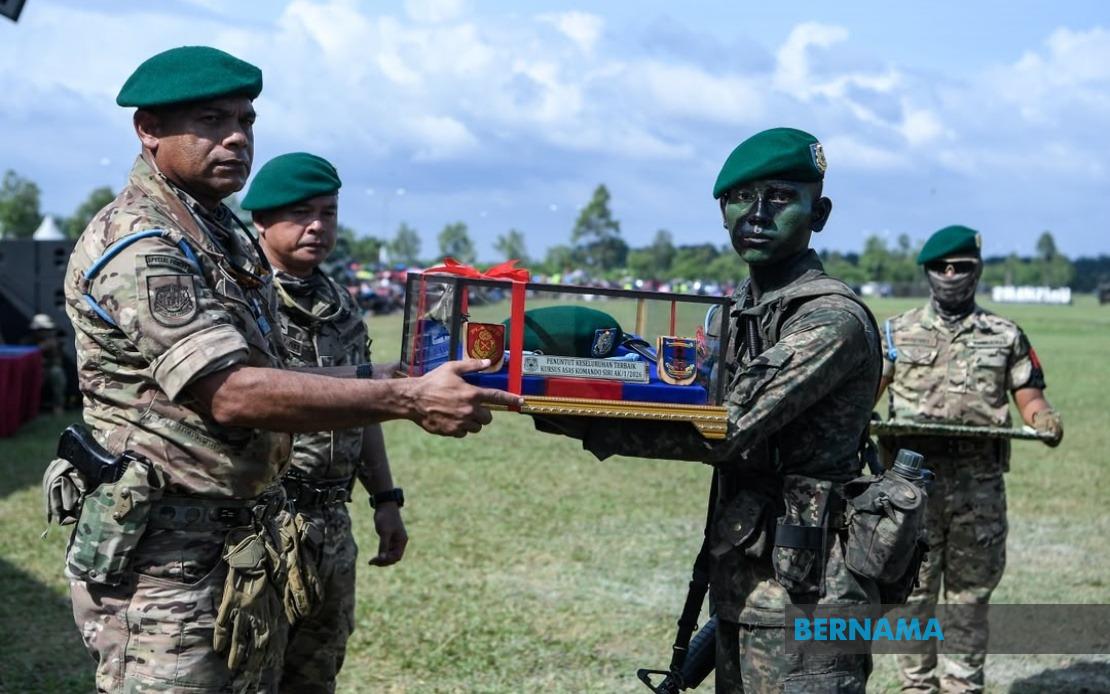
Second Lieutenant Muhammad Fadli Jamalluddin's journey through Malaysia's elite commando training programme encapsulates a narrative of military grit that resonates beyond the barracks. The 24-year-old officer from Ampang, Kuala Lumpur, has become the standout graduate of the Basic Commando Course Series AK/1/26, crowned Best Overall Trainee after initially stumbling on the same path. His achievement, announced at the closing ceremony held at Universiti Sultan Abdul Halim Mu'adzam Shah in Kuala Ketil, underscores the demanding nature of Malaysian military selection processes and the personal fortitude required to succeed within them.
The route to this recognition was neither straightforward nor predictable. Muhammad Fadli's first encounter with the Basic Commando Course in 2024 ended in failure, a result that could have derailed ambitions forged during his secondary school years. Rather than accepting the outcome as final, he returned for another attempt, demonstrating the psychological resilience that distinguishes commando-track officers from their peers. This comeback mentality reflects broader expectations within Malaysia's armed forces, where military culture prizes perseverance and the ability to convert setbacks into catalysts for improvement. His decision to rejoin the course placed him among a select cohort preparing for one of the military's most gruelling examinations.
The three-month intensive programme that Muhammad Fadli conquered combines physical punishment with intellectual demand in measures that few civilians fully appreciate. Land and sea training components tested not only cardio-vascular capacity and muscular endurance but also decision-making under extreme fatigue. The training regimen included marching distances exceeding 100 kilometres, an ordeal that Muhammad Fadli experienced firsthand during the eighth week, when he faced another potential washout after failing a critical exercise. At that moment, with months of sacrifice already invested, the psychological temptation to withdraw must have been considerable. Yet his refusal to accept this second setback, despite advice from colleagues to abandon the effort, reveals the mental fortitude that separates successful commando trainees from those who cannot sustain the commitment required.
Muhammad Fadli's educational foundation provided intellectual scaffolding for his military career. Armed with a Bachelor's degree in Global Policing and Intelligence with Honours from the National Defence University of Malaysia (UPNM), he brought analytical capability to a role demanding both brawn and brain. His commissioning into the Royal Malay Regiment in 2024 followed this academic preparation, but the commando track represented a deliberate choice to pursue what he identified as the military's most challenging pathway. Joining the 21st Special Service Group positioned him within Malaysia's premier special operations unit, an environment where competence and dedication serve as minimum entry requirements rather than career aspirations.
The personal dimensions of Muhammad Fadli's achievement carry weight beyond institutional recognition. His aspiration to make his father proud drove much of his motivation, particularly meaningful given his father's health struggles over the preceding year. The stroke suffered by his father transformed the commando course from a professional milestone into a family endeavour, where personal sacrifice and dedication became offerings of respect and gratitude. This family-centred motivation reflects cultural values prevalent throughout Malaysian society, where military service frequently intertwines with filial duty and multigenerational honour. His regret at his father's absence from the closing ceremony speaks to the emotional stakes embedded within his accomplishment.
The Basic Commando Course Series AK/1/26 cohort comprised five officers and 33 other ranks who successfully navigated the full curriculum, representing a completion rate that signals the programme's genuine difficulty. Not all participants who commence such training achieve graduation; attrition rates in commando courses worldwide typically reach 30 to 50 percent, reflecting the cumulative toll of physical, mental, and psychological demands. The fact that Muhammad Fadli not only completed the course but emerged as the standout performer elevates his achievement within this competitive environment. His recognition as Best Overall Trainee by Colonel Nordin Abu, Commandant of the Special Warfare Training Centre (PULPAK), represented institutional validation of excellence across multiple dimensions of commando competency.
Muhammad Fadli's articulation of what commando service demands reveals mature understanding of the role's complexity. He emphasised that physical prowess alone proves insufficient; successful special operations officers must combine strength with intellectual acuity, capable of executing missions demanding careful planning and sound tactical judgement. This dual requirement—athlete and strategist—distinguishes commando track personnel from conventional military officers. The appreciation he expressed for these demands suggests he grasps the operational contexts in which he may eventually deploy, whether in domestic counter-terrorism scenarios or international peacekeeping environments where Malaysian special forces contribute. This conceptual clarity indicates preparation for roles extending well beyond physical performance.
The timing of his achievement carries significance within Malaysia's broader military modernisation trajectory. As the armed forces navigate evolving security threats ranging from transnational terrorism to maritime domain challenges, the development of highly trained special operations personnel becomes increasingly critical. Officers like Muhammad Fadli represent the human infrastructure through which Malaysian defence capabilities operationalise. Their training, motivation, and demonstrated resilience directly translate into operational readiness across multiple operational domains. The investment in rigorous commando training programmes yields returns in enhanced capability and improved crisis response capacity.
Muhammad Fadli's journey also illustrates the transformation implicit in military training. The secondary school student who aspired to serve underwent systematic development through university preparation, officer commissioning, and now elite commando qualification. This progression reflects institutional mechanisms through which Malaysia identifies and develops leadership talent. The progression from initial failure through persistent effort to ultimate recognition exemplifies the military's capacity to extract maximum potential from committed individuals willing to endure hardship in pursuit of professional excellence. This developmental model, replicated across numerous cohorts, compounds institutional strength across multiple generations of officers.
Looking forward, Muhammad Fadli's career within 21 GGK will likely involve contributions to operations demanding precisely the qualities he demonstrated during training: resilience under adversity, mental clarity amid chaos, and commitment to collective objectives despite personal cost. His family's investment in his ambition, particularly his father's endurance through health challenges, provides continuing motivation for performance. The award itself, while validating his individual excellence, also represents recognition of the institutional values embedded within Malaysia's special operations community—values prioritising merit, perseverance, and professional mastery. His path from initial setback to crowned trainee offers inspiration not merely within military contexts but across Malaysian society, demonstrating that failure need not be final and that determination can convert disappointment into opportunity.

