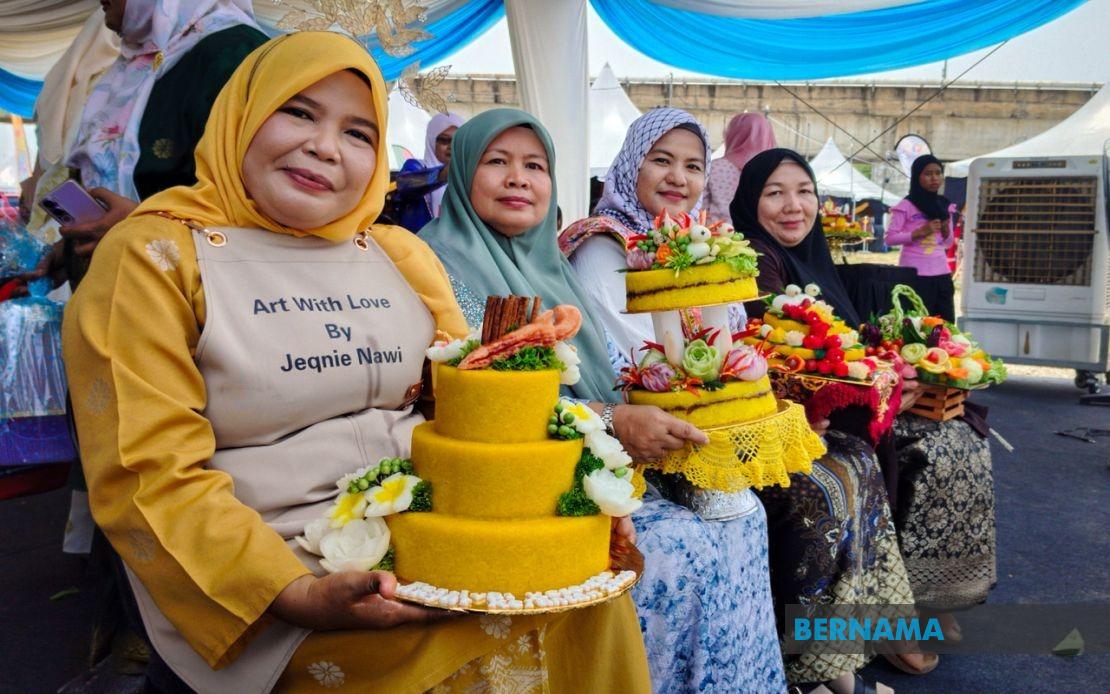
Nortiny Nawi's decision to leave her position as a resort marketing officer four years ago proved transformative when she channelled her deep passion for cooking into a specialised craft. Today, operating from her modest home in Kampung Gong Cokoh, Pasir Puteh, the 46-year-old has established a flourishing enterprise centred on creating elaborate pulut kuning arrangements—elaborately decorated turmeric-infused glutinous rice presentations that have become highly sought-after for ceremonial dining occasions throughout Kelantan.
The transition from corporate work to artisanal food crafting reflects a broader trend across Southeast Asia where individuals are leveraging traditional culinary knowledge to create sustainable livelihoods. For Nortiny, the journey began during her teenage years when she first developed an interest in cooking, though the demands of her previous career temporarily sidelined her ambitions. Her turning point came while working at the resort, where she spent her available time observing kitchen operations and absorbing culinary techniques from professional chefs. This informal apprenticeship deepened her understanding of food preparation and design, ultimately inspiring her to pursue cooking as a full-time endeavour.
What distinguishes her business model is the premium positioning of pulut kuning as more than mere sustenance—it functions as an ornamental centrepiece for significant life events. Her creations command prices ranging from RM100 to RM280 per arrangement, with pricing determined by the weight of glutinous rice used and the intricacy of decorative elements. This pricing strategy reflects both the labour intensity involved and the perceived value customers assign to bespoke, handcrafted presentations for celebrations such as thanksgiving feasts, birthday parties, and makan beradab (formal bridal dinners).
The demand for her work has accelerated remarkably, with booking requests arriving almost daily and capacity allowing her to accept up to six orders per day depending on design complexity. Her clientele now spans individual households, educational institutions, and government departments across Kelantan, demonstrating the wide appeal of her craft across diverse customer segments. This diversified customer base provides business stability while validating market demand for culturally-rooted culinary artistry.
Recognition of her exceptional skill came when Nortiny won the top prize at the recent Kelantan Folk Arts Festival, where she exhibited an eight-kilogramme pulut kuning arrangement embellished with intricate floral carvings fashioned from white radish. This achievement serves as both personal validation and marketing credibility, distinguishing her work within an increasingly competitive creative economy. Such recognition underscores how traditional food crafts can gain contemporary cultural relevance when executed with genuine artistic vision.
The operational demands of her business reveal the hidden complexities behind what appears as simple food preparation. Unlike cake-making or other baked goods that can be prepared in bulk and refrigerated, pulut kuning requires synchronised timing for each order. Nortiny typically begins work at 3 am, steaming the glutinous rice before undertaking the labour-intensive processes of kneading, cooling, and sculpting the rice into decorative formations. This early-morning rhythm, combined with the physical demands of shaping and decorating each arrangement, requires substantial stamina and commitment.
Despite the taxing nature of her routine, Nortiny maintains that her genuine passion for the craft sustains her motivation through exhausting workdays. Customer feedback serves as a continuous source of inspiration, with compliments and appreciation driving her commitment to technical refinement and creative innovation. This intrinsic motivation, rooted in authentic passion rather than purely financial incentives, appears fundamental to her ability to maintain quality standards and customer satisfaction in what is fundamentally a small-scale, labour-dependent enterprise.
The business holds particular significance within the Malaysian context, where home-based culinary enterprises represent an accessible pathway for skilled individuals—particularly women—to generate substantial income while maintaining flexible work arrangements. Nortiny's venture demonstrates how cultural knowledge and artisanal skills can command premium pricing in contemporary markets, particularly among consumers seeking authentic, locally-produced alternatives to mass-manufactured offerings. Her success illustrates the economic potential embedded within traditional food crafts when combined with effective marketing and consistent quality delivery.
Looking forward, Nortiny envisions expanding her operations to larger premises as sustained demand continues. This growth trajectory reflects both her business acumen and the genuine market opportunity for culturally-grounded culinary products in Malaysia. Scaling operations while preserving the handcrafted quality that distinguishes her offerings presents the logical next challenge, requiring careful management to avoid compromising the artisanal character that customers value. Her aspirations for expansion signal confidence in long-term market viability for her specialised product category.
The broader implications of her entrepreneurial journey extend beyond individual success to encompass questions about economic diversification and cultural preservation within Malaysian communities. As younger generations increasingly pursue non-traditional career paths, figures like Nortiny demonstrate how investing in culturally-rooted skills can generate meaningful livelihoods. Her enterprise quietly challenges conventional career progression while validating the economic worth of knowledge held within traditional communities, particularly in regions like Kelantan where cultural heritage remains economically underutilised.

