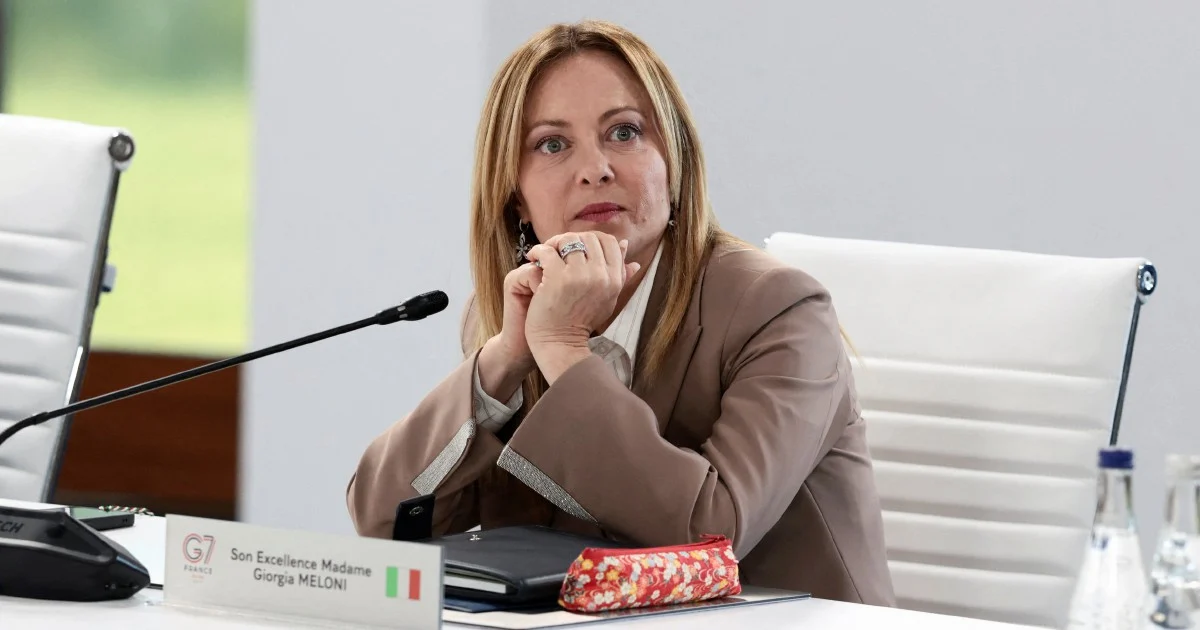
When Donald Trump took his oath of office for his second presidential term in 2025, one European leader alone received an invitation to the inaugural ceremony: Italian Prime Minister Giorgia Meloni. That singular honour suggested the beginning of an unusually warm chapter in relations between the Italian government and Washington—a partnership that would grant Rome preferential standing among its EU peers at a time of significant geopolitical flux and economic uncertainty across the continent.
Meloni's initial embrace of the Trump administration appeared to position Italy as a unique bridge between the incoming American presidency and the broader European establishment. As the leader of a major Western economy and a member of the G7, she held considerable diplomatic leverage. Her presence at Trump's inauguration signalled not merely goodwill but the potential for Italy to shape how the new administration engaged with European capitals. For many observers across the continent, her willingness to engage warmly with Trump suggested she might leverage that relationship to secure favourable terms for Italian businesses, agricultural exports, and geopolitical interests.
Yet within months of that apparently promising beginning, the relationship deteriorated markedly. Meloni found herself increasingly at odds with Trump administration policies, particularly regarding trade measures and their impact on European economies. What had been framed as a golden era of transatlantic partnership became strained by concrete disputes over tariffs, investment regulations, and the political conditions attached to American economic relationships. The Italian Prime Minister's criticism of these policies grew progressively sharper, moving from diplomatic caution to more forthright opposition.
For Malaysian and Southeast Asian observers, this shift carries substantial implications. Italy's repositioning signals that even close allies of the Trump administration may struggle to reconcile his protectionist economic agenda with their own national interests. The European Union's collective response to American trade policies will shape the global trading environment that affects ASEAN nations directly, through supply chains, investment flows, and market access. If Italy—initially positioned as a Trump whisperer—cannot secure lasting favourable terms, the prospects for smaller economies negotiating with Washington appear equally challenging.
Meloni's transformation from insider to critic also reflects the profound tensions within Trump's transatlantic strategy. The administration's approach to NATO, trade, and security commitments has proven sufficiently contentious that even sympathetic European leaders cannot maintain uncritical support. This suggests that ideological affinity or personal rapport with Trump may prove insufficient to protect allies from policies that threaten their economic wellbeing or security arrangements. Italian industries, particularly manufacturing and agriculture, face real harm from proposed tariffs, making Meloni's shift from accommodation to resistance politically inevitable for a leader accountable to domestic constituencies.
The Italian Prime Minister's evolving stance demonstrates the limits of bilateral charm offensives in an era defined by structural economic competition. While her attendance at Trump's inauguration was meant to establish exclusive access and influence, it did not ultimately insulate Italy from policies that conflict with European interests. This pattern suggests that European leaders across the political spectrum must coordinate collective responses rather than pursue isolated relationships with Washington—a lesson particularly relevant given the diverse ideological orientations of current EU governments.
For the broader Indo-Pacific region, Italy's experience underscores the complexities of navigating American foreign policy under Trump. Regional powers considering closer alignment with Washington face similar dilemmas: initial diplomatic goodwill and bilateral cooperation may not translate into exemptions from protectionist economic measures or security arrangements that fundamentally reshape regional balance. The question facing leaders from Tokyo to Jakarta to Kuala Lumpur is whether proximity to American decision-makers offers sufficient protection against policies driven by nationalist economic priorities.
Meloni's public criticism of Trump administration positions also reveals the limitations of quiet diplomacy. As a right-wing populist leader with considerable personal ideological affinity for Trump's nationalist rhetoric, she might have been expected to weather controversial policies without dissent. Yet the concrete economic damage to Italian exporters and producers forced her hand. This suggests that when economic interests diverge sufficiently from political alignment, even friendly governments must speak out—a reality that constrains the Trump administration's ability to build durable coalition support for its policies.
The deterioration in the Meloni-Trump relationship carries additional significance for Europe's strategic autonomy debate. A Europe that cannot rely on preferential bilateral arrangements with Washington must develop independent capacity in defence, technology, and economic policy. This imperative affects global markets, technology standards, and investment rules in ways that ripple across Southeast Asia. If European governments cannot individually secure favourable treatment from the Trump administration, they will increasingly pursue collective alternatives—potentially through strengthened EU institutions or through deepened engagement with non-American partners including China and India.
Looking ahead, Meloni's trajectory suggests that European leaders, regardless of their personal or ideological orientation toward Trump, will ultimately prioritise protecting their domestic economies. This practical realism will likely push even sympathetic European governments toward greater distance from Washington on crucial economic questions. For Malaysian policymakers and businesses, this shift offers both opportunity and caution: opportunity to engage with European partners seeking alternatives to American-dependent trade relationships, and caution that the stability of global supply chains and trade relationships cannot be taken for granted in an era of American policy unpredictability.

