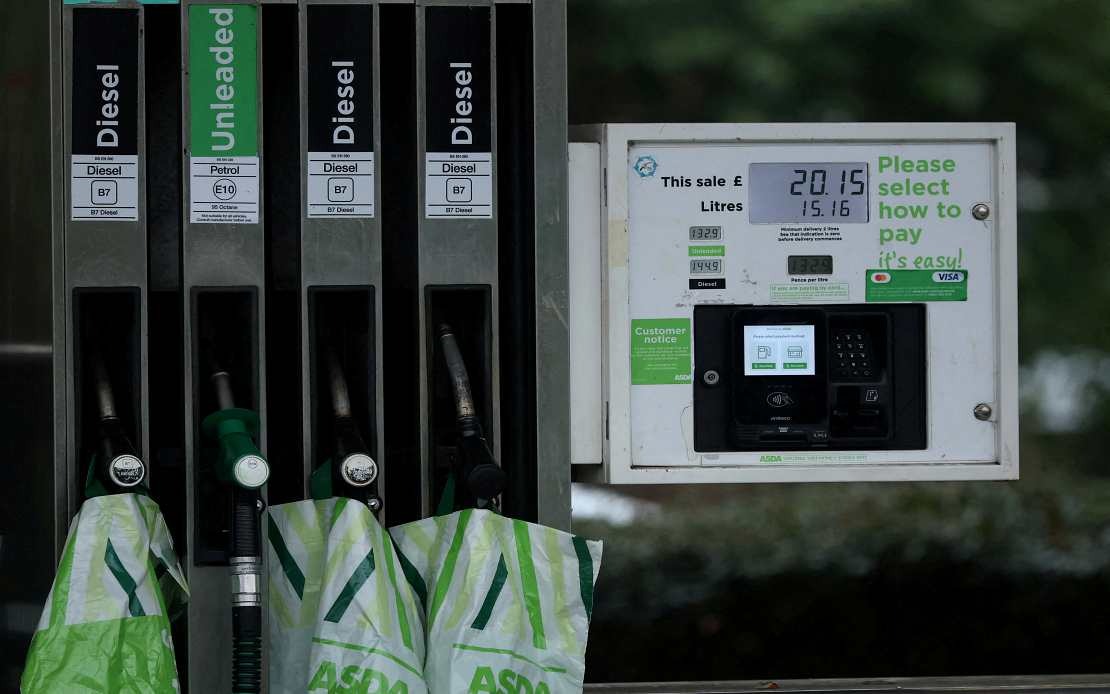
The cost-of-living crisis gripping Britain has spawned an unexpected consequence at petrol forecourts: a dramatic increase in fuel theft that shows no signs of abating. Data compiled by Forecourt Eye, a fuel theft prevention firm, reveals that drivers have collectively made off with nearly £200,000 worth of petrol and diesel each day since hostilities in Iran escalated on February 28. This troubling pattern underscores how economic pressures are reshaping consumer behaviour and creating fresh challenges for independent retailers already battling wafer-thin margins.
The statistics paint a picture of escalating criminal activity across Britain's 8,359 petrol stations. During the five months following the outbreak of the Iran conflict, incidents of fuel taken without payment climbed by 20 percent when compared to the same period beforehand. More strikingly, the monetary value of stolen fuel surged by 48 percent over the identical timeframe. This disparity between volume and value tells a revealing story: while the number of thefts increased by a fifth, soaring pump prices meant that each theft netted thieves substantially more fuel than before the crisis began. The average daily loss across the country reached £194,000, based on analysis of 550 petrol station installations that form a representative sample of the broader market.
Petrol prices have become the primary driver of both theft and desperation. The average litre of unleaded petrol climbed to 160 pence on the day of reporting, representing a jump of approximately 27 pence since the conflict's onset and marking the highest level seen in three and a half years. Diesel has proven even more volatile, rising roughly 37 pence per litre to 179 pence. For households already stretched thin by inflation, heating costs, and energy bills, the cumulative effect has proven unbearable for some motorists, pushing them toward illegal measures to keep their vehicles running.
The composition of fuel theft offences reveals important nuances about who is stealing and why. First-time offenders accounted for 23 percent more incidents during the post-conflict period, with a 26 percent increase in the volume they took. Repeat offenders showed more modest increases of 17 percent in incidents and 20 percent in volume. This data suggests that desperate ordinary drivers—not just habitual criminals—have begun resorting to petrol station theft, driven by genuine economic hardship rather than organised criminal enterprise. The distinction matters because it suggests the problem will persist as long as fuel prices remain elevated and household budgets remain under pressure.
The theft incidents themselves fall into two main categories. Drive-offs occur when drivers simply depart without any pretence of payment, while "no means of payment" incidents involve customers who fill their tanks and then claim inability to settle the bill. Both represent significant losses for forecourt operators, yet the latter creates particular frustration because it occurs after the transaction has already taken place, leaving attendants powerless to prevent it.
For independent petrol retailers, these losses carry outsized consequences. Ben Lawrence, director of Lawrences Garages, which operates five stations in Norfolk and Hampshire, highlighted a critical misconception affecting his business and competitors. Many drivers incorrectly believe that branded forecourts—those displaying Shell, BP, or similar corporate logos—are directly operated by these multinational energy companies. This misunderstanding leads some customers to view theft as victimless, reasoning that large oil corporations can absorb the loss. In reality, most branded forecourts are independently operated franchises, meaning a £80 to £90 fuel theft directly impacts the small business operator, not the distant petrochemical giant. This perception gap between customer assumption and operational reality creates a particularly troubling dynamic.
Gordon Balmer, executive director of the Petrol Retailers Association representing independent stations, has reported a disturbing secondary consequence of rising prices: increased verbal and physical abuse directed at forecourt staff. Employees, who have absolutely no control over pump pricing, face mounting hostility from frustrated customers. This combination of economic pressure, rising crime, and workplace aggression threatens the viability of Britain's independent fuel retail sector and the employment it provides.
Historically, fuel theft was predominantly the preserve of career criminals and those engaged in organised criminal networks. Lawrence's observation that this profile has shifted carries significant weight. The problem has become democratised, affecting individuals across multiple socioeconomic strata who would not ordinarily resort to theft but feel compelled by circumstances beyond their control. This normalisation of fuel theft represents a broader social indicator of economic distress permeating British society.
In response to these mounting challenges, the industry is mobilising technology-based solutions. Forecourt Eye has partnered with Facewatch to provide free access to crime reporting technology for its customer base. This system allows operators to more efficiently document fuel thefts, shoplifting, and other criminal incidents. The partnership extends further with an optional live facial recognition network that alerts operators when known offenders appear at their premises. Michelle Henchoz, Forecourt Eye's managing director, has framed this integration as essential for protecting both forecourt operations and convenience store sections as offending patterns become increasingly organised and sophisticated.
For Malaysian readers observing these developments, the situation offers instructive parallels regarding how energy price shocks propagate through economies and reshape social behaviour. Malaysia's own experience with fuel subsidies and price deregulation demonstrates how abrupt or sustained price increases can trigger unintended consequences across society, from consumer behaviour shifts to informal economic activity. The British experience illustrates how cost-of-living crises, whether originating from geopolitical conflicts or supply chain disruptions, create pressure points where normally law-abiding citizens cross ethical and legal boundaries. As Southeast Asian economies navigate post-pandemic recovery and inflationary pressures, understanding these dynamics becomes increasingly relevant to policymakers and business operators across the region.
The collaboration between retailers and technology firms signals broader trends in how businesses respond to crime in economically stressed environments. Rather than simply accepting losses, the industry is investing in detection and prevention infrastructure, mirroring approaches emerging across Europe as businesses grapple with elevated theft across multiple sectors. For independent operators already operating on slim margins, this additional investment burden creates fresh pressure even as it offers tools to reduce losses.

