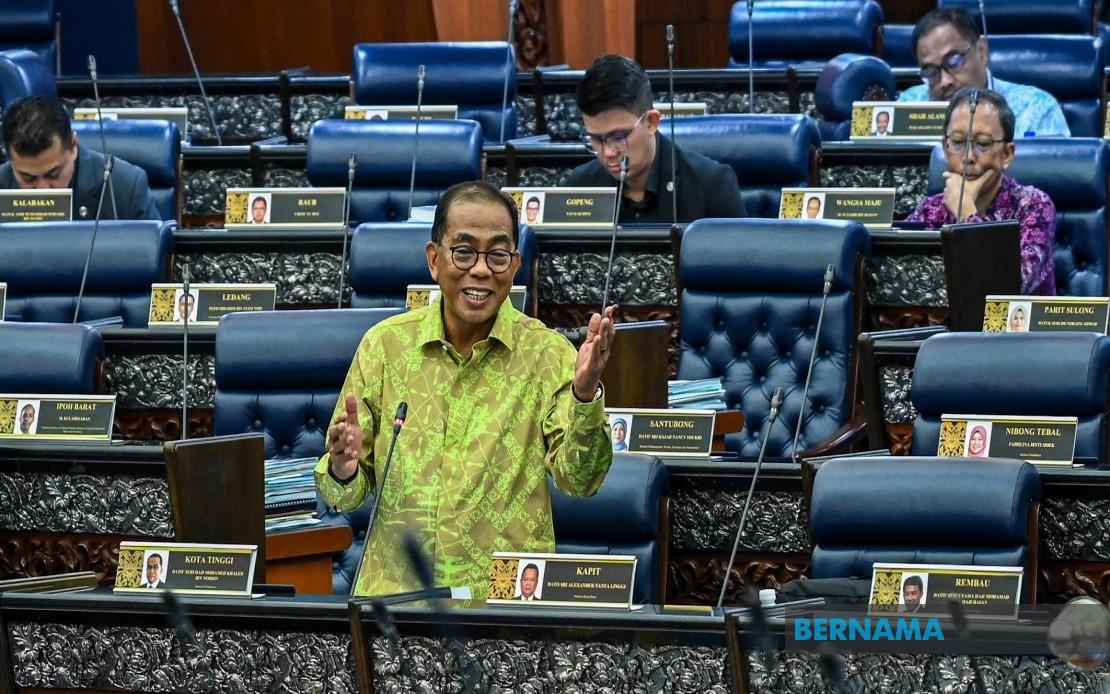
A comprehensive investigation into the fatal grenade explosion at Hobart Camp Firing Range in Gurun, Kedah will be concluded and submitted by July 23, Defence Minister Datuk Seri Mohamed Khaled Nordin announced in Parliament on July 16. The incident, which occurred on June 16 during a Combat Enhancement Training exercise, resulted in the deaths of Lance Corporal Siti Khadijah Sungip and Sergeant Norazmi Abu Bakar, who sustained severe injuries in the blast inside a bunker and died while being transported to Sultan Abdul Halim Hospital in Sungai Petani.
The delay in finalising the board of inquiry report reflects the Defence Ministry's commitment to ensuring a thorough examination of all technical and procedural aspects surrounding the tragedy. A dedicated inquiry board was convened on June 17, the day immediately following the incident, and submitted preliminary findings to the 2nd Division Headquarters and Army Western Field Command Headquarters for review. When the ministry received the board's report on July 13, officials identified gaps that required further witness testimonies and possibly additional statements from other individuals with direct knowledge of the incident.
Mohamed Khaled emphasised that the comprehensive nature of the inquiry is essential before drawing definitive conclusions about what caused the explosion. The decision to recall witnesses and seek additional statements represents a methodical approach to uncovering the precise circumstances that led to the deaths of the two servicemen. This deliberate pace may frustrate those seeking immediate answers, but it underscores the complexity of investigating accidents involving military explosives, where even minor procedural deviations can have catastrophic consequences.
The tragedy has prompted immediate and far-reaching changes to training protocols across Malaysia's armed forces. Army Chief General Tan Sri Azhan Md Othman ordered an immediate suspension of all grenade-throwing exercises across the military following the June 16 incident. Additionally, a comprehensive special inspection was directed for all remaining grenades held by the 1st Squadron of the Royal Engineer Regiment, the unit involved in the fatal training exercise. This precautionary measure aims to identify any defective or unsafe ordnance that might pose similar risks during future training operations.
Beyond these immediate responses, the Defence Ministry has outlined several structural improvements designed to enhance safety at military firing ranges nationwide. The installation of closed-circuit television cameras at all firing ranges will create a permanent visual record of training activities, facilitating more detailed post-incident analysis and providing oversight of compliance with safety protocols. Body-worn cameras for personnel conducting explosive training will capture additional perspectives and help identify procedural violations or environmental hazards that static CCTV might miss.
A particularly significant reform involves implementing a casting policy for ammunition and explosives that establishes clear service life limits for ordnance. Military explosives degrade over time, and without proper tracking systems, units risk using grenades or other munitions that have exceeded safe operational parameters. This policy formalises the retirement and replacement of aging ordnance, ensuring that training exercises rely only on grenades and explosives within their designated operational window. Such measures reflect international best practices in military ordnance management.
For Malaysian readers and military observers across Southeast Asia, this incident highlights the inherent dangers of training with live explosives, regardless of how experienced the personnel involved. Lance Corporal Siti Khadijah Sungip represented a new generation of female combat engineers in the Malaysian Armed Forces, making her death particularly significant. The presence of a supervising instructor among the casualties underscores that even the most experienced personnel cannot eliminate the risks associated with training with live grenades.
The incident also raises broader questions about training culture within the armed forces. While the Defence Ministry has presented a coordinated response emphasising improved safety measures, the underlying question of whether training methods themselves require fundamental reassessment remains largely unaddressed in public statements. Other militaries have increasingly incorporated virtual reality and simulation-based training for explosive handling to reduce live-fire training requirements while maintaining competency levels.
The parliamentary response to the inquiry reflects a balanced approach between accountability and institutional protection. Datuk Mohd Isam Mohd Isa's question about preventing recurrence of such incidents suggests sustained political interest in training safety, though the relatively limited legislative focus on military matters in Malaysian parliamentary debates suggests such scrutiny may be episodic rather than systematic. The timing of the full report release also signals that the Defence Ministry expects the inquiry to provide sufficient clarity to manage public and political expectations without requiring supplementary investigations.
For military personnel and their families across the region, this incident and the subsequent safety reforms carry particular resonance. Training-related fatalities, while statistically rare in modern militaries, represent a sobering reality of military service. The systematic approach to improving safety protocols—from ordnance management to surveillance infrastructure—demonstrates institutional learning, even as the fundamental risks of explosives training persist. The two servicemen who died on June 16 effectively prompted changes that may protect countless others engaged in similar training exercises in the years ahead.

