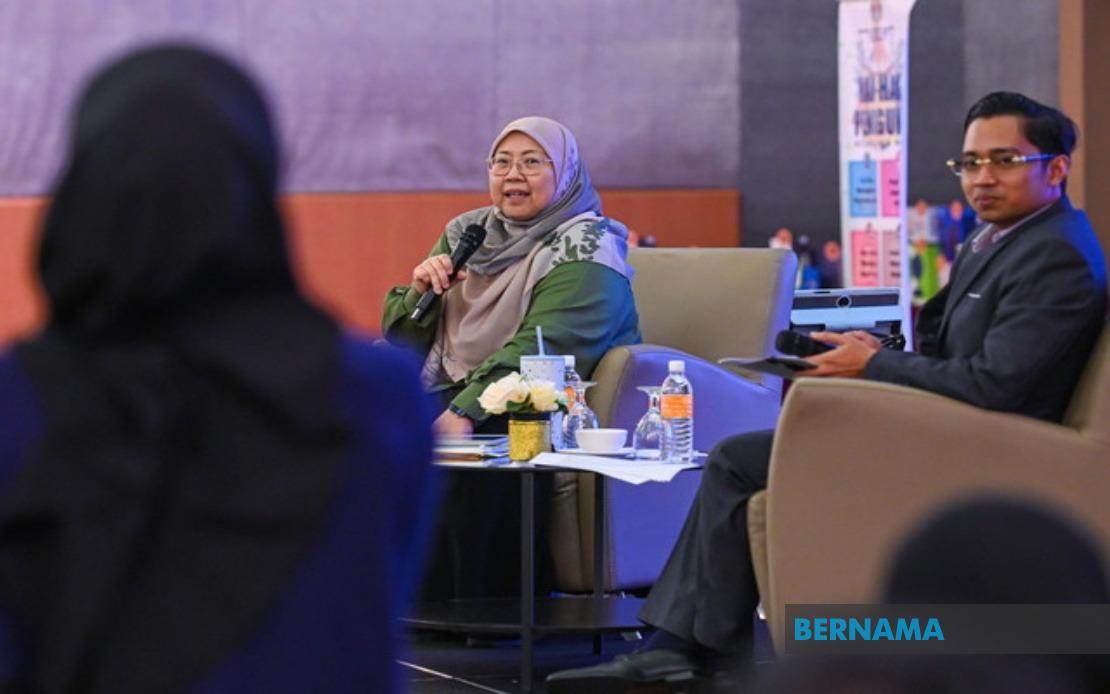
The Pakatan Harapan coalition is banking on sustained momentum as campaigning enters its final stretch ahead of Negeri Sembilan's state election, with party leadership projecting strong voter confidence in its bid to retain control of the legislature. Speaking in Seremban, PKR secretary-general Datuk Dr Fuziah Salleh conveyed optimism about the coalition's organisational preparedness and the reception its candidates have received from communities across the state, suggesting that messaging strategies have resonated effectively in both demographic contexts.
Fuziah highlighted the coordinated nature of the coalition's campaign infrastructure, emphasising that voters have responded positively to the slate of candidates fielded by PH and its constituent parties. The party leadership's framing of campaign performance as evidence of public confidence reflects an attempt to project inevitability around a renewal of the coalition's electoral mandate, a common tactical manoeuvre in final campaign phases when momentum becomes as important as policy substance.
The PKR chief noted that the coalition has tailored its messaging to distinct voter constituencies, deploying different policy emphases depending on whether engagement occurs in rural or urban settings. In less developed areas, the campaign has prioritised bread-and-butter concerns affecting agricultural communities and smaller towns, while in urban centres the focus has shifted toward municipal governance issues and quality-of-life concerns that resonate with city dwellers. This granular approach to issue prioritisation suggests that PH's campaign apparatus has invested effort in understanding local preoccupations rather than imposing a uniform state-wide narrative.
Central to the coalition's campaign strategy is the performance record of incumbent Menteri Besar Datuk Seri Aminuddin Harun, who serves as PH's candidate for the Linggi state seat and will seek renewal of his mandate in the August 1 election. Fuziah argued that eight years of governance under PH stewardship have translated into tangible benefits that voters can point to, implicitly suggesting that administrative competence and delivery of services provide stronger foundations for electoral endorsement than abstract political promises.
The invocation of popular shorthand—Aminuddin referred to colloquially as "Tok Min"—underscores efforts to cultivate a personal connection between the sitting chief minister and ordinary voters, a relationship-building strategy that becomes particularly important in a state election where local personalities and regional governance records carry more weight than federal political narratives. By anchoring campaign messaging to the performance of a well-regarded chief minister, PH appears to be attempting to insulate itself from potential backlash over federal policy positions or controversies that might otherwise complicate its prospects at the state level.
Fuziah's comments come as the election timeline accelerates toward its conclusion. Early voting has been scheduled for July 28, providing an initial test of turnout and voter enthusiasm, while the formal polling date of August 1 will determine the composition of the state assembly. The compressed campaign window means that final messaging and organisational activities become increasingly critical, as parties attempt to consolidate support and mobilise their respective voter bases before ballots are cast.
For Negeri Sembilan, a state with a population of roughly one million people and a legislature comprising 36 seats, the election carries implications beyond the state boundary. A strong performance by PH would signal resilience in a key peninsular state where the coalition faces competition from Perikatan Nasional and independent challengers seeking to capitalise on any dissatisfaction with incumbent governance. Conversely, losses would suggest vulnerability to broader anti-government sentiment or organisational weakness.
The timing of the Negeri Sembilan election places it among a series of subnational electoral contests that will collectively reveal whether PH's federal reform agenda has strengthened its position in state-level politics or whether regional dynamics have tilted in favour of rival coalitions. Southeast Asian observers frequently track Malaysian state elections as barometers of political sentiment, since they provide more granular data about voter preferences than federal polls conducted once every five years.
Fuziah's public statements represent an exercise in confidence-building aimed at multiple audiences simultaneously—reassuring PH supporters that the coalition commands sufficient organisational capacity and public support to win, signalling to wavering voters that backing the incumbent represents the safer choice, and sending a message to rival parties that PH's machinery is operating effectively. In campaign politics, perceptions of momentum often become self-fulfilling prophecies, as voters gravitate toward perceived winners and donors or volunteer activists commit resources to campaigns perceived as viable.
The emphasis on positive voter feedback also reflects a deliberate choice to avoid defensive posturing over specific policy failures or controversies that might otherwise dominate campaign discourse. By framing the election as a straightforward choice between continued PH stewardship and uncertainty under alternative governance arrangements, campaign messaging attempts to keep attention focused on what the coalition presents as its strongest asset: an eight-year record of state-level administration that Fuziah characterised as delivering tangible benefits to voters across multiple constituencies and demographic segments.

