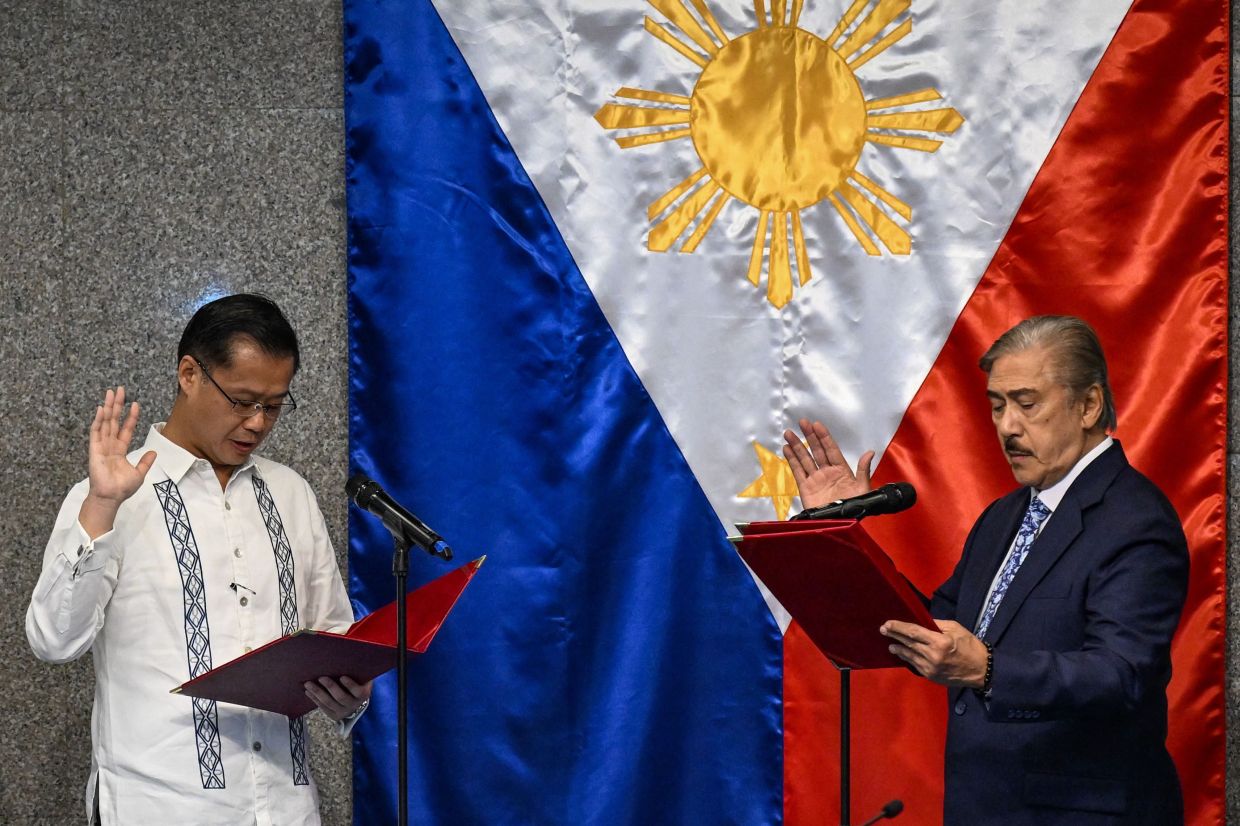
Senator Sherwin Gatchalian has been elected president of the Philippine Senate, marking a significant upheaval in the chamber's leadership structure. The 24-member Senate convened for a special session on Wednesday, June 17, where 13 lawmakers cast their votes to install Gatchalian in the top post. This minimum threshold proved decisive as political alignments shifted unexpectedly in recent days, culminating in the removal of Alan Peter Cayetano, who had held the position for just over a month.
The pathway to Gatchalian's elevation reveals the fluid nature of Senate politics in Manila. On June 3, an initial bloc of 12 senators had already moved to elect Gatchalian as Senate president pro tempore, effectively signalling their intention to dislodge Cayetano. However, the move stalled because Senate procedure requires 13 votes to conduct official business related to electing or removing Senate officers—a technicality that Cayetano seized upon to maintain his position. At that juncture, the math appeared to favour Cayetano's survival, as supporters of the competing factions remained locked in a standoff.
The decisive moment came when Senator Joel Villanueva switched camps. Villanueva had previously aligned with Cayetano but ultimately joined forces with Gatchalian's faction, providing the critical 13th vote needed to proceed with the formal election. This realignment fundamentally altered the arithmetic, a reality that Cayetano acknowledged on Tuesday before the full Senate vote. Following conversations with Villanueva, Cayetano recognized the futility of further resistance and signalled his willingness to relinquish the presidency, effectively conceding before the special session convened.
Gatchalian brings substantial political credentials to the Senate presidency. The lawmaker previously served as Mayor of Valenzuela City, a municipality in Metro Manila with a population exceeding 600,000 residents. Before his Senate election, he represented his district in the House of Representatives, where he accumulated experience in legislative affairs and constituent services. These background roles position him as a figure with executive experience at the local level and legislative familiarity, though the Senate presidency represents his most prominent position to date.
The instability in Senate leadership reflects broader fragmentation within Philippine congressional politics. Cayetano's ascension to the presidency on May 11 appeared to consolidate a particular coalition's influence, yet the arrangement proved remarkably fragile, lasting merely 37 days before unravelling. Such rapid reversals are not uncommon in Philippine legislatures where personal relationships, factional loyalties, and shifting political calculations frequently override party structures. The willingness of senators to vote against one leadership arrangement and embrace another suggests that underlying consensus remains elusive.
The Senate's operational capacity faces practical constraints that complicate leadership dynamics. The chamber officially comprises 24 members, yet only 22 are currently sitting. Senator Jinggoy Estrada, arrested and detained earlier this month, subsequently faced a 90-day suspension order issued by the Sandiganbayan, the country's anti-graft court, in connection with his graft case. His absence from the chamber effectively removes a vote and diminishes the overall membership count. Meanwhile, Senator Ronald Dela Rosa remains a fugitive from the International Criminal Court, with his current whereabouts unknown. His status as both an ICC wanted person and an absent senator creates a parallel vacancy that affects the body's total voting strength.
These absences carry significance beyond mere numbers. With only 22 active members, the 13-vote threshold required for Senate business now represents a considerably higher proportion of available votes than it would with full attendance. This mathematical reality means that the coalition supporting Gatchalian commands a substantial majority of the sitting chamber, providing him with a secure mandate for his new role. However, the fragility demonstrated by Villanueva's sudden defection indicates that this majority could prove unstable if further realignments occur.
For Malaysian and broader Southeast Asian observers, the Philippine Senate's institutional instability presents an interesting comparative case study. While Malaysian parliamentary politics certainly feature factional tension and coalition shifts, the overt and frequent leadership changes seen in the Philippine Senate are less common in Malaysia's more institutionalised party system. The willingness of senators to alter their positions on fundamental questions of chamber leadership reflects political cultures that prioritize individual and factional advantage over institutional stability or party discipline.
Gatchalian's election also signals potential shifts in policy direction and legislative priorities. As a politician with local government experience and a constituency-focused background, his leadership may emphasise different issues than his predecessor. The Senate presidency typically shapes legislative agendas, determines which bills receive floor time, and influences the chamber's interaction with the executive branch. His predecessor's abbreviated tenure suggests that internal Senate dynamics will remain volatile, and observers should expect ongoing negotiations and potential further realignments as the administration's legislative agenda unfolds.
The political manoeuvering surrounding this leadership transition underscores how procedural rules—such as the 13-vote requirement—become pivotal when coalitions are evenly divided or unstable. Cayetano's initial attempt to exploit the procedural threshold demonstrated how technical rules can provide temporary refuge for endangered leaders. However, once Villanueva crossed over, no procedural mechanism could salvage Cayetano's position. This lesson reveals that in chambers where consensus is weak and loyalty fluid, even formal rules offer only temporary protection against determined opposition.