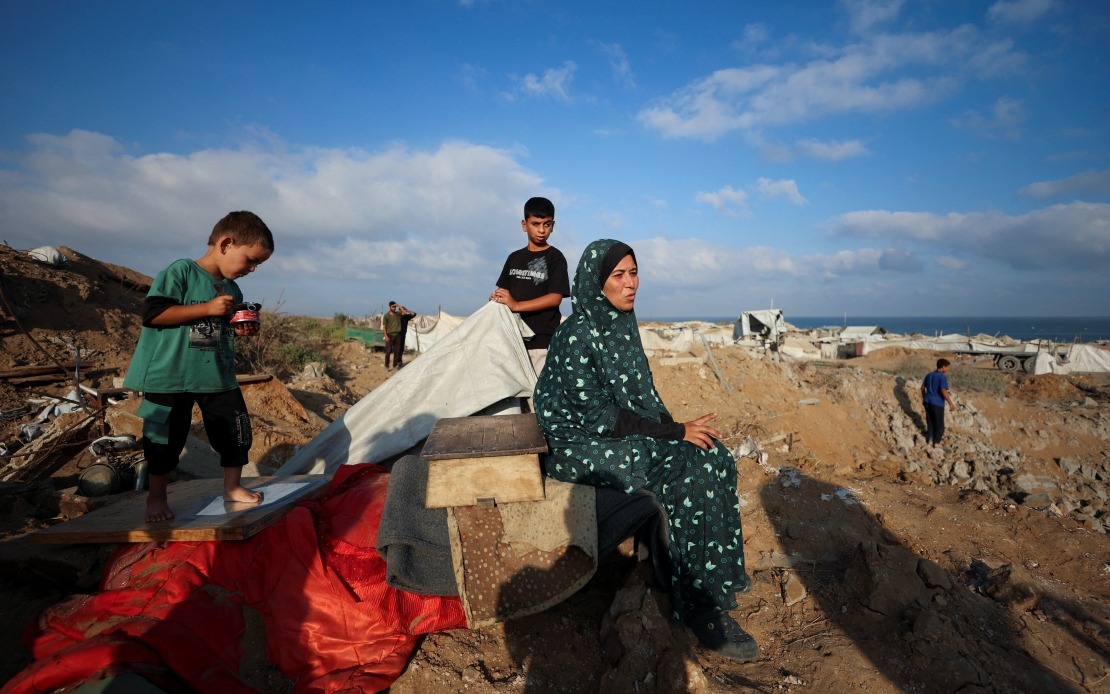
A humanitarian crisis of alarming proportions is unfolding in Gaza, with the latest Integrated Food Security Phase Classification analysis painting a bleak picture for millions struggling to secure adequate nutrition. The assessment, released on Thursday, projects that 1.4 million residents will endure what experts classify as "high levels of acute food insecurity" extending through December 2026—a significant jump from the 1.2 million people recorded during the April to June evaluation period. This deterioration underscores the fragility of recent humanitarian gains and the precarious state of a population still reeling from prolonged conflict.
The scale of the crisis becomes even more stark when examined against Gaza's total population. The IPC analysis indicates that two-thirds of the territory's inhabitants—precisely 67 per cent—are expected to experience either crisis-level conditions or worse situations. Within this broader cohort, approximately 212,000 people face emergency-phase food insecurity, the most severe category before outright famine conditions. All five governorates across Gaza now bear the classification of crisis, meaning the food security emergency is not concentrated in particular areas but instead represents a territory-wide phenomenon affecting every administrative region without exception.
The apparent contradiction between these grim projections and the ceasefire agreement reached in October 2025 reveals the complexity of humanitarian recovery in post-conflict settings. The agreement initially sparked modest improvements, with expanded food assistance programmes reaching approximately 1.49 million people during May alone. These interventions temporarily bolstered food security metrics and nutrition indicators across the population. Yet the analysis cautions that such gains remain extraordinarily vulnerable to reversal, lacking the institutional and economic foundations necessary for sustainable improvement.
The fundamental problem plaguing Gaza's food security lies not merely in the absence of aid, but in the complete collapse of ordinary economic activity that would normally sustain families. The IPC report reveals that 83 per cent of households report having absolutely no income source whatsoever, rendering them entirely dependent on external humanitarian assistance for survival. Rations delivered through aid channels, though vital, remain below the quantities necessary to meet nutritional requirements, leaving families perpetually undernourished despite receiving assistance. This income crisis extends beyond individual hardship; it reflects the broader destruction of Gaza's economic infrastructure and the absence of employment opportunities or commercial activity.
A troubling indicator of humanitarian assistance sustainability has emerged since February, when funding constraints began limiting the delivery of food aid despite ongoing need. International organisations operating within Gaza face mounting operational uncertainties that further restrict their capacity to distribute assistance at previous levels. This decline in programme intensity occurs precisely when populations have become most dependent on external support, creating a dangerous gap between need and provision. The timing proves particularly consequential given that the recent ceasefire represents perhaps the most significant window for rebuilding that Gaza has experienced in recent years.
The counterfactual presented by the IPC analysis starkly illustrates how precarious current conditions remain. Without any humanitarian food assistance whatsoever, the organisation estimates that approximately 1.9 million people—constituting roughly 90 per cent of Gaza's entire population—would face acute food insecurity through the remainder of 2026. This figure underscores how thoroughly the humanitarian system now undergirds basic survival across the territory, and conversely, how catastrophic the human toll would become should assistance programmes collapse entirely. The difference between current projections and this worst-case scenario represents the thin margin separating inadequate nutrition from genuine famine conditions.
The vulnerability assessment extends particularly to the youngest and most medically vulnerable populations. The IPC projects that 74,200 children under five years old will require treatment for acute malnutrition by April 2027, including 11,432 cases classified as severe—a medical emergency requiring intensive nutritional intervention. Simultaneously, some 24,600 pregnant and breastfeeding women require urgent nutritional support, as malnutrition during these critical periods compromises both maternal health and child development during crucial formative months. These demographic categories face the most severe consequences of food insecurity, with impacts that extend far beyond immediate hunger to shape long-term health outcomes and developmental trajectories.
The humanitarian community's assessment identifies three interconnected requirements for preventing deterioration and achieving sustainable improvement. First, humanitarian access must remain sustained and unobstructed, allowing aid organisations to deliver assistance consistently across all governorates. Second, specialised nutrition programmes targeting vulnerable populations must expand significantly beyond current capacity to address the specific medical needs of malnourished children, pregnant women, and other high-risk groups. Third, a permanent cessation of hostilities remains essential, as the underlying fragility of current conditions stems fundamentally from the absence of genuine peace and the perpetual risk that renewed conflict could destroy whatever infrastructure and economic activity is gradually being rebuilt.
For Malaysian and Southeast Asian observers, the Gaza situation carries implications extending beyond humanitarian concern. The international aid system's struggles in Gaza—characterised by funding shortfalls, operational constraints, and the difficulty of sustaining programmes in post-conflict environments—mirror challenges that could emerge in other regional conflict zones or humanitarian emergencies. The case demonstrates how ceasefire agreements, while essential, constitute merely the opening chapter of recovery rather than its conclusion. Sustained international engagement, adequate financing, and commitment to institution-building remain necessary for transforming temporary humanitarian assistance into genuine development and economic normalisation.

