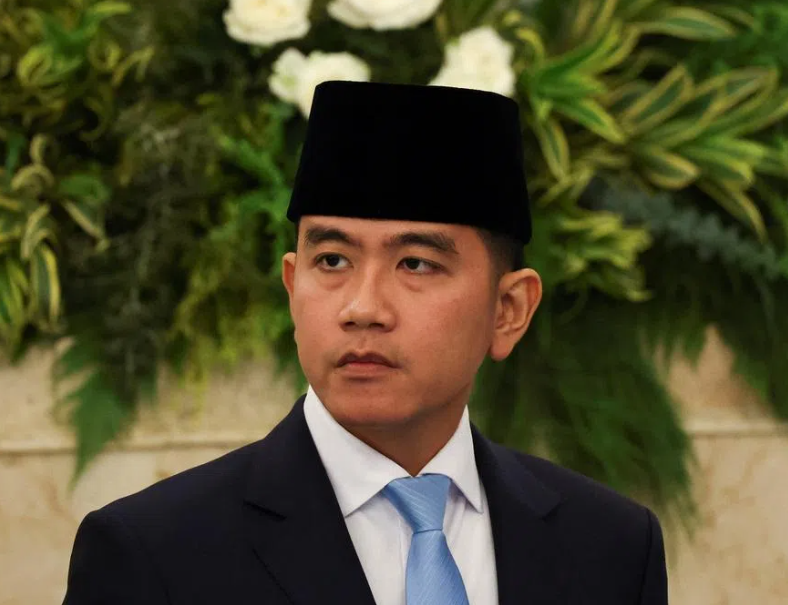
Vice-President Gibran Rakabuming Raka has thrust himself into the centre of Indonesia's student protest movement, inviting five university demonstrators aboard a government aircraft bound for eastern Indonesia just days after they had challenged his administration's flagship initiatives. The June 18 trip followed a closed-door palace meeting where student leaders from Bung Karno University presented research questioning the government's free meals programme and the Red and White Cooperative initiative, an ambitious plan to establish village-run businesses nationwide. The Vice-President's Office released a carefully worded statement in which student representative Muhammad Abdi Maludin praised Gibran's receptiveness and pledged that findings would reach President Prabowo Subianto.
The carefully orchestrated engagement belies deeper uncertainties about both Gibran's authority and his ambitions within the Prabowo administration. At 38 years old, the son of former president Joko Widodo has struggled since October 2024 to carve out a meaningful policy portfolio, a reality that analysts say now compels him to pursue higher visibility through direct engagement with the public. Unlike predecessors who received explicit ministerial portfolios, Gibran has been assigned only broad development responsibilities linked to Papua and the new capital Nusantara—roles that keep him perpetually in the shadows of more powerful officials. The student meeting thus serves multiple purposes: demonstrating responsiveness to public grievance, raising his personal profile during a period of intense scrutiny on government programmes, and positioning himself as a bridge between dissatisfied citizens and the presidency before the 2029 electoral cycle.
Yet the genuine scope of Gibran's influence over the programmes he has engaged with remains severely constrained by institutional realities. The National Nutrition Agency, which oversees the free meals scheme, reports directly to President Prabowo, not the vice-president. Similarly, the Red and White Cooperative initiative operates as a presidential priority programme coordinated across multiple ministries and security agencies without vice-presidential involvement. Researchers at the Center for Strategic and International Studies observe that Gibran's current moves do not represent a shift in actual decision-making authority but rather an attempt to manufacture political relevance. By publicly addressing student concerns and promising to audit findings, he creates an appearance of administrative engagement without the structural power to implement substantive policy modifications.
The free meals programme itself has become a lightning rod for public criticism following a series of corruption scandals at the National Nutrition Agency. In June, agency chief Dadan Hindayana was arrested alongside two former deputies over alleged procurement irregularities, exposing governance failures that generated widespread anger and student-led demonstrations demanding accountability. When Gibran visited East Nusa Tenggara on his four-day eastern tour, he acknowledged programme shortcomings and called for improved governance structures. He simultaneously instructed officials to accelerate implementation in areas with existing infrastructure and promised follow-up on regional concerns—actions designed to signal vice-presidential oversight without overstepping into domains controlled by other agencies.
The student engagement has provoked mixed reactions that reveal the calculated nature of Gibran's outreach. Social media commenters questioned whether the selected student leaders genuinely represented Indonesia's largest and most influential campuses, with some suggesting that inviting more prominent university figures would have lent greater credibility to the exchange. The criticism reflects broader scepticism about whether Gibran sought authentic dialogue or merely curated an opportunity for favourable optics. That scepticism intensified when reporting emerged that student participants had received cash payments, with amounts ranging from 2 million to 20 million rupiah distributed after the palace meeting. The Presidential Palace indicated it was investigating the claims, but the payments reinforced perceptions that Gibran's engagement was a carefully scripted performance rather than genuine democratic participation.
Analysts across Indonesian think tanks interpret Gibran's strategy as a deliberate but ultimately limited attempt to build political capital ahead of potential future candidacy. Researchers at CSIS characterise his approach as cultivating a persona of accessibility and receptiveness—qualities that might distinguish him from other senior officials if he pursues the presidency in 2029. However, scholars including Irman Lanti of Padjadjaran University contend that Gibran's visibility on these initiatives does not reflect actual involvement in their design or implementation. Rather, his actions represent an effort to demonstrate relevance by positioning himself alongside popular grievances while avoiding the harder work of confronting entrenched bureaucratic or security sector interests that control actual programme execution.
The broader context amplifies the significance of Gibran's student engagement within Indonesia's political system. Since taking office alongside President Prabowo, the vice-president has observed a structural marginalisation that contrasts with historical precedent, where vice-presidents often received defined ministerial responsibilities or policy domains. Instead, Gibran occupies a purposefully ambiguous role, linked to symbolic high-profile initiatives while excluded from substantive decision-making on major programmes. This institutional sidelining may reflect either a deliberate strategy to limit his independent power base or simply the reality that President Prabowo has concentrated authority within his inner circle and the security establishment. For Gibran, the consequence is an urgent need to demonstrate political value and build an independent constituency—making student engagement and media visibility attractive despite their limited policy impact.
The implications of this dynamic extend beyond Jakarta's political elite to affect how Indonesian governance functions and how citizens perceive their relationship with authority. When vice-presidents engage in ostensibly responsive governance while lacking actual implementation power, public trust in institutional accountability becomes attenuated. Students and activists may feel heard in the moment while discovering later that their concerns have not translated into structural change, breeding cynicism about democratic participation. The free meals scandal exemplifies this pattern: despite Gibran's pledges to improve governance, the underlying corruption reflected failures in presidential oversight and security sector coordination that a vice-president cannot unilaterally address. For Malaysian and Southeast Asian observers, the Indonesian case illustrates the risks of creating policy vacuums within executive structures, particularly when ambitious junior leaders resort to performative engagement to manufacture influence.
Looking forward, Gibran's trajectory will significantly shape Indonesian politics and the distribution of power within the Prabowo government. If his student engagement generates sufficient public goodwill and media attention, he may gradually accumulate informal influence that translates into actual policy roles, perhaps in future cabinet reshuffles. Conversely, if public scepticism hardens—particularly as cash payments to student participants become more widely known—his efforts at bridge-building may backfire, reinforcing perceptions that he operates through calculated manipulation rather than authentic democratic engagement. The 2029 presidential election timeline, analysts suggest, will serve as the ultimate arbiter of whether his current strategy successfully differentiates him as a viable political alternative or merely exposes the hollowness of his current vice-presidential mandate.

