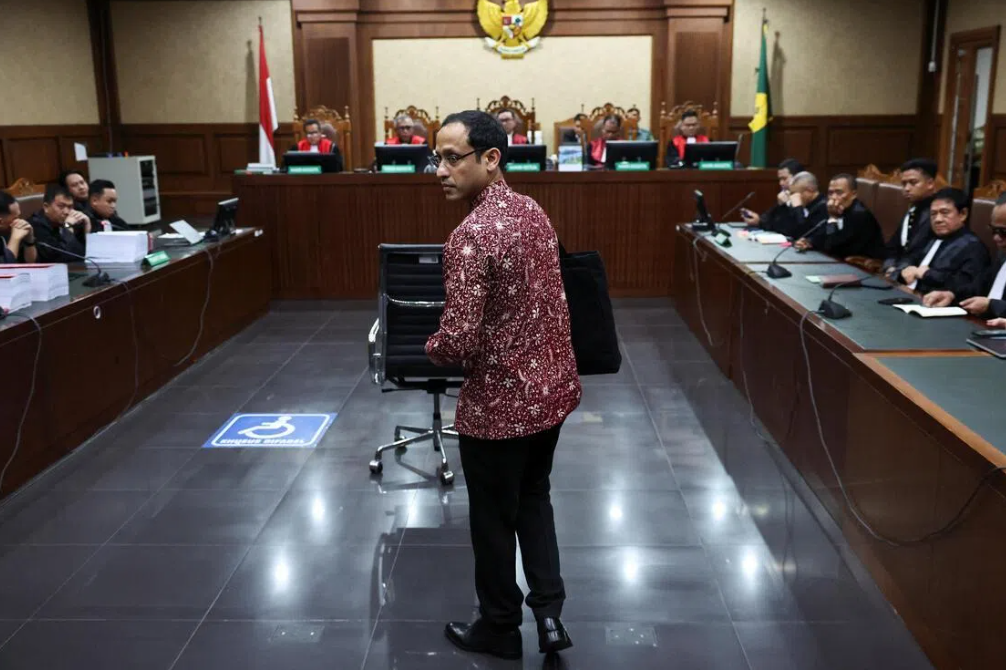
The sentencing of Nadiem Makarim on 30 June represents one of Indonesia's most consequential corruption convictions in recent years, culminating a high-profile trial that captivated public attention and raised broader questions about the intersection of business interests and government policy-making. The Jakarta Corruption Court found the 41-year-old guilty of abusing his authority as education minister in directing a procurement scheme for approximately 1.1 million Chromebook laptops between 2020 and 2022, imposing a decade-long prison term alongside a 1 billion rupiah fine and ordering 809.6 billion rupiah in restitution, with an additional five-year sentence if he fails to repay the amount.
Chief judge Purwanto delivered a ruling that struck at the heart of Nadiem's defence, stating that the manner and purpose of the procurement policy contained "an abuse of authority intended to unlawfully benefit certain parties". The five-judge panel determined that Nadiem had "consciously and intentionally directed" the Chromebook procurement and that his motivations centred on strengthening business relationships between Google and PT Aplikasi Karya Anak Bangsa, his company's parent entity. This determination proved particularly damaging because it suggested that personal business interests, rather than public welfare, had guided a major educational technology initiative during Indonesia's most disruptive pandemic period.
Nadiem's trajectory from celebrated tech entrepreneur to convicted minister reflects a dramatic reversal of fortune for a figure who once epitomised Indonesia's emerging generation of digitally-savvy leaders. Before joining former president Joko Widodo's cabinet in 2019, he had built Gojek into Southeast Asia's first unicorn start-up, expanding the original motorcycle taxi and delivery service into a sprawling super app encompassing food delivery, digital payments through GoPay, and various other services. By the time he entered government, the company was valued at approximately US$10 billion, and Nadiem was recruited specifically to inject a technology-driven approach into the traditionally bureaucratic education ministry.
The corruption charges, formally filed in January 2026, emerged from the very digitalisation initiatives that had defined his ministerial tenure. During the pandemic, when schools across Indonesia were forced to migrate to remote learning, the education ministry launched an ambitious programme to equip educational institutions with Chromebook laptops. Prosecutors alleged that this initiative, rather than being driven by pedagogical merit, was fundamentally designed to benefit Google and Gojek's parent company through inflated procurement values. They contended the scheme caused approximately 2.18 trillion rupiah in state losses and that Nadiem personally benefited by around 809 billion rupiah through related transactions.
The prosecution sought significantly harsher penalties than those ultimately imposed, requesting an 18-year prison sentence alongside 1 billion rupiah in fines and 5.6 trillion rupiah in restitution. Their case rested on the argument that pre-existing ministry research from 2018 had already identified Chromebooks as unsuitable for Indonesia's remote and rural regions, where inadequate internet infrastructure would render the devices ineffective. Additionally, prosecutors highlighted an August 2019 group chat that allegedly contained discussions about a Chromebook-focused digitalisation strategy before Nadiem's formal cabinet appointment, suggesting pre-planned coordination between business and government interests.
Nadiem's defence maintained that the entire initiative represented good-faith efforts to sustain education during an unprecedented national crisis. His legal team argued he received no personal financial benefit from the procurement and pointed out that approximately 97 per cent of the 1.1 million Chromebooks had been successfully delivered to 77,000 schools by 2023. They characterised the case as a fundamental misunderstanding of the policy-making process during emergency circumstances and contended that the timing and substance of the charges reflected political or institutional pressure rather than genuine criminal conduct. Notably, Google itself was not indicted, complicating the narrative of coordinated corporate misconduct.
The trial attracted extraordinary public engagement for a corruption case, with livestreaming of court proceedings, social media-organised watch parties, and dozens of Gojek drivers attending hearings to express solidarity with Nadiem. In one symbolic gesture, he arrived at court wearing a Gojek driver jacket before changing into traditional blue batik attire. The case also received amicus curiae briefs supporting his position, reflecting genuine divisions within Indonesian civil society about whether his actions constituted corruption or simply controversial policy decisions within a minister's legitimate authority.
Nadiem's family background added another dimension to the proceedings. His father, Nono Anwar Makarim, is a prominent lawyer, while his maternal grandfather was an Indonesian independence fighter, positioning Nadiem within Indonesia's intellectual and nationalist elite. This pedigree made his conviction more shocking to many observers and raised questions about whether the judicial system applies consistent standards across social classes. As the trial entered its final stages, Nadiem attempted to reframe the case beyond narrow procurement disputes, arguing that the verdict would signal to Indonesia's youth and diaspora whether the nation remains welcoming to talented professionals willing to transition from the private sector into public service.
In his defence plea delivered on 23 June, Nadiem posed a direct challenge to the court, asking: "Is this country still safe for us to serve?" This framing shifted the narrative from technical questions about procurement procedures to existential concerns about governance incentives and whether Indonesia's institutional structures could retain talented leaders from the business world. The question resonated beyond his specific circumstances, touching on broader anxieties about whether corruption investigations might be weaponised against reformist figures or whether legitimate policy disagreements could be criminalised through selective prosecution.
The conviction carries significant implications for Southeast Asian governance and Indonesia's anti-corruption efforts. While demonstrating institutional commitment to investigating high-profile cases involving powerful individuals, the outcome may also deter future cross-sector talent flows into government. Nadiem's case illustrates the risks that technology entrepreneurs face when entering politics, where their previous business relationships become subject to judicial scrutiny and policy decisions become reinterpreted through the lens of potential self-dealing. For Malaysian observers, the case underscores the precarious position of reformist technocrats navigating corruption investigations in developing democracies.
The sentencing was considerably lighter than prosecution requests, suggesting the court accepted some elements of Nadiem's defence regarding his intentions and the practical benefits delivered by the Chromebook programme. However, the conviction itself sends a powerful message that Indonesian judges are willing to impose substantial prison sentences on high-ranking officials and prominent entrepreneurs, regardless of their previous accomplishments or social status. The 10-year term, combined with substantial restitution requirements, represents a decisive intervention in what had become one of Indonesia's most symbolically significant corruption cases.
As Nadiem faces appeals and potential years in prison, his case will likely influence how subsequent governments approach technology integration in education and whether future ministers prioritise large-scale digitalisation initiatives. The conviction may also reshape relationships between Silicon Valley companies and Indonesian government agencies, introducing greater caution into technology procurement processes. For Indonesia's broader anti-corruption agenda, the Nadiem Makarim verdict demonstrates both institutional capacity to hold powerful figures accountable and the complicated intersection between business networks, policy-making, and criminal liability in contemporary Southeast Asian governance.
The case ultimately reveals tensions within Indonesia's political economy between meritocratic modernisation and institutional accountability. Nadiem entered government as a symbol of progressive reform, yet found himself convicted on charges directly connected to his efforts to accelerate educational technology. Whether this represents appropriate judicial scrutiny of potential corruption or institutional resistance to transformative change remains contested within Indonesian society, with implications extending well beyond individual legal outcomes.

