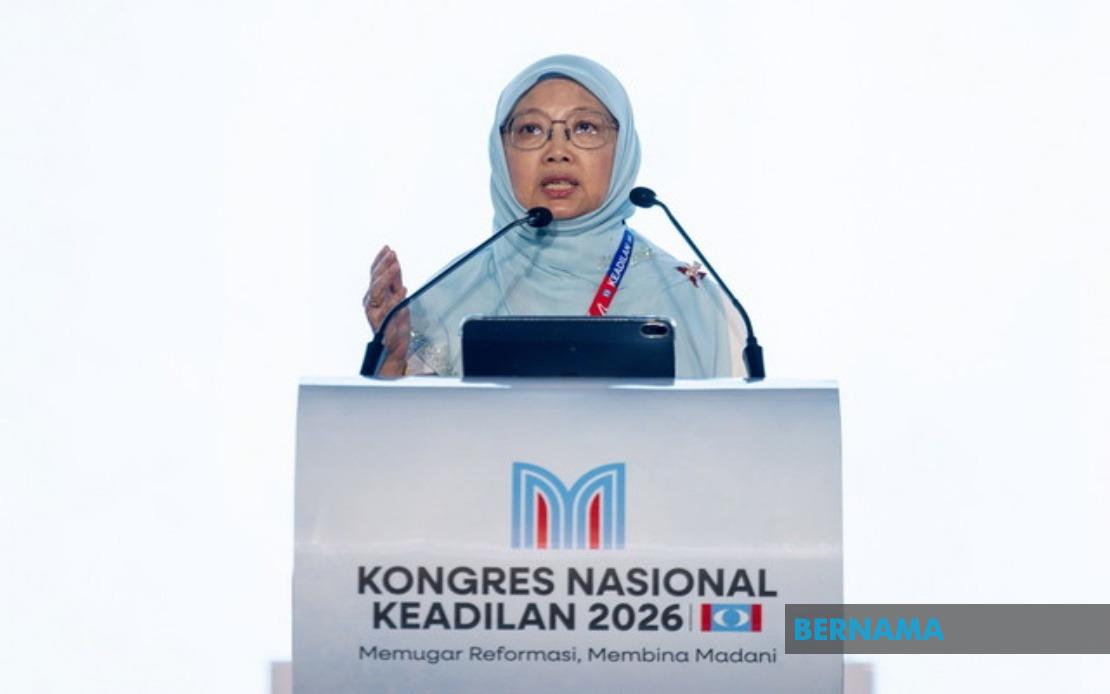
The struggle for reform must not be reduced to a mere competition for political office, warned Parti Keadilan Rakyat (PKR) vice president Datuk Seri Dr Zaliha Mustafa during her address at the party's 2026 National Congress in Melaka. Speaking at the Melaka International Trade Centre on August 16, Zaliha articulated a crucial distinction between capturing power and wielding it purposefully—a message of particular resonance for Southeast Asia's broader democratic movements, which often grapple with the tension between revolutionary idealism and the grinding realities of governance.
Zaliha's intervention comes as PKR, now embedded within Malaysia's federal government, faces mounting pressure to deliver on decades-old promises of systemic transformation. Having campaigned for 27 years under the Reformasi banner, the party's transition from opposition agitator to governing coalition member demands a recalibration of expectations and methods. The vice president's emphasis on this distinction reveals internal awareness that possessing ministerial portfolios does not automatically translate into institutional reform, a lesson many Malaysian observers and regional analysts closely watch.
The core assertion underpinning Zaliha's message rests on a fundamental reframing of what reform truly entails. She rejected the notion that Reformasi's three-decade journey constitutes merely a struggle to displace one administration in favour of another. Instead, she positioned reform as fundamentally about restructuring how the Malaysian state functions—a far more ambitious and complex undertaking than simple leadership rotation. This framing acknowledges that winning elections, while necessary, proves insufficient for achieving the comprehensive institutional overhaul the movement has long advocated.
With PKR now shouldering governmental responsibility, Zaliha outlined an expanded mandate encompassing institutional strengthening, governance enhancement, anti-corruption measures, and the combat against abuse of power. Equally significant, she spotlighted the party's obligation to maintain internal discipline and mutual accountability—arguably the most testing aspect of translating reform principles into practice. Governments frequently struggle to police their own ranks, making this commitment both laudable and challenging to sustain across the electoral cycle.
A particularly instructive element of Zaliha's address concerned the methodology of reform implementation. Drawing on PKR president Datuk Seri Anwar Ibrahim's invocation of Khalifah Umar Abdul Aziz, she argued for phased, strategic change rather than wholesale overnight transformation. This pragmatic approach acknowledges that sustainable reform requires sequencing priorities, distinguishing between immediately implementable changes and those demanding extended negotiation and preparation. For Malaysian policymakers navigating complex bureaucratic, political, and social landscapes, this represents a tacit recognition that reform agendas frequently encounter stubborn institutional resistance and require patience to embed lasting change.
Yet Zaliha simultaneously warned against conflating caution with capitulation. The distinction she drew—between gradualism and delay, between circumspection and lost courage—addresses a perennial criticism levelled at governing reformists across the region. Opposition parties routinely accuse sitting governments of diluting their transformative commitments once installed in power. By explicitly defending the legitimacy of phased implementation while insisting on clear directional purpose, Zaliha attempted to preempt such charges while maintaining PKR's ideological coherence.
Beyond institutional mechanics, Zaliha identified a critical governance vulnerability: the gap between policy implementation and public comprehension. She emphasised that governmental achievement requires parallel investment in explanation and communication. This diagnosis reflects a sophisticated understanding of contemporary political dynamics, particularly in Southeast Asia where social media narratives frequently overwhelm official messaging. The government cannot assume passive public absorption of its accomplishments; it must actively construct the narrative framework through which citizens understand and evaluate its performance.
Her call for streamlined party communication and the adoption of more accessible public language addresses a persistent weakness in Malaysian governance discourse. Technical policy documents and formal government announcements frequently fail to resonate with ordinary citizens, leaving space for opposition messaging and misinformation to flourish. Zaliha's insistence on moving toward communication approaches closer to vernacular language and social media fluency acknowledges that contemporary political legitimacy flows partly through capacity to master digital narratives.
The emphasis on controlling social media discourse and preventing opposition dominance of digital spaces reflects broader regional anxieties about digital statecraft. As Southeast Asian governments navigate increasingly sophisticated information warfare, Zaliha's explicit concern with narrative mastery underscores how governing reform movements must now operate simultaneously in traditional institutional spaces and contested digital environments. Failure in either domain can undermine achievements in the other.
Fundamentally, Zaliha's address articulates a mature understanding of reform governance: winning public trust requires not merely implementing policies but ensuring constituencies actually perceive, comprehend, and accept governmental action as beneficial. This recognition—that numerical and policy victories prove insufficient without capturing public sentiment—distinguishes sophisticated political operators from those who mistake electoral victory for mandate realisation. For PKR and the broader Reformasi movement, the challenge now lies in translating this analytical clarity into consistent institutional practice across its governing tenure.

