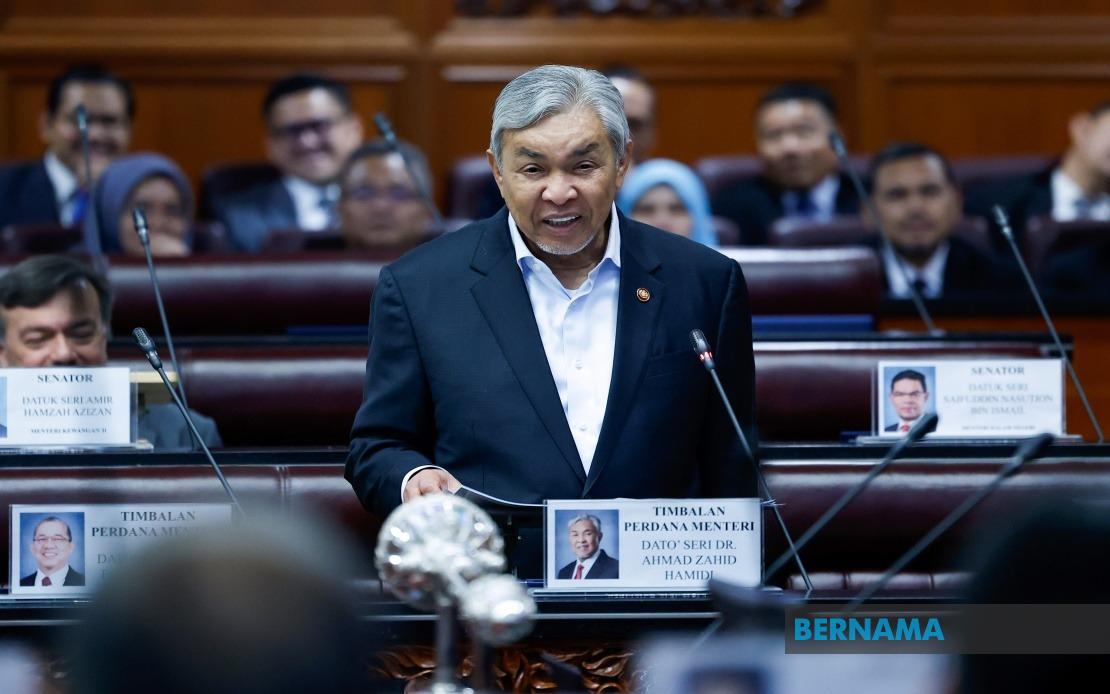
The Malaysian government has embarked on a comprehensive review of its land administration framework governing Federal Land Development Authority (FELDA) settlements, signalling a shift toward modernising regulations that have remained largely unchanged since 1960. Deputy Prime Minister Datuk Seri Dr Ahmad Zahid Hamidi disclosed in Parliament this week that the administration is actively considering structural amendments to the Land (Group Settlement Areas) Act 1960, driven by mounting pressure from younger generations of settlers seeking greater flexibility in property ownership and development.
Among the proposed modifications under examination are provisions to limit the registration of heirs to two nominees—a measure designed to simplify succession processes and reduce administrative bottlenecks that have historically plagued estate settlements. The government is simultaneously exploring the introduction of a single administrative representative system, which would streamline decision-making authority and reduce fragmentation among multiple stakeholders when managing collective settlement affairs. These changes reflect an understanding that outdated inheritance structures have created complications for modern families with diverse needs and circumstances.
EquallySignificant is the government's openness to permitting multiple housing units on individual residential lots, subject to strict conditions, alignment with state and local planning policies, and appropriate authorisations from relevant authorities. This flexibility addresses a critical housing shortage facing the second and third generations of FELDA participants, whose demographic profiles and economic aspirations differ markedly from their parents' generation. The proposal acknowledges that a single-dwelling model no longer meets contemporary family structures, where adult children may need to remain within settlements or establish independent households alongside parental properties.
Ahmad Zahid, speaking in his capacity as Rural and Regional Development Minister, emphasised that any legislative amendments must strike an equitable balance between the competing interests of current settlers, their heirs, emerging FELDA cohorts, state governments, and broader national development imperatives. This multi-stakeholder approach suggests that reform will proceed deliberately rather than hastily, with careful consideration of unintended consequences. The delicate calibration reflects recognition that FELDA settlements represent not merely individual properties but foundational pillars of rural development policy affecting hundreds of thousands of Malaysians across multiple generations.
Progress on land title distribution continues to advance, with the government reporting that 109,104 of 112,638 FELDA settlers—representing 96.86 per cent—have received formal land titles confirming legal ownership. This achievement represents the culmination of sustained collaborative efforts between FELDA, state land authorities, and district land offices working to convert administrative records into formal, legally defensible documentation. For settlers long accustomed to occupying properties without formal legal instruments, title issuance represents a transformative shift, providing security against future disputes and enabling land use as collateral for agricultural or business financing.
The government's commitment to completing title issuance in phased stages reflects a pragmatic acknowledgment that simultaneous processing of remaining titles would overwhelm administrative capacity. Rather than pursuing a rushed universal distribution that might compromise documentation quality, the measured approach prioritises accuracy and completeness. This deliberateness is particularly important given that land titles form the foundation for inheritance proceedings, property mortgaging, and dispute resolution—functions requiring meticulous administrative precision.
FELCRA Berhad, the sister organisation handling coconut resettlement programmes, has achieved comparable progress on title issuance for residential lots. As of June 2026, FELCRA had distributed titles for 4,274 of 6,025 house-site lots spanning 43 projects nationwide, encompassing approximately 71 per cent of eligible participants. The remaining 1,751 lots remain in processing stages, with State Land and Mines Offices continuing their systematic work toward universal title coverage. This parallel advancement across both FELDA and FELCRA initiatives demonstrates coordinated institutional effort to resolve a longstanding administrative legacy.
The pace of title issuance carries significant implications for rural financial inclusion and property market dynamics across Malaysia. Settlers possessing formal land titles gain access to institutional credit mechanisms previously unavailable to them, enabling agricultural modernisation, business expansion, or children's education financing. The expansion of titled property holdings also strengthens state revenue streams through property taxation and registration fees, generating resources for local infrastructure development. For younger generations contemplating permanent settlement in their parents' communities, title security removes barriers to implementing the proposed multi-unit housing arrangements.
The broader policy review acknowledges demographic realities that early FELDA planners could not have anticipated. When the Land (Group Settlement Areas) Act was enacted in 1960, the assumption was that descendants would voluntarily migrate to urban employment or remain as agricultural operators within existing settlement patterns. Contemporary Malaysia presents a different scenario: adult children from FELDA backgrounds increasingly pursue professional careers while maintaining family ties to ancestral properties, creating demand for flexible residential arrangements. Some desire to construct secondary dwellings for extended family members or rental income, others seek commercial uses compatible with rural settings. The regulatory framework must evolve to accommodate these legitimate aspirations without undermining the foundational purposes of organised settlement schemes.
Implementation of proposed amendments will require careful legislative drafting to prevent unintended consequences. Limiting heir registrations to two nominees, for instance, raises questions about how families with more numerous claimants should resolve succession disputes—whether through family consensus mechanisms or state-mediated arbitration. Permitting multiple residential units requires detailed specifications regarding setback distances, plot coverage ratios, infrastructure capacity, and environmental safeguards to prevent ad-hoc densification that could degrade settlement quality. Single administrative representatives require clear authority delineation to prevent conflicts with individual property rights.
The government's engagement with this modernisation agenda also reflects pressure from political constituencies representing FELDA communities. Member of Parliament Kamal Ashaari from Kuala Krau, who raised parliamentary questions prompting Ahmad Zahid's response, represents a constituency with significant FELDA populations. Second and third-generation settlers comprise an increasingly vocal demographic demanding property rights reforms and housing flexibility. Their electoral significance means that political parties ignoring these demands risk constituency dissatisfaction, creating incentive for administrative action.
Regional comparisons suggest Malaysia is following patterns observable elsewhere. Other Southeast Asian countries with large organised settlement schemes have similarly confronted pressures to modernise inheritance frameworks and permit intensified property use as demographic and economic circumstances evolved. The experience of these jurisdictions indicates that successful reforms balance traditional equity principles protecting original settlers with progressive provisions accommodating younger generations' legitimate aspirations. Malaysia's measured review approach, emphasising stakeholder consultation and coordinated implementation, may yield sustainable outcomes avoiding the backlash that hastily implemented reforms have triggered elsewhere.
The timeline for legislative amendments remains unspecified, suggesting the government prefers thorough consultation over rapid enactment. For affected FELDA and FELCRA participants, the ongoing review process offers opportunity to articulate specific concerns through official channels, ensuring that final legislation reflects genuine settlement community input rather than technocratic assumptions about settler preferences. As modernisation proceeds, the government's foundational commitment—ensuring legal land ownership rights for settlers and heirs while facilitating sustainable settlement development—must remain paramount.

