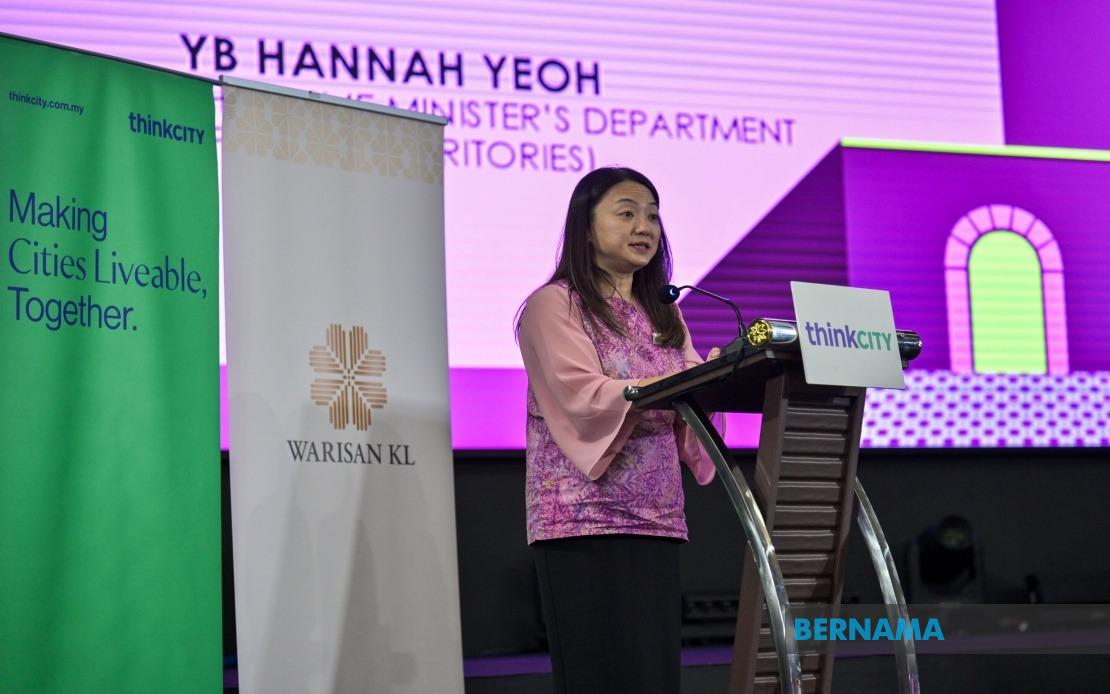
The federal government is channelling RM1 million into a dedicated grants scheme aimed at breathing new life into downtown Kuala Lumpur while protecting the city's cultural and historical identity. Minister in the Prime Minister's Department (Federal Territories) Hannah Yeoh unveiled the Downtown Kuala Lumpur Grants Programme 2026, which will dispense funding in tranches between RM30,000 and RM100,000 to successful applicants working in heritage preservation, community development, entrepreneurship and creative industries.
Yeoh framed the initiative as part of a broader vision for the capital that extends beyond conventional development metrics. She emphasised that urban success should be judged not simply by the construction of new buildings or infrastructure, but by the city's ability to retain residents, attract businesses and investment, and create reasons for people to return. This philosophy underpins a shift in how the federal government approaches urban planning in Kuala Lumpur, recognising that livability and cultural vitality are as critical as economic expansion.
The minister highlighted the instrumental role that heritage and creative sectors play in strengthening Malaysia's domestic economy. By positioning arts, culture and heritage as economic drivers rather than merely preservative concerns, the funding framework aligns with contemporary urban development thinking that treats cultural infrastructure as a legitimate investment category. This approach acknowledges that creative practitioners, artisans and heritage custodians generate employment, attract tourism revenue and enhance urban appeal—outcomes measurable in economic terms.
Kuala Lumpur's designation as a UNESCO Creative City in 2020 provides institutional backing for this strategy, signalling international recognition that the capital's cultural assets hold tangible value. Yeoh referenced this status to underscore that cultural preservation is inseparable from economic opportunity. Cities across Southeast Asia have increasingly leveraged similar designations to justify public funding for creative quarters, artisan hubs and heritage restoration projects, positioning themselves as destinations for cultural tourism and attracting knowledge-based workers and creative entrepreneurs.
Central to Yeoh's messaging is a commitment to reshaping the reputation and operational culture of Kuala Lumpur City Hall (DBKL). She expressed frustration with the perception of DBKL as an obstructionist bureaucratic entity and signalled an intention to reposition it as an enabling institution. This reframing matters because municipal governments in Malaysia have often earned criticism for slow permit processes, opaque approval procedures and perceived indifference to grassroots concerns. By pledging to make DBKL a facilitator rather than a gatekeeper, Yeoh is addressing a persistent friction point between the private sector, civil society and government.
The actual administration of the grants programme will be delegated to Think City, a strategic partner organisation that will handle applications, eligibility assessment and fund distribution. This outsourcing to a specialised intermediary is pragmatic, allowing the government to benefit from Think City's technical expertise, existing networks within the creative and heritage sectors, and credibility among potential applicants. Think City has established itself as a bridge between government policy and ground-level practitioners, positioning it well to identify projects with genuine transformative potential.
Applicants will soon receive detailed eligibility criteria from Think City, though the announcement stops short of specifying exact requirements, thresholds or assessment weightings. This staged disclosure is typical in Malaysian government communications but also reflects that criteria may still be under refinement. Potential beneficiaries—community groups, small enterprises, artists, heritage conservationists—will need to monitor Think City's formal guidelines carefully, particularly regarding project scope, expected outcomes, reporting obligations and timeline expectations.
The RM1 million allocation, while meaningful, remains modest relative to downtown Kuala Lumpur's regeneration needs. With individual grants capped at RM100,000, the programme can fund only ten maximum-sized projects or a larger number of smaller interventions. This constraint means the initiative functions as a catalytic investment, intended to unlock private sector interest, attract volunteer effort and leverage in-kind contributions, rather than to single-handedly finance comprehensive urban renewal. Success will partly depend on the programme's ability to generate momentum and demonstrate early wins that attract additional funding.
For Malaysian readers and regional observers, this initiative reflects a broader repositioning of how Southeast Asian governments approach urban centres. Rather than viewing heritage zones as quaint museums separate from modern urban life, there is growing recognition that integrating cultural preservation with economic dynamism yields superior outcomes. Cities like Bangkok, Ho Chi Minh City and Jakarta have experimented with similar blends of heritage grants and creative industry support, with mixed but instructive results.
The programme also carries implications for governance perceptions. If Think City can process applications transparently and distribute funds fairly, the model could strengthen public confidence in government institutions and demonstrate competence in managing targeted fiscal interventions. Conversely, if applications are protracted, criteria appear arbitrary or selected projects fail to deliver visible results, the scheme risks amplifying scepticism about official programmes. The monitoring and evaluation mechanisms embedded in the initiative will be crucial but remain unspecified in current announcements.
Longer-term success hinges on whether the grants catalyse a self-sustaining cycle in which heritage-based tourism, creative businesses and community engagement generate sufficient economic returns to attract private investment and sustain improvements without perpetual government subsidy. This requires not only capital but also complementary policy reforms in areas like land use zoning, parking and traffic management, public realm maintenance and business licensing—domains where Yeoh's pledge to transform DBKL into a facilitator becomes operationally critical.
The initiative arrives at a time when urban centres across Malaysia face mounting pressure from suburban sprawl, shifting retail patterns and demographic change. Downtown Kuala Lumpur has experienced decades of flux, from its heyday as the unchallenged commercial hub to periods of relative decline as commercial activity dispersed to Bangsar, Damansara and the Klang Valley periphery. The grants programme represents a conscious effort to reposition the downtown as a cultural and creative destination rather than attempting to restore it to its previous commercial dominance—a strategic pivot reflecting realistic assessment of modern urban economics.
As the scheme unfolds, attention will focus on which projects receive funding, how effectively grantees execute their proposals and whether visible improvements in downtown Kuala Lumpur materialize within a reasonable timeframe. The programme's ultimate value will be measured not by the allocation amount but by the tangible transformation it catalyses and the extent to which it fosters renewed interest in the capital's historic heart among residents, workers and visitors.

