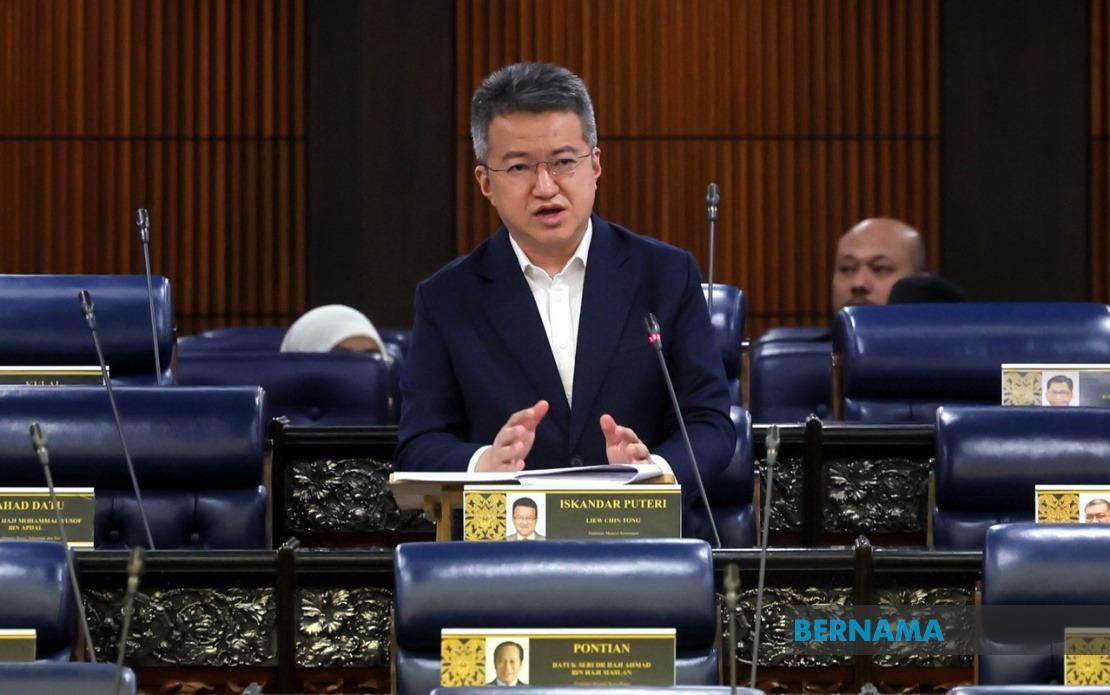
The Malaysian Human Rights Commission (SUHAKAM) will receive RM15.77 million from the government in 2025 to sustain its operations, marking a significant financial boost as the institution continues its mandate to promote and protect human rights across the country. Deputy Finance Minister Liew Chin Tong announced the grant allocation during parliamentary proceedings, noting that the sum represents an increase of RM2.2 million compared to the RM13.55 million disbursed in the previous financial year. The funding encompasses not only SUHAKAM's direct operational requirements but also extends to the Office of the Children's Commissioner (OCC), reflecting the government's commitment to multiple fronts of human rights protection.
The financial allocation underscores the government's recognition that adequately resourced human rights institutions are essential for maintaining the rule of law and institutional integrity. While some may perceive the increase as modest, it reflects a deliberate budgetary decision that balances competing national priorities within the constraints of public finance management. For SUHAKAM, which has operated continuously since its establishment as an independent constitutional body, this consistent funding represents a baseline expectation that the government has consistently met over the years. Liew's statement that the government "has never failed to provide funding for SUHAKAM" carries particular weight in a region where some nations have historically starved independent human rights bodies of resources.
The breakdown of how these funds are deployed reveals the operational complexities facing SUHAKAM. The 2024 allocation covered fixed allowances and emoluments for commissioners, essential facility costs including rental payments and utility expenses, and crucially, the implementation of the institution's annual suite of programmes and activities. This granular approach to budgeting ensures that SUHAKAM can maintain its investigative capacity, conduct public education initiatives, and respond to complaints from Malaysian citizens regarding alleged human rights violations. Without this operational funding, the commission would struggle to fulfil its constitutional mandate to investigate complaints, advise the government on human rights matters, and promote awareness of human rights principles throughout society.
The budgetary decision reflects a methodical government approach to public resource allocation. Liew explained that the grant amount was determined through a comprehensive review process conducted during the Budget 2024 session, taking into account SUHAKAM's historical spending patterns and demonstrated efficiency in utilising allocated funds. The government also factored in its own financial capacity at the time of assessment, suggesting that while the increase is meaningful, it was calibrated against broader economic conditions and competing budgetary claims from other government agencies and social programmes. This approach indicates a desire to ensure fiscal sustainability while maintaining institutional independence, a balance that independent constitutional bodies require to function effectively.
Beyond SUHAKAM's core funding, the parliamentary discussion revealed the government's broader social welfare agenda, particularly concerning informal sector workers and gig economy participants. Deputy Finance Minister Liew addressed questions from opposition parliamentarians regarding how the government intends to protect vulnerable workers who fall outside traditional employment frameworks. The i-Saraan programme, which continues through Budget 2026, represents the government's primary mechanism for encouraging these workers to build retirement security through voluntary contributions to the Employees Provident Fund (EPF). The scheme's design, offering a 20 per cent matching incentive on individual contributions capped at RM500 annually or RM5,000 over a lifetime, attempts to create financial incentives that overcome the reluctance many informal workers have about allocating scarce income to retirement savings.
Recognising the specific vulnerabilities of platform-based workers, the government is introducing the i-Saraan Plus programme starting in 2026, a targeted initiative that acknowledges e-hailing and p-hailing workers occupy a distinct economic category with particular precarity. This cohort will be eligible for government matching contributions reaching RM600 per year or RM6,000 across their working lifetime, a significantly more generous arrangement than the standard i-Saraan scheme. The enhanced incentive reflects government data suggesting that ride-sharing and delivery workers, who have become demographically significant in urban Malaysia, face heightened income volatility and lower baseline retirement preparedness compared to formal sector employees. For Malaysian and Southeast Asian context, this development matters because gig economy work has mushroomed across the region, yet most countries have yet to develop adequate social protection mechanisms for these workers.
The government's concurrent examination of additional mechanisms to expand contribution coverage to informal and gig sector workers indicates that current policy tools are viewed as insufficient, despite their positive intentions. Deputy Finance Minister Liew's reference to these ongoing investigations suggests that the administration recognises structural barriers preventing broader participation in retirement savings schemes. These might include workers' limited financial literacy regarding EPF benefits, cash flow constraints that make even small voluntary contributions difficult, or lack of awareness about existing schemes. By commissioning deeper analysis through the EPF, the government signals a commitment to evidence-based policymaking on social protection, though the timeline and concrete outcomes remain undefined.
The policy framework also addresses an underlying anxiety in Malaysia and throughout Southeast Asia regarding retirement security in rapidly changing labour markets. Traditional defined-benefit pension schemes characteristic of formal employment have become increasingly rare, yet informal and gig workers typically lack alternative institutional mechanisms for retirement savings. The government's multifaceted approach—combining matching incentives, targeted outreach to specific worker categories, and ongoing institutional review—represents an attempt to build social protection in an era where neither traditional employment arrangements nor market mechanisms alone suffice. Whether these measures will substantially improve retirement security for millions of informal workers remains an open question, dependent on implementation quality, worker uptake rates, and the sustainability of government matching contributions across economic cycles.
The parliamentary debate reveals how Malaysian governance increasingly must address the interconnected challenges of institutional funding, human rights protection, and social welfare provision for workers in non-traditional arrangements. SUHAKAM's funding increase, while important, occurs alongside broader social policy commitments that reflect a government attempting to manage the distributional consequences of economic transformation. For regional observers, Malaysia's approach offers instructive lessons about how developing democracies attempt to balance multiple competing priorities—funding independent oversight institutions, protecting vulnerable populations, and maintaining fiscal sustainability. The success or limitations of these initiatives will likely inform policy discussions throughout Southeast Asia, where similar pressures on government budgets and labour market transformation create comparable policy dilemmas.

