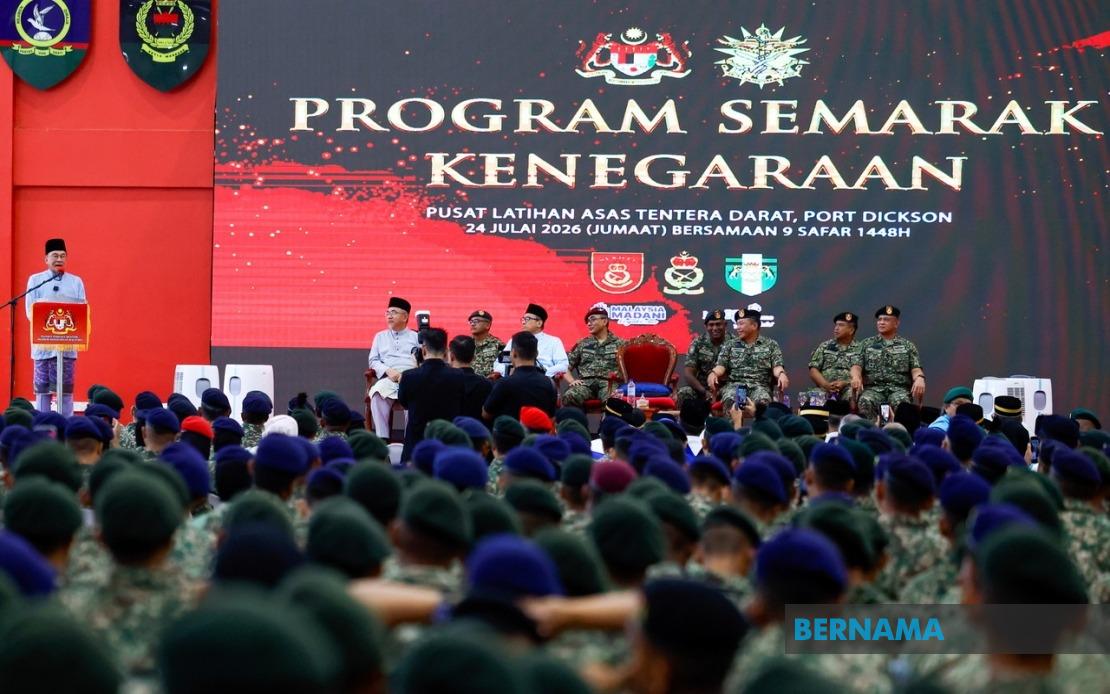
Prime Minister Datuk Seri Anwar Ibrahim has announced that the government is providing an additional RM2 million to support this year's Warriors' Day celebration, a significant boost to the fund that typically allocates between RM1 million and RM1.5 million annually. The enhancement reflects what Anwar described as the exceptional management record demonstrated by those responsible for the event's administration. Speaking in Port Dickson on July 24, the Prime Minister—who also holds the Finance portfolio—underscored that the elevated commitment recognises the enduring sacrifices made by Malaysia's Armed Forces veterans in safeguarding national sovereignty.
Warriors' Day, observed annually on July 31, carries profound symbolic importance in Malaysia's national calendar. The commemoration honours the contributions of security personnel and military professionals whose service has been foundational to the nation's stability and prosperity. Since 1968, the celebration has been organised on a rotating basis between the Malaysian Armed Forces and the Royal Malaysia Police, creating an alternating platform for both institutions to lead the observance and amplify recognition of their respective roles in national defence and internal security.
Anwar's decision to increase funding reflects a broader strategic repositioning within the government's approach to military and veterans' affairs. By linking the supplementary allocation directly to demonstrated administrative competence, the announcement sends a signal that fiscal support for defence-related initiatives is being calibrated to reward transparency and effective resource management. This performance-based approach could serve as a template for other government expenditures, particularly in sectors where accountability remains under public scrutiny.
Beyond the Warriors' Day allocation, Anwar emphasised that military personnel welfare occupies a central place in the government's budgetary priorities. To substantiate this commitment, he highlighted that RM844 million has been approved specifically for housing services in the current financial year. These funds are designated for the Armed Forces Family Housing programme, focusing on comprehensive repairs and development of residential facilities across military installations nationwide.
One flagship project exemplifying this housing initiative involves the construction of 1,300 new residential units at Syed Sirajuddin Camp in Gemas, Negeri Sembilan. This substantial expansion represents a tangible investment in improving living conditions for military families, addressing long-standing concerns about housing adequacy within the armed forces community. Such projects are critical for recruitment and retention, as competitive housing provisions directly influence personnel morale and organisational stability within defence establishments.
Educational support for military families constitutes another dimension of the government's welfare framework. Anwar announced a dedicated RM3 million allocation for school maintenance across Negeri Sembilan, specifically targeting institutions serving children of defence personnel. The beneficiaries include Sekolah Kebangsaan Sungala and Sekolah Kebangsaan Si-Rusa in Port Dickson, where improved facilities will enhance the educational environment for these students. This targeted approach acknowledges that military service often involves postings to specific regional locations, and ensuring quality educational infrastructure in these areas supports family stability and personnel morale.
The emphasis on welfare reflects deeper policy considerations within Malaysia's national security framework. Retention of experienced military personnel depends significantly on competitive compensation packages and quality-of-life provisions. By demonstrating tangible commitment through housing development, educational support, and ceremonial recognition via enhanced Warriors' Day funding, the government attempts to reinforce the professional attractiveness of military service as a career pathway. This is particularly important as Malaysia faces evolving security challenges in the region and requires a stable, experienced defence force.
The announcement also highlights the interconnection between internal cohesion and external defence capability. Anwar stressed that the government remains dedicated to strengthening Malaysia's defence posture through transparent acquisition of military assets and systematic improvement of facilities and amenities across the armed forces infrastructure. This integrated approach—combining welfare investments with capability enhancement—recognises that effective national defence depends on both material resources and the human capital embodied in motivated, well-supported military professionals.
From a regional perspective, Malaysia's investment in military personnel welfare carries significance within the broader Southeast Asian security landscape. As nations across the region grapple with maritime security challenges, transnational threats, and evolving geopolitical tensions, the capacity to maintain professional, well-resourced armed forces becomes strategically consequential. By prioritising veteran recognition and current personnel welfare, Malaysia signals its intention to sustain military readiness while honouring the institutional memory and expertise that experienced personnel provide.
The government's allocation decisions also reflect macroeconomic considerations. With Malaysia navigating fiscal pressures and competing budgetary demands, the decision to increase Warriors' Day funding and approve substantial housing and educational allocations demonstrates a calculated prioritisation of defence and military welfare within the broader allocation framework. This suggests that despite budget constraints, the government views investments in military personnel and infrastructure as non-negotiable components of national security policy.
Looking ahead, the Warriors' Day 2024 celebration on July 31 will proceed with enhanced resources, providing organisers greater capacity to deliver meaningful commemorative events. The elevated funding potentially enables more comprehensive programming, improved facilities for attendees, and heightened visibility for veterans' contributions—amplifying the national narrative around service and sacrifice. For military personnel and their families, the multiple welfare investments announced simultaneously reinforce a message that their contributions are recognised not merely through ceremonial appreciation but through concrete resource allocation and infrastructure development.
The announcement ultimately positions the government as committed to translating rhetorical support for the armed forces into material reality. Whether through direct commemoration funding, housing programmes, or educational support, these investments collectively demonstrate an integrated approach to military welfare that extends far beyond annual celebrations. This comprehensive framework may serve as a baseline expectation for future government administrations navigating the ongoing challenge of balancing fiscal prudence with the genuine needs of defence personnel and their families.

