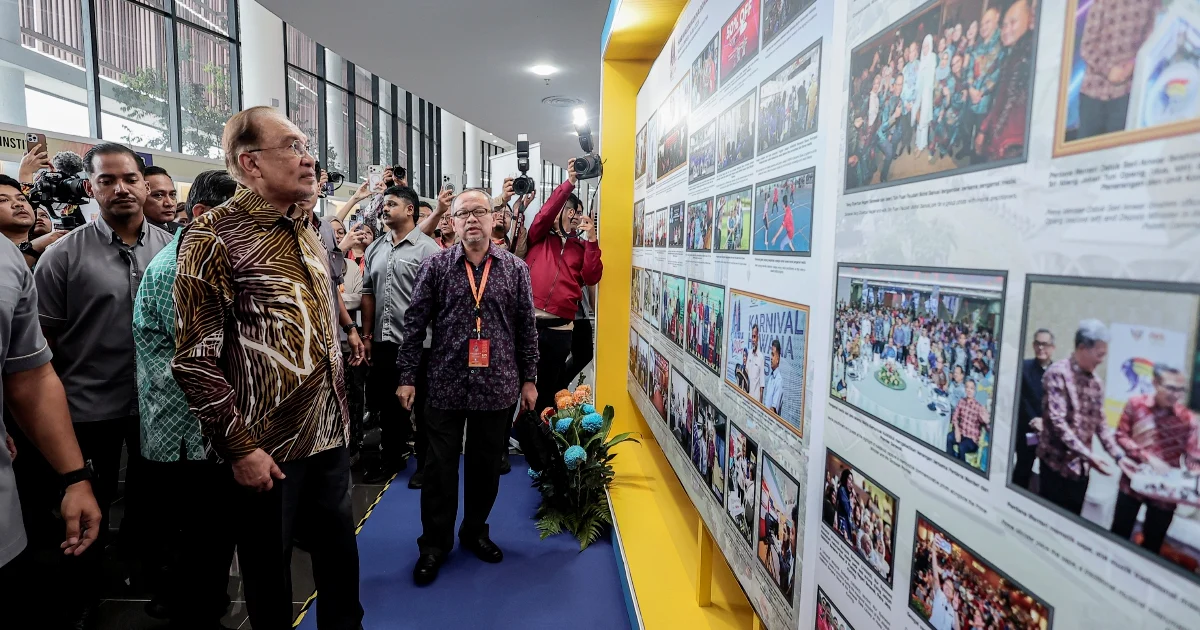
Prime Minister Datuk Seri Anwar Ibrahim has announced a RM1 million government allocation directed towards Tabung Kasih@Hawana 2026, a welfare initiative for members of the media profession. The commitment, revealed during an appearance in Permatang Pauh, reflects the administration's broader policy direction of investing in the journalism sector at a time when the industry faces mounting economic pressures and evolving technological disruption.
The fund represents a concrete manifestation of federal backing for initiatives designed to strengthen the livelihoods of those working across Malaysia's news ecosystem. As the media landscape undergoes profound structural changes driven by digital transformation and shifting audience consumption patterns, targeted welfare provisions have become an increasingly important mechanism for supporting journalists who often face irregular income streams and limited employment security compared to workers in other professional sectors.
Anwar's declaration comes at a moment when Malaysia's journalism community continues to grapple with industry-wide challenges including newsroom contraction, declining advertising revenues, and the rise of non-traditional news sources that fragment audiences and advertising spend. The government's financial commitment signals recognition that public-interest journalism requires institutional support beyond market mechanisms alone, particularly in an era when maintaining professional newsrooms has become financially unsustainable for many traditional publishers.
The Tabung Kasih@Hawana 2026 initiative sits within a broader constellation of media-sector interventions that the government has undertaken. These initiatives aim to modernise journalism practice, improve professional standards, and ensure the sustainability of quality newsroom operations across the country. By directing resources towards welfare mechanisms, the administration is implicitly acknowledging that journalists represent a crucial pillar of Malaysia's information ecosystem and democratic accountability structures.
The timing of this announcement also reflects heightened awareness within government circles about the interconnection between press welfare and press freedom. When journalists face financial insecurity and struggle to meet basic professional needs, their ability to conduct independent, rigorous reporting can be compromised. Conversely, supporting the material conditions of journalism practice—including through welfare funds that ease economic burdens—creates space for more fearless and thorough investigation and commentary.
For Malaysian journalists themselves, direct welfare support through dedicated funds provides tangible relief from unexpected hardships, medical emergencies, or periods of unemployment that can devastate individuals working in precarious newsroom conditions. Such schemes often cover hospitalisation costs, death benefits, and other contingencies that private insurance or government social safety nets may not adequately address for this occupational group.
The broader context of media industry transformation that Anwar referenced encompasses multiple dimensions. Digital disruption has fundamentally altered how news is produced, distributed, and consumed, requiring substantial investment in new skills, technological infrastructure, and business model experimentation. Government support through welfare initiatives must therefore be understood as complementary to—though distinct from—direct investments in technological upgrading or professional training programmes that many Malaysian newsrooms desperately require.
Southeast Asian media environments have experienced similar pressures to those facing Malaysian outlets, with regional publishers contending with intense competition from global digital platforms and eroding traditional revenue bases. Against this backdrop, government initiatives that shore up journalist welfare represent a form of targeted industrial policy aimed at preserving professional journalism capacity. Malaysia's decision to commit resources here contrasts with some other regional economies where the media sector has experienced more limited direct government support.
The allocation also carries symbolic weight in terms of how government perceives its relationship with journalism institutions. By channelling resources into welfare schemes specifically designed for working journalists, the administration frames media as a profession deserving of public investment and protection—a positioning that carries implications for policy discussions surrounding media regulation, content standards, and press freedom more broadly.
Implementation details regarding fund distribution, eligibility criteria, and administrative structures will be crucial in determining how effectively the RM1 million reaches intended beneficiaries. Media industry observers will watch closely to assess whether the welfare initiative becomes a model for sustained engagement between government and journalism sectors, or remains a one-time allocation that fails to generate longer-term systemic support.
The Hawana 2026 reference suggests these welfare efforts connect to broader industry events or coalitions, potentially indicating coordination among media companies, industry associations, and government bodies. Understanding these institutional frameworks will help clarify whether welfare initiatives represent coordinated sector-wide strategies or more ad-hoc allocations.
For Malaysian readers and media stakeholders, this announcement signals that journalism's material sustainability has entered policy conversations at the highest levels. The translation of this recognition into sustained, meaningful support—extending beyond welfare provisions to encompass newsroom investments, technological modernisation, and business model innovation—will ultimately determine whether such commitments translate into meaningful industry transformation or remain largely symbolic gestures.

