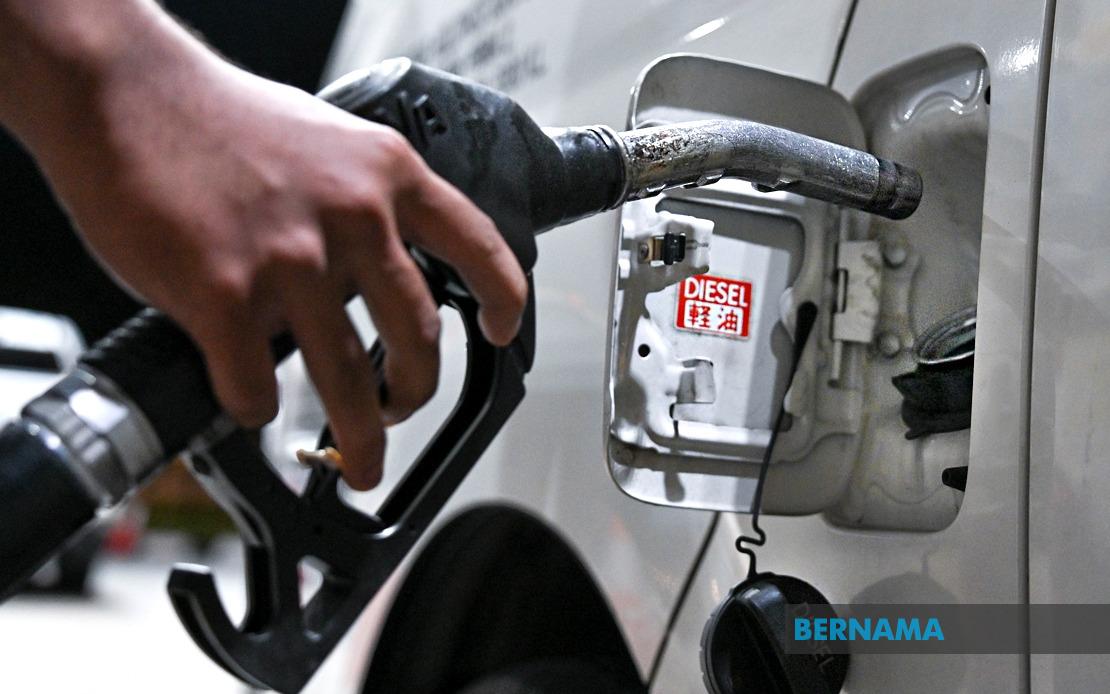
Prime Minister Datuk Seri Anwar Ibrahim has announced a significant fuel pricing adjustment, directing the government to lower the subsidised diesel price to RM2.10 per litre beginning next month. The measure responds to longstanding pressure from commercial operators and transport users, who view the reform as a critical step toward managing operating costs in an inflationary environment. The announcement marks a coordinated effort to harmonise fuel pricing mechanisms across the nation while maintaining targeted support for Malaysian citizens through a verification-based subsidy framework.
The price reduction represents a modest but meaningful adjustment in the diesel market. Currently, diesel at unsubsidised rates reaches RM4.37 per litre in Peninsular Malaysia, whereas Sabah and Sarawak benefit from a subsidised retail price of RM2.15 per litre. The new RM2.10 benchmark will eventually create consistency across all regions, addressing a longstanding disparity that has complicated business planning for companies operating across multiple states. The transition period and specific implementation timeline for Sabah and Sarawak will be detailed by Second Finance Minister Datuk Seri Amir Hamzah Azizan in subsequent announcements.
The subsidy structure will mirror the BUDI MADANI RON95 (BUDI95) programme, which currently restricts premium petrol assistance to Malaysian citizens verified through MyKad. This approach represents a deliberate policy shift toward means-testing and citizen-focused welfare provision, departing from broader universal subsidies. By tying diesel support to citizenship verification, the government aims to prevent subsidy leakage to foreign workers and cross-border fuel arbitrage, a persistent challenge that has previously cost the state hundreds of millions in forfeited subsidy payments. The mechanism also signals an intent to tighten fiscal discipline while demonstrating that assistance reaches intended beneficiaries.
For commercial operators dependent on diesel for daily operations, the announcement offers tangible relief. Tan Chee Keong, a 52-year-old contractor operating a four-wheel-drive vehicle for maintenance and material delivery services in Johor Bahru, characterises the measure as both positive and equitable. His sentiment reflects broader concerns within the construction and logistics sectors, where fuel expenses constitute substantial portions of operational budgets. A reduction of five sen per litre, while appearing modest, compounds significantly across annual consumption patterns typical of active commercial fleets. For businesses operating on tight margins, even incremental savings translate into preserved profitability or reduced pressure on pricing structures.
Transport and delivery operators also anticipate meaningful benefits. R. Mageswaran, a vegetable farm operator from Sungai Siput, Perak, who regularly deploys a van for delivering produce to markets and food establishments, views the lower diesel price as instrumental in containing operational costs. The agricultural and food logistics sectors have experienced sustained margin compression as input costs—including fuel—have risen sharply. For smallholder producers and independent delivery operators, fuel surcharges represent a direct threat to competitiveness. The government's intervention, framed around supporting those who depend on diesel for livelihood generation, acknowledges this vulnerability within the informal and small-enterprise economy.
Night market traders and informal sector operators similarly welcome the adjustment. Mohd Faizal Ahmad, a 43-year-old Shah Alam-based night market trader, emphasises that lower prices combined with subsidy restrictions create greater confidence in policy equity. His comment reflects a broader sentiment among ordinary users that universal subsidies often benefit wealthy and commercial consumers disproportionately, while verification mechanisms better ensure that support flows to those genuinely requiring it. The psychological dimension of perceived fairness matters considerably; policies perceived as equitable generate stronger public cooperation and reduced evasion attempts.
The Ministry of Finance has confirmed that the subsidy reform will establish uniform pricing and mechanisms across Peninsular Malaysia, Sabah, Sarawak, and Labuan. This national standardisation eliminates regional inconsistencies that have previously created administrative complexity and pricing arbitrage opportunities. Currently, the RM2.15 per litre subsidised rate in East Malaysian states contrasts sharply with Peninsular Malaysia's unsubsidised benchmark, creating different economic incentives across regions. Standardisation simplifies policy implementation, reduces cross-border smuggling pressures, and signals to businesses that a single national framework now governs diesel markets.
The timing of the announcement—targeting July 2026 implementation—suggests careful fiscal planning within the government's medium-term budget framework. This future effective date provides petrol station operators adequate lead time for system adaptation, inventory management, and price adjustment procedures. For businesses, the advance notice enables planning and cost forecasting, reducing adjustment shocks that immediate implementation would impose. The lead period also permits refinement of MyKad verification systems and integration with petrol station networks, minimising operational disruptions during rollout.
The broader policy context reflects shifting government priorities toward targeted, means-tested assistance rather than universal subsidies. This philosophical reorientation aligns with international best practices advocating that fuel support reach genuine beneficiaries while minimising fiscal leakage. Malaysia's experience with previous subsidy regimes—where wealthier consumers captured disproportionate benefits and cross-border smuggling created substantial economic losses—has generated political momentum for reform. The BUDI95 programme's apparent success in containing unintended subsidy uptake likely contributed to confidence in extending the verification model to diesel markets.
Implementation challenges nevertheless merit attention. The MyKad verification system's efficiency and accessibility will determine whether the subsidy reaches intended users without creating operational friction at petrol stations. Previous subsidy reforms have occasionally generated queuing, processing delays, and consumer frustration when verification systems experienced capacity constraints or technical failures. The government must ensure robust infrastructure deployment before the July 2026 launch. Additionally, petrol station staff will require training in verification procedures, and public education campaigns must familiarise citizens with new access requirements.
For transport-dependent sectors including logistics, agriculture, food production, and construction, the adjustment represents tangible competitive relief. Sustained diesel price reductions, if maintained, could gradually strengthen business viability within margins that high fuel costs have previously compressed. However, the subsidy's long-term sustainability depends on petroleum market dynamics and fiscal space within broader budgetary allocations. Should crude oil prices spike dramatically, governments face renewed pressure to either absorb costs or adjust subsidy rates, creating policy uncertainty. Businesses dependent on predictable input costs therefore benefit from comprehensive transparency regarding the subsidy framework's duration and adjustment mechanisms.
The government's approach also acknowledges regional disparities in economic development and subsidy dependency. East Malaysian states, where transportation costs are inherently higher due to geographic isolation and infrastructure limitations, have historically received preferential subsidy treatment. By extending consistent national pricing, policymakers signal commitment to national economic integration while respecting established regional support principles through standardised rather than differential mechanisms. This framing balances equity considerations across regions with fiscal discipline and operational simplicity.
Overall, the diesel price reduction to RM2.10 per litre represents a measured policy response balancing fiscal sustainability, operational efficiency, and targeted assistance. The verification mechanism's success will determine whether the reform successfully channels support to genuine beneficiaries while containing subsidy costs. For Malaysian businesses operating in transport, logistics, agriculture, and related sectors, the announcement offers welcome relief from sustained fuel cost pressures. The policy's ultimate effectiveness depends on implementation rigour, system reliability, and sustained government commitment to the subsidy framework across changing fiscal and market conditions.

