The Ministry of Finance has moved to counter allegations of improper use of the Asset Recovery Trust Account, insisting that all expenditures from the fund comply strictly with the established Trust Directive and are restricted to authorised purposes. In a parliamentary response tabled this week, the ministry clarified that funds have been deployed to cover operational expenses and to service outstanding obligations owed by both 1Malaysia Development Bhd and SRC International Sdn Bhd, two entities that have been central to Malaysia's fiscal recovery efforts over the past decade.
Central to the ministry's position is its assertion that the Asset Recovery Trust Account represents a carefully governed mechanism designed specifically to address the financial aftermath of these two troubled enterprises. When the government advanced funds through the Minister of Finance (Incorporated) to meet pressing liabilities, these payments are documented as part of the systematic unwinding of 1MDB and SRC's debt burdens, which collectively have weighed heavily on public finances. The ministry characterised any suggestion of misallocation as fundamentally at odds with the transparent governance framework supposedly underpinning the account's administration.
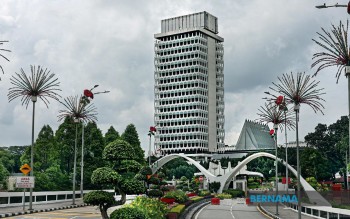
The clarification emerged in response to parliamentary questioning from Datuk Mohd Isam Mohd Isa of Tampin, who had sought specific details about the legitimacy of various expenditures drawn from the fund. Mohd Isam's inquiry touched on broader public concern regarding whether monies ostensibly reserved for managing the 1MDB and SRC legacy have been diverted toward unrelated government functions. Such scrutiny reflects persistent unease among legislators and the public about how the aftermath of these financial episodes continues to shape budget allocations.
The controversy surrounding 1MDB and SRC International has cast a long shadow over Malaysian governance and public finances. Both entities accumulated substantial debts that ultimately fell to the government to resolve, representing a significant drain on the country's fiscal position. The Asset Recovery Trust Account was established as a dedicated mechanism to sequester recovered assets and recovered funds, theoretically isolating these resources from routine budgeting processes and ensuring they would be applied exclusively to rectifying the financial damage caused by these two problematic organisations.
Beyond the 1MDB and SRC matter, the ministry also provided updated figures on Malaysia's broader revenue performance, noting that non-tax revenue surged substantially during the first quarter of 2026. The government projects total revenue of RM343.1 billion for the full year, comprising RM270.4 billion in tax collections and RM72.7 billion in non-tax sources. This split underscores Malaysia's continued reliance on direct and indirect taxation as the backbone of public finances, with non-tax revenue serving as a supplementary but increasingly important contributor.
The first quarter performance proved particularly encouraging for non-tax revenue streams, which climbed by 22.9 per cent year-on-year to reach RM18.8 billion, compared with RM15.3 billion during the same quarter in 2025. This robust growth reflects several factors working in Malaysia's favour. Licensing and permit revenues have benefited from business recovery and regulatory activity, while dividend contributions from Petronas and Bank Negara Malaysia have provided substantial injections into government coffers. These institutional dividends are typically lumpy and dependent on annual profitability and central bank policy decisions, making them somewhat unpredictable components of the revenue base.
Non-tax revenue encompasses a diverse portfolio of government income sources that extends well beyond the most visible categories. Beyond licences, permits, and institutional dividends, the government collects fees for various services, generates rental income from state-owned properties, receives interest payments on loans and investments, and draws revenue from the sale of surplus goods and assets. Fines and penalties, though often smaller-scale sources, contribute to the aggregate total, as do occasional donations to government programmes and initiatives.
The strength of non-tax revenue growth carries particular significance for Malaysian policymakers seeking to diversify and strengthen the revenue base without excessive reliance on income taxation or consumption taxes. As Malaysia navigates post-pandemic economic recovery and confronts longer-term structural challenges, the ability to generate revenue from non-traditional sources provides useful flexibility in budget management. However, the ministry's figures also highlight that tax revenue—projected at RM270.4 billion annually—remains the dominant revenue pillar, accounting for nearly 79 per cent of total government income.
The ministry's emphasis on regulatory compliance and documented governance procedures appears designed to preempt further questioning about the Asset Recovery Trust Account. By situating its spending decisions within an explicit approval framework and invoking the Trust Directive, officials are positioning themselves as stewards of a legally sanctioned process rather than arbiters of discretionary fund allocation. Nevertheless, the very fact that such clarifications remain necessary suggests that public and parliamentary confidence in the management of these recovered assets has not been entirely restored, despite the passage of years since the original 1MDB scandal emerged.
Looking ahead, the ministry's defence of its asset recovery spending and its upbeat assessment of non-tax revenue growth reflect a government seeking to demonstrate fiscal prudence and institutional discipline. Yet ongoing parliamentary inquiries into the Asset Recovery Trust Account suggest that scrutiny of how Malaysia continues to manage the fallout from 1MDB and SRC will persist, particularly as opposition lawmakers and concerned citizens track whether these dedicated funds are genuinely serving their intended purpose or being absorbed into broader budgetary machinery.

