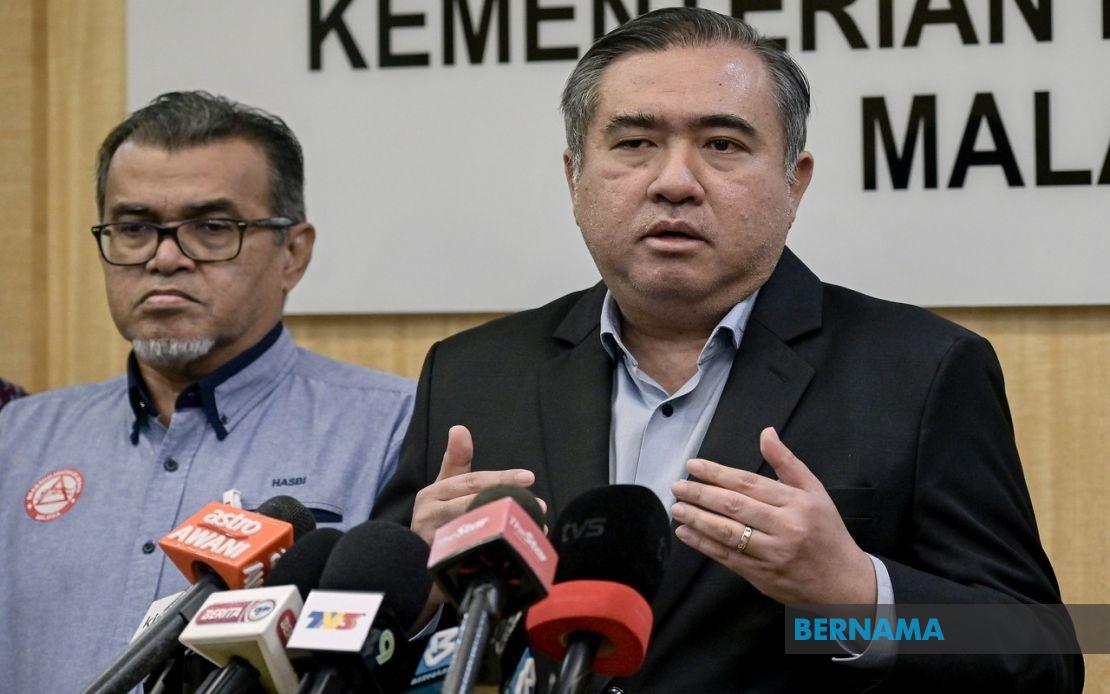
Transport Minister Anthony Loke has moved to clarify the government's approach to senior management appointments at Malaysia's port operators, following international media coverage of recent leadership changes at MMC Ports Holdings Bhd. Speaking in Putrajaya on July 17, Loke outlined a distinction between regulatory oversight of ownership structures and the day-to-day operational decisions of companies managing strategic national infrastructure. His comments come amid reports that Sultan Ahmed Sulayem, the former chairman and chief executive of DP World, has assumed the position of executive chairman at MMC Ports Holdings Bhd following the sudden resignation of group chief executive officer Azman Shah Mohd Yusof.
The Transport Minister emphasized that Malaysia's policy framework for port operations hinges primarily on maintaining domestic control through equity ownership rather than dictating corporate management structures. According to government regulations, any company holding a concession to operate ports or managing other strategic national assets must retain at least 51 per cent Malaysian ownership. This ownership threshold represents the government's primary regulatory concern, Loke explained, establishing a clear boundary between what the state considers its legitimate interest and where it defers to corporate governance principles. The rationale underpinning this approach reflects a broader policy objective to ensure Malaysian stakeholders maintain decision-making authority over critical infrastructure while permitting operational flexibility and international expertise in management roles.
Loke's remarks suggest the government views management appointments as internal corporate matters falling squarely within the purview of board directors and shareholders rather than government agencies. This position allows port operators to recruit senior executives based on merit and experience without seeking state approval, provided the fundamental ownership requirement remains satisfied. The minister's clarification addresses what appears to be public or media concern about foreign nationals occupying top executive positions, particularly in sensitive sectors like ports. By distinguishing between ownership control and management autonomy, Loke seeks to demonstrate that Malaysia can balance nationalist economic principles with pragmatic access to global expertise and talent.
To illustrate this principle in practice, Loke pointed to the Port of Tanjung Pelepas, which operates under foreign chief executive leadership while remaining subject to Malaysian regulatory oversight. The existence of such arrangements demonstrates that the government has long accepted foreign nationals in senior operational roles at strategically important port facilities. This precedent suggests that Sultan Ahmed Sulayem's appointment to MMC Ports Holdings Bhd, while notable given his international stature in the shipping industry, does not represent a departure from established practice. Rather, it exemplifies how Malaysian port operators can access international expertise while maintaining the ownership structures the government deems necessary for national interest protection.
Regarding the specific circumstances surrounding MMC Ports Holdings Bhd, Loke stated that the ministry had received no formal notification of any change in shareholding structure from either the company or its concessionaire. This absence of official communication suggests that if Sultan Ahmed Sulayem's appointment involved shareholding adjustments, such notification procedures had not been followed at the time of Loke's statement. The minister indicated that companies must formally advise the government, including through the Public-Private Partnership Unit (UKAS), whenever modifications to shareholding arrangements occur. This notification requirement serves as the government's monitoring mechanism for ensuring compliance with the 51 per cent Malaysian ownership mandate.
The distinction Loke draws between management appointments and ownership changes carries significant implications for how Malaysia's port sector evolves. Management decisions can change relatively quickly through corporate restructuring, while ownership modifications typically involve more substantial legal and financial transactions that trigger regulatory reporting obligations. By establishing this separation, the government creates space for dynamic management while maintaining oversight of the fundamental control structures. This approach potentially allows Malaysian port operators to respond flexibly to market opportunities and operational challenges by recruiting global talent, whilst preserving state visibility over changes that might affect Malaysian stakeholders' core interests in the sector.
For Malaysian readers concerned about foreign influence over critical infrastructure, Loke's explanation attempts to reassure by emphasizing the robustness of ownership controls. The 51 per cent threshold ensures that Malaysian shareholders collectively retain voting power and decision-making authority over strategic matters, even if day-to-day operations are led by foreign executives. This model has precedent in other sectors and countries where foreign expertise enhances performance while domestic ownership maintains political and economic control. The government's confidence in this arrangement reflects assumptions about the alignment of interests between foreign professional managers and Malaysian shareholders, where operational excellence benefits all stakeholders regardless of national origin.
The timing of these comments reflects broader regional discussions about port governance and the appropriate balance between openness to international investment and management expertise versus protection of strategic assets. Southeast Asian nations have grappled with similar questions as global shipping companies and investment funds seek operational roles in regional port infrastructure. Malaysia's explicit articulation of its approach—prioritizing ownership control while permitting management flexibility—provides clarity to international investors and domestic stakeholders about the operating environment. This transparency potentially facilitates further foreign participation in Malaysian port operations by establishing predictable rules.
Looking forward, the government's stance suggests that future leadership changes at MMC Ports Holdings Bhd or other port operators involving foreign nationals would face no regulatory obstacles, provided ownership requirements are maintained and proper notification procedures are followed. This policy direction indicates Malaysia's commitment to allowing competitive global management practices in its port sector while preserving the ownership structures deemed essential for national interest. As regional shipping and logistics competition intensifies, such policies may prove crucial in attracting and retaining experienced leadership capable of positioning Malaysian ports competitively within global supply chains. The challenge will be ensuring that notification requirements and oversight mechanisms function effectively to maintain government visibility over strategic assets while not deterring the appointment of qualified professionals.

