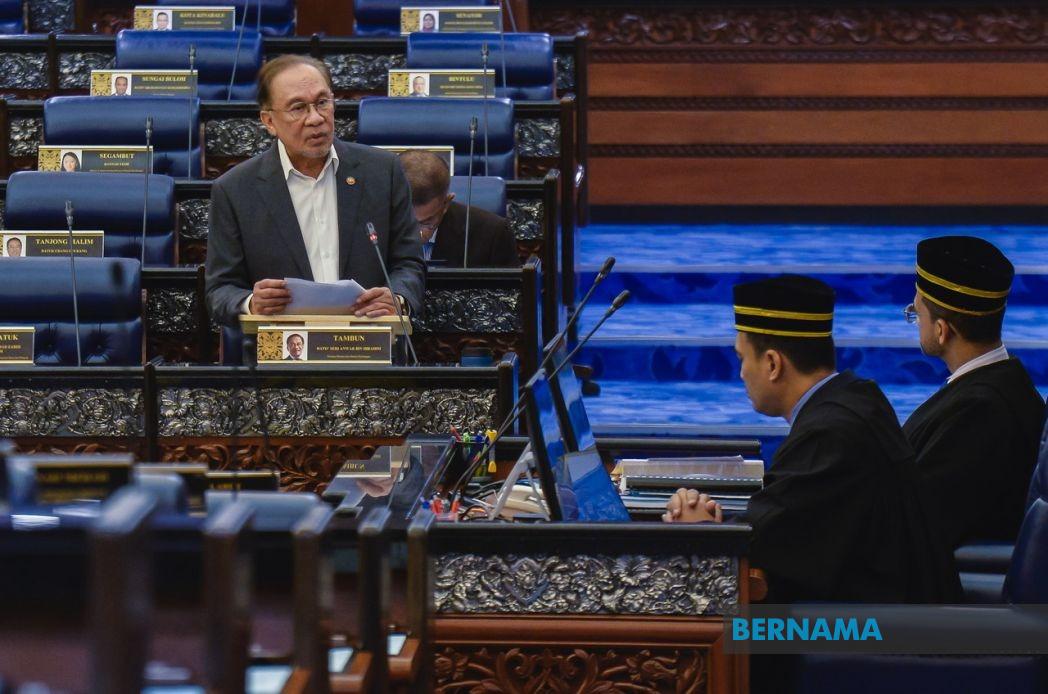
Prime Minister Datuk Seri Anwar Ibrahim moved to quell speculation about restrictions on activities in Federal Land Development Authority (FELDA) settlements on June 30, emphasising during parliamentary question time that no blanket prohibition exists against programmes held in these communities. The clarification came in response to a query from Datuk Seri Hamzah Zainudin, a Perikatan Nasional member representing Larut, and addresses what appears to be a misunderstanding about the limits of regulatory oversight in rural development areas.
The Prime Minister's statement draws a critical distinction between the authority of state governments to conduct their own initiatives and the legal constraints placed on the use of public resources for electoral purposes. Under Malaysian electoral legislation, state administrations retain full discretion to organise their own events, launch development projects, and distribute entitlements such as land titles within their jurisdictions, even if those jurisdictions include FELDA settlements. The constraint operates at a narrower level: federal government machinery and FELDA's own administrative resources cannot be deployed to facilitate political campaigning activities. This separation of powers reflects established conventions intended to preserve the impartiality of civil service institutions during electoral periods.
Anwar specifically rejected assertions that his administration had issued directives to cancel the FELDA Settlers' Day programme that had been scheduled for Kluang in Johor on June 20 and 21. The fate of that particular event became a flashpoint for political commentary, with some interpreting any postponement as evidence of government interference. The Prime Minister's denial suggests that whatever changes occurred to the programme's timing or format resulted from logistical or administrative considerations rather than from a policy decision to suppress activities in FELDA communities. This clarification carries weight given that FELDA settlements, home to hundreds of thousands of smallholders and their families, represent significant voting blocs in multiple states, making them politically sensitive terrain for any administration.
The MADANI Government's broader approach to FELDA communities reflects what Anwar characterised as a corrective to patterns of historical neglect. He attributed inadequate infrastructure and lagging development to what he described as poor stewardship during previous administrations, a framing that positions his government's interventions as rectification rather than innovation. This narrative proves important for understanding the administration's posture toward FELDA areas and why clarity on their relationship with settlements matters beyond mere legal technicality. The allegation of programme restrictions could undermine confidence precisely at a moment when the government is attempting to rebuild institutional relationships with communities it views as having been shortchanged.
Among the concrete measures the Prime Minister highlighted are the establishment of dialysis centres within FELDA settlements and expanded development infrastructure deployed through federal agencies. These initiatives target essential health services and infrastructure deficits, areas where rural communities often experience service gaps relative to urban populations. The emphasis on healthcare provision is particularly significant given Malaysia's ageing rural demographic, where non-communicable diseases place considerable burdens on residents who may lack easy access to specialist facilities. By anchoring government attention to tangible welfare improvements, Anwar seeks to demonstrate responsiveness to genuine community needs rather than engagement driven purely by electoral cycles.
Deputy Prime Minister Datuk Seri Dr Ahmad Zahid Hamidi's involvement in shaping FELDA policy, as mentioned by the Prime Minister, signals that rural development constitutes a collaborative priority within the cabinet structure. This partnership between the Prime Minister and Deputy Prime Minister on FELDA matters suggests institutional commitment rather than ad hoc attention, though it also reflects the political significance these constituencies carry within Malaysia's electoral geography. States with substantial FELDA populations include Johor, Pahang, Perak, and Kedah, each representing meaningful electoral contests in any prospective general election.
The distinction Anwar articulated between programme restrictions and machinery restrictions carries practical implications for how state governments interact with FELDA administration during electoral periods. State menteri besars can continue organising their own campaigns and service delivery initiatives within settlements without requiring federal permission, though they remain bound by broader election commission regulations governing campaign conduct. This delineation appears designed to reassure state governments, particularly those holding different political alignments from the federal government, that they retain agency within their own territories. Such reassurance proves valuable for inter-governmental relations and for preventing the kind of centre-state tensions that can arise when administrative boundaries become flashpoints for political disagreement.
The parliamentary forum in which Anwar delivered these remarks carries symbolic weight. Question time in the Dewan Rakyat provides opposition members with a platform to raise grievances and demand explanations from the executive, a mechanism that public accountability depends upon. The fact that Anwar addressed the question directly rather than deflecting suggests either confidence in his position or recognition of the political importance of providing a clear public record on the matter. Either way, the statement becomes part of the official parliamentary record and serves as a baseline against which future government conduct toward FELDA areas can be measured.
For Malaysian voters in FELDA communities and observers of rural development policy, these clarifications signal a government keen to position itself as committed to improving welfare in long-neglected areas while operating within electoral legal constraints. Whether such messaging translates into sustained funding and attention remains to be demonstrated through budget allocations and implementation timelines. The government's willingness to engage with questions about FELDA policy, however, does suggest that these communities and their concerns occupy a meaningful place within the MADANI administration's strategic thinking.

