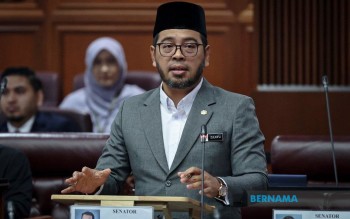
Malaysia's government has injected over RM10 billion into Lembaga Tabung Haji (TH), the pilgrimage savings board, to reverse a deepening financial crisis rooted in years of mismanagement and embezzlement rather than to take control of the institution's assets. Minister in the Prime Minister's Department (Religious Affairs) Dr Zulkifli Hasan made this clarification during a special sitting of the Dewan Rakyat, addressing widespread public concern and misinformation surrounding one of Malaysia's most sensitive religious and financial institutions.
The bailout became necessary after TH's financial position deteriorated sharply, with the deficit gap between assets and liabilities reaching over RM10 billion by the fourth quarter of 2018—a situation that left the institution effectively insolvent within a three-month window. This critical juncture forced the Pakatan Harapan government at the time to intervene decisively with a comprehensive restructuring plan. The minister emphasised that the primary objective was to stabilise TH's finances and ensure its long-term sustainability rather than to liquidate or redirect its valuable holdings.
Dr Zulkifli also addressed a sensitive issue that had fuelled public anxiety and, in some quarters, incitement to prejudice. He firmly rejected claims, which he characterised as irresponsible and deliberately misleading, that TH assets had been sold to non-Muslim entities or Chinese investors. Such narratives, he stressed, were designed to inflame communal tensions and exploit public concern over TH's misfortunes. The clarification is significant in Malaysia's complex religious and multi-ethnic context, where institutional trust and asset management touching on Islamic institutions carry considerable symbolic and political weight.
Critically, the assets in question are held within Urusharta Jamaah, a company fully owned by the Minister of Finance Incorporated, meaning they remain under government stewardship rather than passing into private or foreign hands. This structure ensures that any asset sales or restructuring occur within a transparent government framework accountable to Parliament and the public. The arrangement reflects standard practice for state financial institutions undergoing recovery and rehabilitation, though the sheer scale of TH's losses meant the remedial measures required unprecedented intervention.
The Royal Commission of Inquiry (RCI) Report on TH had previously documented the systemic failures and misdeeds that accumulated to create this financial catastrophe. Years of inadequate oversight, poor investment decisions, and instances of outright embezzlement eroded TH's capital base substantially. The timing of the crisis—converging with broader economic challenges and market volatility—meant that TH lacked the financial cushion to absorb losses or recover organically. The government's bailout thus represented not merely a rescue of an institution, but a safeguard for millions of Malaysian Muslims who depend on TH for their pilgrimage savings.
From a governance perspective, the bailout underscores broader challenges facing large state-linked institutions in Malaysia, particularly those managing public funds with religious or social significance. The scale of intervention required suggests that internal controls, risk management protocols, and board accountability mechanisms had broken down substantially before remedial action became possible. Subsequent reforms initiated through the restructuring plan have aimed to tighten oversight and prevent recurrence of the mismanagement patterns that triggered the crisis.
The decision to stabilise TH rather than permit its collapse reflects the government's assessment that the institution serves essential functions within Malaysia's Islamic financial ecosystem. TH manages savings for approximately 9 million members and plays a role in facilitating pilgrimages to Mecca, making it integral to religious practice for a significant portion of the Muslim population. Allowing the institution to fail would have created cascading effects across the broader financial sector and undermined public confidence in government-managed religious institutions.
The over RM10 billion injection represents one of the largest single bailouts of a Malaysian institution in recent years, a scale that demands rigorous scrutiny and public accountability. Parliamentary briefings and RCI reports have provided mechanisms for public disclosure, though ongoing transparency regarding asset management and recovery progress remains essential for rebuilding institutional trust. The minister's emphasis on clarifying the facts and debunking false narratives suggests awareness that public perception and confidence are as crucial as the financial mechanics of recovery.
Looking forward, the restructuring plan's success will depend on sustained improvements in governance, management quality, and investment discipline at TH. The institution's recovery trajectory will serve as an important benchmark for how Malaysia manages large state financial institutions and addresses institutional crises. For policymakers across Southeast Asia grappling with similar challenges in managing large savings and pilgrimage funds, Malaysia's experience with TH offers both cautionary lessons and insights into intervention strategies.
The government's commitment to restoring TH's financial health without acquiring its assets also reflects recognition that religious institutions require particular sensitivity in their governance and public messaging. While the financial mechanisms of restructuring are technical and bureaucratic, the cultural and religious dimensions demand careful communication to prevent misunderstanding and preserve public trust. Dr Zulkifli's parliamentary briefing, therefore, addressed not only financial technicalities but also the broader need to maintain confidence in institutions that bridge state, religious, and popular interests in Malaysia's unique socio-political landscape.

