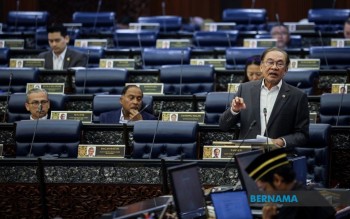
The Malaysian government has unveiled a new e-invoice voluntary declaration programme extending through the end of 2027, positioning the initiative as a critical relief measure for the nation's business community, particularly its substantial base of micro, small and medium enterprises. Prime Minister Datuk Seri Anwar Ibrahim, speaking during parliamentary question time, framed the announcement as part of broader efforts to address mounting operational pressures facing businesses navigating volatile international economic conditions and heightened regulatory requirements.
The voluntary declaration framework represents a departure from conventional tax administration practice in Malaysia. During the designated window, businesses may voluntarily revise, update or correct their e-invoice submissions without triggering financial penalties from the Inland Revenue Board of Malaysia. Anwar, who holds the concurrent portfolio of Finance Minister, characterised such leniency as notably unusual within the income tax compliance landscape, underscoring the administration's commitment to reducing friction between regulatory enforcement and business viability.
The initiative comes as Malaysian policymakers grapple with sustaining economic momentum across sectors heavily populated by smaller enterprises that form the backbone of employment and innovation. MSMEs have long pointed to escalating compliance burdens as a constraint on growth and profitability, particularly when managing digital tax infrastructure alongside core operational demands. By creating space for voluntary correction without punitive consequences, the government seeks to encourage transparent alignment with e-invoice requirements rather than driving businesses toward deliberate evasion or operational shutdown.
Complementing the amnesty approach, the government has simultaneously approved an acceleration of tax incentive mechanisms designed to offset implementation costs. Eligible businesses undertaking e-invoice system investments may now claim full capital allowances within a single fiscal year, substantially faster than standard depreciation schedules. This compressed timeline directly reduces the tax burden during the critical adoption phase, functioning as immediate financial relief rather than deferred benefits spread across multiple years. The measure explicitly targets businesses bearing upfront technological expenditure to comply with e-invoice mandates.
The policy orientation reflects evolving international standards around digital tax administration. Many jurisdictions have introduced e-invoice systems to enhance revenue collection accuracy and reduce evasion, yet policymakers increasingly recognise that punitive approaches during transition periods can destabilise smaller enterprises lacking sophisticated accounting infrastructure. Malaysia's approach balances modernisation imperatives with pragmatic recognition of implementation challenges, particularly acute for businesses operating with limited administrative capacity or capital reserves.
Context matters significantly here. In December 2025, the government had already adjusted e-invoice exemption thresholds upward, raising the income ceiling from RM500,000 to RM1 million annually. This earlier decision benefited more than one million Malaysian taxpayers by removing compliance obligations for enterprises below that threshold, substantially narrowing the universe of businesses requiring full e-invoice implementation. The cumulative effect of threshold elevation plus voluntary declaration flexibility plus accelerated tax deductions creates a three-layered cushion designed to ease transition without sacrificing revenue administration objectives.
The parliamentary response to the announcement came from Lee Chuan How, the Ipoh Timor representative from the Pakatan Harapan coalition, whose question specifically prompted consideration of MSME challenges amid contemporary global headwinds. This framing highlights the consensus across government and opposition that small business survival depends partly on regulatory calibration. International factors, including supply chain volatility, inflationary pressures and shifting trade patterns, have compressed margins and forced many enterprises to prioritise immediate cash flow over compliance infrastructure investment.
From a Southeast Asian perspective, Malaysia's approach merits attention as regional economies face similar digitalisation pressures. Nations across ASEAN are implementing or contemplating comparable e-invoice systems to modernise tax administration, yet implementation experiences vary considerably. Thailand's pilot programmes encountered resistance from merchants citing system complexity and cost. Indonesia's phased rollout involved substantial stakeholder negotiation and technical support. Malaysia's emphasis on graduated exemptions and penalty waivers suggests learning from regional experiences while attempting to avoid implementation backlash that could undermine both tax compliance and political support for broader digital government initiatives.
The financial implications warrant scrutiny. While accelerated capital allowances reduce immediate tax revenue, they essentially convert compliance costs into deductible business expenses, lowering the net burden on taxpayers while maintaining revenue collection on business income and profits. The voluntary declaration window theoretically increases compliance by removing fear of retroactive penalties, potentially yielding better long-term revenue through broader participation. However, sophisticated businesses might utilise the amnesty period to correct intentional underreporting, effectively narrowing the tax base if corrected amounts prove modest.
The political economy of the decision also deserves consideration. The MADANI government, still relatively early in its tenure, faces pressure to demonstrate responsiveness to business sector grievances without sacrificing fiscal stability. Both large and small enterprises have lobbied against regulatory expansion and compliance costs. By introducing flexibility mechanisms before implementation deadlines become absolute, the government signals willingness to listen while maintaining forward momentum on technological modernisation essential for long-term revenue administration and anti-corruption objectives.
Looking forward, the success of this programme depends substantially on implementation clarity and business awareness. Enterprises must understand the precise scope of the voluntary declaration window, eligible correction categories, and interaction with other tax obligations. The Inland Revenue Board will require adequate staffing and systems to process corrections efficiently without creating administrative bottlenecks. Transparent communication about the programme timeline and procedures remains essential to ensure uptake extends beyond large, sophisticated businesses to smaller enterprises lacking dedicated tax compliance personnel.
Ultimately, the voluntary e-invoice declaration programme represents pragmatic policy design attempting to balance competing objectives: modernising revenue administration, reducing business compliance costs, and maintaining fiscal sustainability. Whether this equilibrium proves durable will become evident as the programme unfolds and compliance data accumulates.

