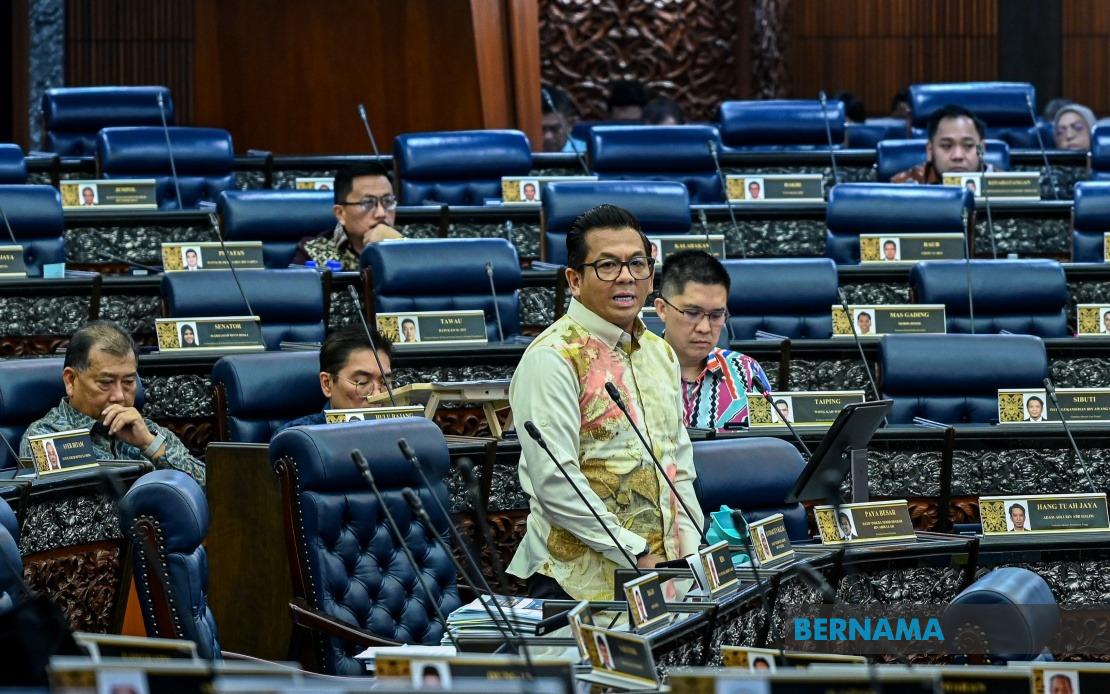
The Malaysian government is deploying sophisticated data analysis to tackle one of the nation's most persistent economic challenges: the widening gap in living costs between urban and rural communities. Drawing on the Basic Living Expenditure (PAKW) framework developed by the Department of Statistics Malaysia, policymakers are crafting targeted interventions designed to reflect the reality that a ringgit does not stretch equally far across different regions. Deputy Economy Minister Datuk Mohd Shahar Abdullah outlined this approach during parliamentary proceedings, signalling a recognition that one-size-fits-all economic policies risk leaving rural Malaysians behind.
The PAKW framework represents a methodological shift in how the government approaches cost-of-living analysis. Rather than relying on national averages that obscure regional variations, the tool dissects household spending patterns across diverse locations, accounting for differences in affordability, essential needs, and discretionary consumption. This granular approach has been made accessible to ordinary Malaysians through a public calculator at myPAKW.dosm.gov.my, enabling citizens to benchmark their own expenditure against benchmarked standards for their region. The initiative reflects a broader understanding that household economics vary significantly depending on whether families live in dense metropolitan areas or dispersed rural settlements.
The disparities revealed by PAKW data are striking and consequential. Kuala Lumpur's basic living expenditure stands at RM5,639 monthly, a figure substantially higher than the RM4,254 recorded in Kelantan or RM4,511 in Sabah. These gaps, while partly attributable to higher urban costs for housing, transport, and services, also reflect deeper structural differences in economic opportunity and income distribution. The fact that the federal capital's living costs exceed those in Kelantan by more than 32 percent underscores why rural Malaysians frequently report feeling economically squeezed despite national growth figures. Understanding these variations is essential for crafting interventions that genuinely improve household welfare rather than simply moving money around without addressing underlying affordability challenges.
The government's response strategy centres on income enhancement rather than price controls or subsidies alone. Training and upskilling programmes form the backbone of this approach, designed to lift both the floor—ensuring minimum living standards—and the ceiling, or earning potential, across the income distribution. This philosophy reflects recognition that sustainable poverty reduction requires expanding employment opportunities and wage growth rather than relying on temporary assistance measures. By embedding these initiatives within Five-Year Malaysia Plans and revising them twice per cycle, the government signals commitment to treating cost-of-living challenges as structural issues requiring sustained policy attention rather than episodic crises demanding emergency responses.
The evolution of the Poverty Line Income illustrates the scale of change the government is attempting. The national PLI has surged to RM2,705 in 2024, a remarkable 176 percent increase from RM980 in 2016. This adjustment reflects not merely inflation but recognition that older poverty thresholds bore little relationship to actual living costs. However, such increases also highlight the pressures facing both government budgets and working-age Malaysians whose wages have not always kept pace with updated poverty lines. The rising PLI, while methodologically sound, serves as a reminder that the cost-of-living problem is not simply one of measurement but of genuine economic stress affecting household finances.
For rural and semi-urban Malaysians, the implications of the PAKW framework extend beyond academic interest. Policy differentiation based on regional living costs could mean that assistance targeting or minimum wage adjustments reflect local realities rather than national averages. A worker in Kelantan earning above the national poverty line may still struggle with housing costs unique to that state, or conversely, may find that a nationally calibrated assistance programme misses their specific vulnerabilities. The PAKW data thus provides granularity that can inform more equitable distribution of government resources and more thoughtful design of social safety nets.
The parliamentary exchange that prompted these explanations arose from concerns about inflation and rising prices outlined in a 2023–2025 economist field study focusing specifically on urban-rural disparities. This research agenda indicates that the government has recognised cost-of-living divergence as a significant policy problem worthy of sustained investigation. The fact that such studies are being conducted suggests policymakers understand that casual observation or anecdotal evidence is insufficient; rigorous data collection and analysis are necessary to avoid misdiagnosing the problem or implementing misdirected solutions.
However, challenges remain in translating PAKW insights into effective policy action. Income-enhancement strategies, while conceptually sound, depend on sustained economic growth, job creation, and employer investment in workforce development. Rural areas often face structural disadvantages in attracting business investment, making it harder to generate the wage growth needed to keep pace with rising living costs. Additionally, training programmes only benefit those who can access them, meaning geographical isolation, family obligations, or prior educational gaps may prevent some of the most vulnerable from participating in upskilling opportunities. The government's framework is thus only as strong as its implementation capacity and the broader economic conditions that create job opportunities.
The PAKW tool also raises important questions about how households should be supporting themselves. By framing the issue as one of individual spending patterns and income generation, the framework emphasises personal responsibility and market-based solutions. Critics might argue this approach underemphasises the role of public services, housing policy, healthcare accessibility, and transportation networks in determining effective living costs. A household in a well-serviced urban area with good public transport and subsidised housing may experience lower net costs than raw expenditure figures suggest, while a rural household may face hidden costs—such as higher fuel prices or transport expenses—not fully captured in basic spending categories.
Moving forward, the PAKW framework's value will depend on how consistently it informs actual policy decisions. If regional cost-of-living data shape everything from civil service salary structures to targeted assistance programmes to minimum wage adjustments, the framework will represent genuine progress. If, conversely, it remains primarily an analytical tool generating interesting statistics without influencing budgetary allocations or regulatory changes, its impact will be limited. The government's public discussion of PAKW data suggests serious intent, but sustained political commitment will be required to maintain differentiated policies that recognise regional diversity rather than reverting to centralised, one-size-fits-all approaches when political pressure mounts or fiscal constraints tighten.

