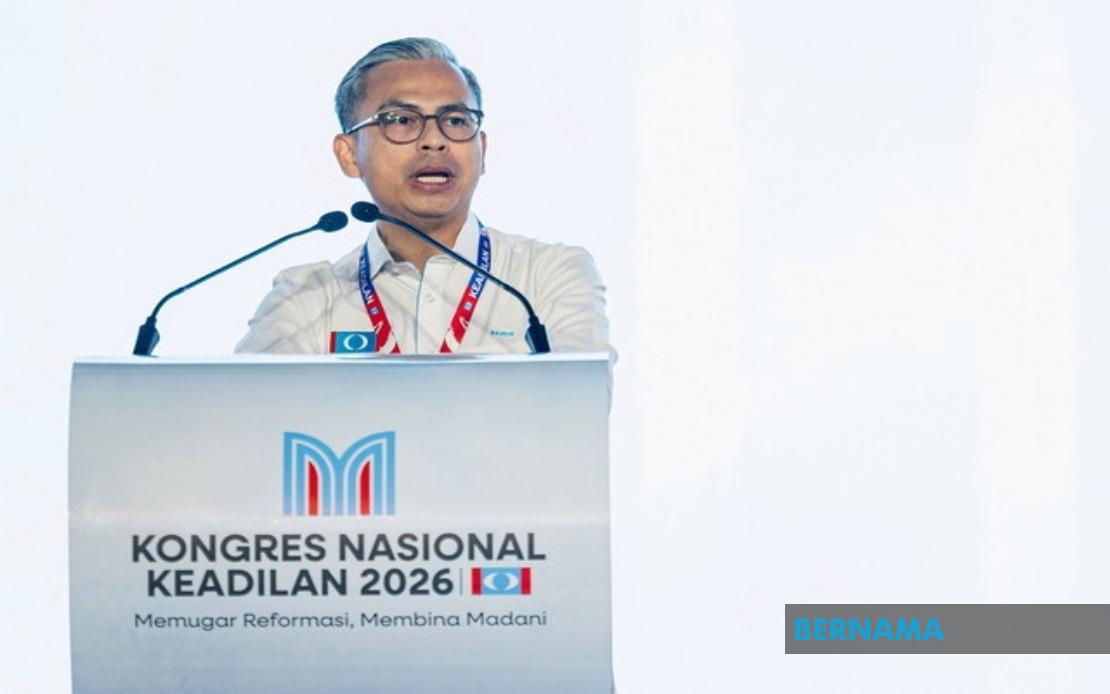
The Malaysian government must substantially improve how it explains its policies and economic achievements to the general public, according to PKR information chief Datuk Seri Fahmi Fadzil, who also serves as Communications Minister. Speaking at the 2026 PKR National Congress in Melaka, Fahmi recognised that despite significant policy successes under President Datuk Seri Anwar Ibrahim's administration, many citizens remain unaware of these initiatives or fail to experience their practical benefits in daily life. This gap between governmental accomplishment and public perception represents a critical challenge that the ruling coalition must address through improved messaging and engagement strategies.
Fahmi characterised the government's macroeconomic progress as the foundation of national prosperity but acknowledged that such broad-based improvements must be transformed into concrete outcomes that resonate with individual Malaysians. He noted that PKR has introduced numerous policies designed to strengthen the economy, yet the messaging around these initiatives has failed to penetrate public consciousness effectively or demonstrate their relevance to household finances and living standards. This disconnect underscores a persistent challenge facing the Anwar administration—translating technical policy achievements into narratives that ordinary voters can understand and appreciate within their own contexts.
The Communications Minister emphasised that future government communication efforts must incorporate an emotional and human dimension rather than remaining purely technocratic. Rather than simply announcing policies and their aggregate economic indicators, the government must frame its achievements in ways that help citizens perceive direct personal benefit. This approach recognises that public support depends not merely on factual awareness but on genuine felt impact—the ability of individuals to connect government action with improvements in their own lives, whether through increased employment, better wages, more affordable housing, or improved services.
To strengthen the government's information distribution network, Fahmi outlined plans to deepen collaboration with grassroots PKR leaders, particularly division chiefs who maintain direct contact with communities across Malaysia. These local party structures possess invaluable proximity to ordinary citizens and can serve as credible messengers for government narratives. By empowering division chiefs with better information and training, the party aims to create multiple communication channels that reach beyond traditional media and reach citizens where they live and work. This grassroots approach also allows for personalised explanation of policies adapted to local concerns and priorities.
The government will expand a series of smaller-scale engagement talks designed to explain policies in accessible, informal settings rather than formal press conferences or parliamentary statements. These intimate forums allow officials and party leaders to discuss complex policy issues in relaxed environments where citizens feel comfortable asking questions and raising concerns directly. The format encourages genuine dialogue rather than one-way information delivery, enabling the government to understand public misperceptions and address them in real time. Such localised engagement builds trust by demonstrating government willingness to engage with ordinary people rather than simply broadcasting messages from above.
Concurrently, Fahmi highlighted ongoing collaboration with the Malaysian Communications and Multimedia Commission (MCMC) to combat misinformation and false accounts that exploit sensitive social issues. Since the recent Johor state election, MCMC has identified and targeted more than 8,410 fake accounts deliberately spreading disinformation related to the 3R issues—religion, race, and the royal institution. These coordinated efforts to remove inauthentic accounts represent an acknowledgment that public misunderstanding of government policies is sometimes deliberately manufactured through organised disinformation campaigns rather than resulting from genuine communication failures.
The government's approach to combating false information reflects recognition that emotionally charged issues around religion, ethnicity, and constitutional monarchy can be weaponised to undermine public confidence in government initiatives. By systematically removing inauthentic accounts exploiting these sensitive topics, authorities aim to prevent deliberate manipulation of public opinion that could misdirect blame for economic challenges toward religious or ethnic scapegoating rather than policy evaluation. This strategy attempts to create information environments where substantive debate about government performance can occur without constant emotional distraction and inflammatory messaging.
Fahmi stated that any concerns regarding media accuracy would be addressed through respectful and proper channels rather than confrontational approaches. The government explicitly rejected any suggestion that it seeks to control media operations, instead positioning its role as a corrective mechanism that identifies factual errors and requests revisions through orderly procedures. This framing attempts to distinguish between legitimate fact-checking and suppression of criticism, allowing government to maintain editorial standards while respecting press independence. However, the distinction between respectful correction and more coercive pressure remains subjective and requires careful handling to maintain media confidence and public trust in government neutrality.
The PKR information machinery will undergo several adjustments to refine its overall communication strategy whilst strengthening collaboration with the party's Wanita (women's) wing to expand message reach. Women's organisations traditionally maintain strong community networks and grassroots connections that complement formal party structures, particularly in reaching household decision-makers and community opinion leaders. Integrating the Wanita wing more systematically into government communication efforts leverages existing social networks and trusted relationships to disseminate information about policies and achievements more effectively than top-down announcements alone.
For Malaysian readers, these developments signal that the government recognises a significant credibility challenge beyond mere policy design—the ability to convince citizens that government actions genuinely serve their interests and improve their material circumstances. In a region where economic inequality persists despite overall growth, and where competing narratives about government competence and intentions constantly circulate, improved communication represents not merely a public relations exercise but a fundamental governance necessity. The PKR's willingness to acknowledge communication shortcomings and commit resources to improving public engagement suggests understanding that sustained political support depends on demonstrated responsiveness and tangible benefit distribution rather than technical accomplishment alone.
The initiatives outlined by Fahmi—grassroots engagement, localised talks, combating disinformation, and integrating party wings into communication efforts—represent a comprehensive recognition that connecting government to citizens requires multifaceted approaches adapted to diverse communities and communication contexts across Malaysia's varied social landscape. Whether these efforts succeed in substantively improving public perception of government achievements will ultimately determine the coalition's ability to maintain political momentum heading toward the next general election and beyond.

