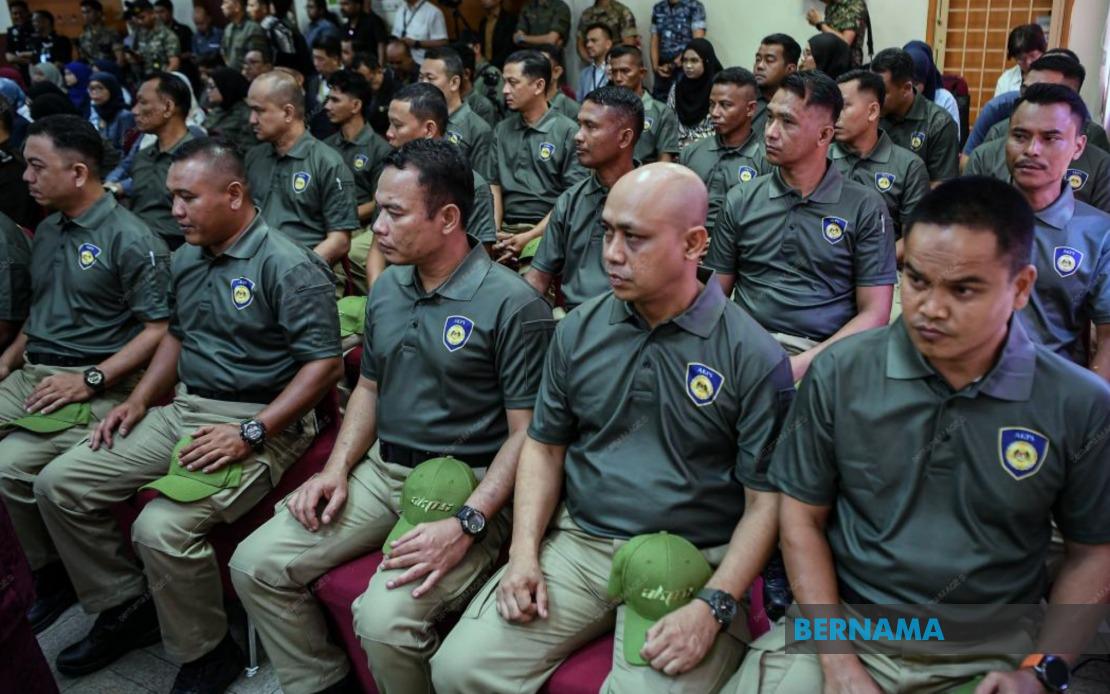
The Malaysian government has moved to reassure employees of the Border Control and Protection Agency (AKPS) that their career prospects and financial security will remain intact as the agency shifts to a reformed service structure administered by the Public Service Department beginning next month. Deputy Home Minister Datuk Seri Dr Shamsul Anuar Nasarah delivered these assurances during parliamentary proceedings on June 25, seeking to ease concerns among the roughly 8,400 personnel affected by the institutional reorganisation.
The AKPS itself represents a relatively recent consolidation of multiple enforcement bodies into a single unified agency tasked with managing border security and the movement of goods and travellers across Malaysia's 122 official entry points. This merger was intended to streamline operations and eliminate overlapping jurisdictions, though it has created complexity around how existing employees transition into new administrative frameworks. The shift to PSD oversight marks another layer of structural change that required explicit government guarantees to prevent staff anxiety from affecting operational capacity at critical border checkpoints.
According to the deputy minister's statement, officials who opt to remain within their original service classifications and their home agencies will face no disadvantage whatsoever in terms of advancement opportunities, length of service calculations, superannuation arrangements, or other welfare provisions. This distinction matters considerably because it creates a pathway for staff reluctant to embrace the new system to maintain continuity with their previous employment terms—a safety valve for institutional transition that protects both employee security and operational continuity.
The transition mechanism itself reflects the complexity of Malaysia's civil service architecture. Many AKPS positions were previously filled through temporary secondments, whereby officers from core enforcement agencies—such as customs, immigration, and police units—were loaned to the newer organisation. This arrangement created ambiguity about permanent employment status and career trajectories. Under the new scheme, officers must now decide whether to formally transfer their positions to AKPS under the PSD framework or remain seconded to their parent agencies.
Those who decline formal transfer will remain in a provisional status within AKPS pending reassignment decisions by the PSD, or they may be returned entirely to their original departments if positions become available. This flexibility attempts to balance institutional needs with individual preferences, though it introduces administrative complexity in managing placement decisions across multiple agencies. The Home Ministry, PSD, and participating enforcement bodies will coordinate these arrangements, though the practical implementation of such coordination across bureaucratic boundaries often encounters delays.
Statistical data presented during the parliamentary exchange reveals that as of mid-June, approximately 6,824 of the 8,403 approved positions had been filled, leaving a shortfall of 1,579 vacancies. These unfilled slots represent roughly 19 percent of total authorised establishment, a significant gap that could affect operational effectiveness at border facilities. The vacancy rate is being addressed through a gradual recruitment and placement process involving consultation among AKPS leadership, the Home Ministry, the PSD, and the various contributing agencies.
To incentivise appointments to the restructured AKPS and maintain attraction for experienced personnel, the government has incorporated financial inducements into the new service scheme. Officers transferring to AKPS positions will receive additional annual salary increments alongside a monthly service incentive payment of RM200. These monetary supplements acknowledge that border operations require sustained performance and competency, particularly given Malaysia's position as a major transit hub for Southeast Asian commerce and travel. The incentives aim to ensure that the country's entry and exit checkpoints operate at peak efficiency despite the institutional turbulence accompanying the reorganisation.
The parliamentary question triggering this response originated from opposition member Rushdan Rusmi representing Padang Besar, a constituency directly affected by border operations. His inquiry reflected broader concern within the legislative body about whether the establishment of AKPS and subsequent reorganisation under PSD might destabilise enforcement capabilities or disadvantage thousands of civil servants caught in the transition. Such concerns are not merely theoretical—poorly managed institutional shifts can result in morale problems, operational inefficiencies, and qualified personnel departing for private sector employment.
The timing of these announcements—occurring just days before the July 1 implementation date—suggests that finalization of transition details extended nearly to the deadline. This compression of the announcement period may have limited opportunity for affected staff to fully process the changes or for their union representatives to negotiate additional protections. Nevertheless, the government's explicit parliamentary confirmation of rights protection provides some official documentation of promises that staff and their advocates can reference if disputes emerge during actual implementation.
For Malaysian business interests and regional trade partners, the outcome of the AKPS transition carries practical significance. Border agencies fundamentally affect the cost and speed of trade flows through Malaysia, and any disruption to efficiency at entry points ripples through regional supply chains. The government's priority in staffing the vacant positions and maintaining operational continuity reflects an understanding that border security and facilitation directly influence Malaysia's competitive standing in the region.
The experience of this transition will likely inform how future Malaysian government agency restructurings are managed. The explicit legislative reassurance about employee protections sets a precedent, while the persistence of substantial vacancies and ongoing placement discussions suggests that structural reorganisation of large public institutions remains logistically challenging even in nations with established civil service systems. Whether the incentive packages prove sufficient to attract and retain capable personnel throughout the implementation period will become apparent in the coming months as AKPS operations settle into their reformed structure.

