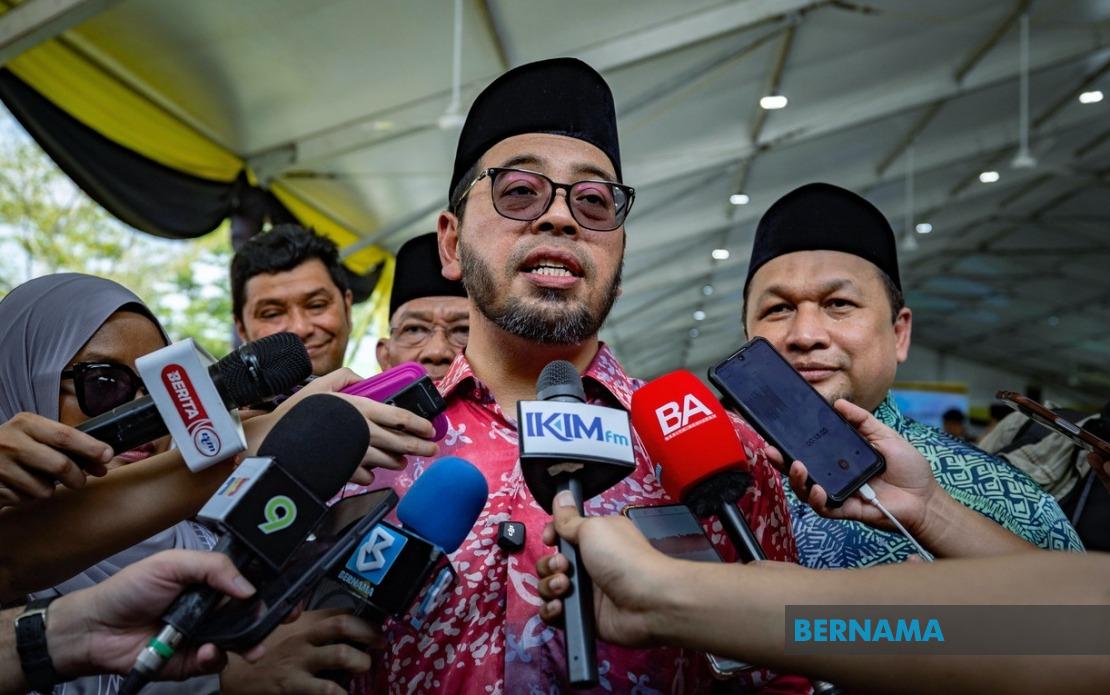
The Malaysian federal government has reasserted its strategic partnership with pondok institutions, madrasahs and religious schools, positioning them as essential pillars in constructing a nation that reconciles material advancement with moral and spiritual development. This commitment emerged during the 2026 Perak Pondok and Religious Schools Gathering (HIPSA) held at Sekolah Agama Bantuan Kerajaan Maahad Al-Ummah in Chemor, an event inaugurated by Prime Minister Datuk Seri Anwar Ibrahim and attended by senior government figures including Perak Menteri Besar Datuk Seri Saarani Mohamad and Chief Secretary to the Government Tan Sri Shamsul Azri Abu Bakar.
Minister Dr Zulkifli Hasan, speaking from the Prime Minister's Department (Religious Affairs), articulated a philosophy that distinguishes the government's development paradigm from purely economic-centric models. Rather than viewing national progress through the narrow lens of gross domestic product or infrastructure expansion, he argued that a country's true advancement hinges on the calibre of its citizenry and the moral framework guiding their development. This perspective reflects a deliberate policy choice to integrate Islamic values and human capital concerns into the broader Malaysian MADANI agenda, which emphasises people-centric governance and social wellbeing.
The government's collaborative framework extends across multiple institutional layers. Through the Prime Minister's Department (Religious Affairs), federal authorities maintain ongoing coordination with state governments, State Islamic Religious Departments, State Islamic Religious Councils, religious authorities and private Islamic educational institutions nationwide. This multi-level approach acknowledges that Islamic education operates within a complex federal structure where state governments hold significant constitutional authority over religious matters. By positioning itself as a facilitator rather than a unilateral controller, the federal government seeks to ensure educational quality and coherence while respecting constitutional boundaries.
Structured quality improvement in Islamic education represents a central preoccupation. Minister Zulkifli emphasised that the collaborative framework aims to sustain systematic development of the religious education sector, maintaining contemporary relevance whilst anchoring instruction in traditional Islamic learning. For Malaysia, where Islamic schools educate significant portions of the Muslim population alongside the national school system, this commitment addresses longstanding debates about modernisation, standardisation and the integration of technical skills with religious knowledge.
Practical support mechanisms accompanied the government's rhetorical commitment. During the gathering, Zulkifli presented MADANI Aid Baskets to twelve recipients, symbolically representing assistance directed toward 250 beneficiaries from surrounding communities. This targeted welfare approach reflects the Malaysia MADANI framework's emphasis on ensuring vulnerable populations receive direct material support, acknowledging that educational excellence requires addressing poverty and food insecurity among students and their families.
The HIPSA 2026 event mobilised substantial grassroots participation, drawing approximately 3,000 attendees comprising pondok members, religious school educators, KAFA (Koranic classes) teachers, non-governmental organisation representatives and local residents. This scale of engagement indicates the deep penetration of Islamic educational networks within Malaysian society and suggests that government initiatives targeting this sector achieve wide dissemination through established community structures. Yayasan Dakwah Islamiah Malaysia (YADIM), the organising body, demonstrated capacity to coordinate complex multi-stakeholder gatherings that blend intellectual discourse with material assistance.
Intellectual and spiritual dimensions received attention through the Bicara Murobbi forum, which examined the role of Islamic scholars and community leaders in nation-building processes. Prominent speakers included Kelantan-based scholar Sheikh Wazir Che Awang Al-Makki, former Perak mufti Datuk Seri Wan Zahidi Wan Teh and preacher Ustaz Mohamad Saifuddin Abdul Latiff. These speakers represented diverse expertise and geographic representation, suggesting the government aims to elevate Islamic intellectual discourse and demonstrate that nation-building depends on theological and ethical guidance as much as administrative capacity.
Material assistance programs expanded beyond emergency aid to encompass educational infrastructure and student support. YADIM facilitated distribution of essential food items to needy families, presented symbolic grants to pondok institutions and religious schools throughout Perak, funded student fee sponsorships and supported the Fast Track Sijil Pelajaran Malaysia programme. This diversified approach addresses multiple constraints on educational participation: immediate food security, institutional sustainability and accelerated pathways to national qualifications. The emphasis on KAFA teachers and grassroots religious communities reflects recognition that informal Islamic education networks historically served populations underserved by formal systems and continue wielding significant influence over religious socialisation.
The Malaysia MADANI framework provides the overarching ideological scaffolding for these initiatives. Rather than treating Islamic education as a separate domain requiring containment or marginalisation, the government explicitly integrates religious institutions into its broader development narrative. This approach contrasts with earlier periods when some Malaysian policymakers viewed religious schooling and secular education as competing systems requiring careful balance. By contrast, the current government articulates religious education as complementary to national development objectives, provided institutions maintain quality standards and engage with contemporary skill requirements.
For Southeast Asia more broadly, Malaysia's positioning of Islamic educational institutions as development partners carries significance. Throughout the region, Islamic schools operate across diverse national contexts with varying government relationships. Malaysia's model, emphasising collaborative quality improvement and material support whilst maintaining institutional autonomy, offers an alternative to both highly centralised systems and laissez-faire approaches. This framework may prove instructive for other Southeast Asian nations grappling with Islamic education's role in modern development paradigms.
The emphasis on human capital development through Islamic institutions addresses structural labour market concerns. Malaysia's economic transformation requires workers equipped with both technical competencies and reliable ethical frameworks. Islamic schools, when functioning effectively, provide both religious instruction and increasingly incorporate mathematics, science and languages into their curricula. Government support for these institutions thus serves not merely religious objectives but contributes to workforce development and social cohesion.
The government's recognition of pondok communities and religious teachers as society's backbone underscores acknowledgment that Islamic education serves functions beyond ritual observance. These institutions have historically provided social welfare, community organisation and grassroots leadership development. By channelling MADANI support toward them, the government effectively utilises established institutional networks to distribute assistance and identify vulnerable populations, demonstrating how religious structures can serve as vehicles for broader social policy implementation.
Moving forward, the sustainability of this collaborative framework depends on consistent resource allocation and genuine power-sharing in educational decision-making. Pondok institutions and madrasahs have expressed historical concerns about excessive government interference compromising their religious integrity and pedagogical autonomy. Whether the current approach successfully balances quality assurance with institutional independence will substantially influence whether religious educational communities maintain their strategic partnership with federal authorities or revert to suspicion and distance.

