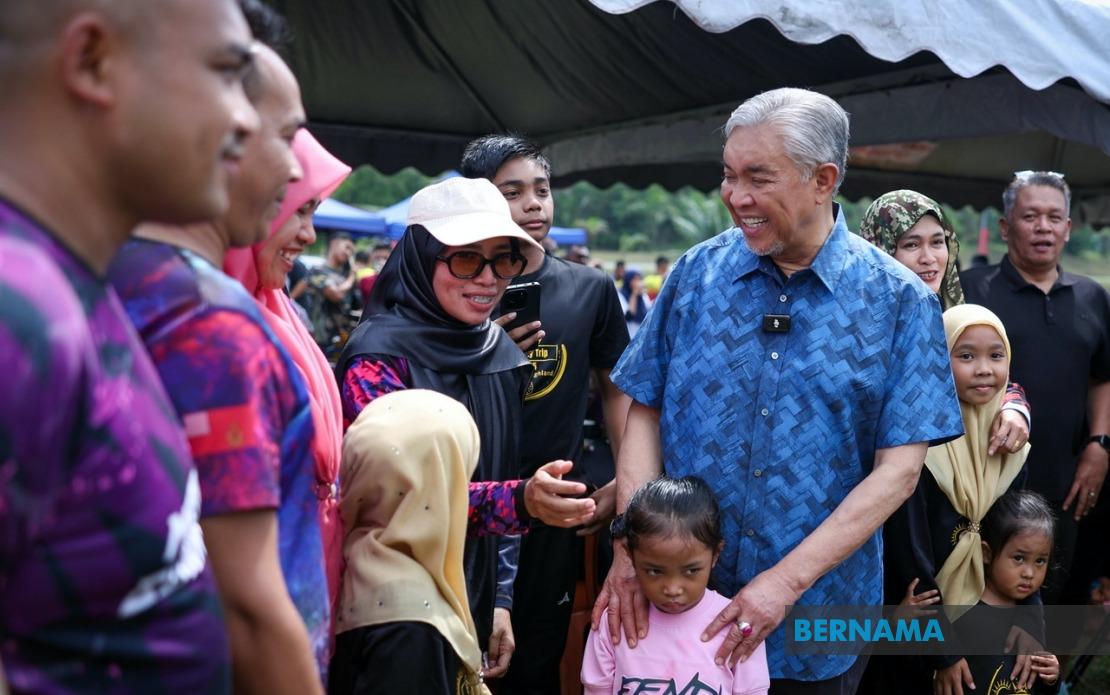
Deputy Prime Minister Datuk Seri Dr Ahmad Zahid Hamidi has underscored the government's commitment to comprehensive welfare programmes for the Malaysian Armed Forces, arguing that investing in soldiers' quality of life directly strengthens the nation's defence posture. Speaking at the Southern Zone ATM Family Day Carnival at Kem Syed Sirajuddin in Gamas on Saturday, Ahmad Zahid positioned military personnel welfare not as a peripheral social concern but as a strategic enabler of operational effectiveness, stating that when troops are assured of their families' security and educational prospects, they can discharge their constitutional duties with undivided attention.
The Deputy Prime Minister outlined three pillars of the government's military support strategy: housing provision, educational facilities, and comprehensive family welfare systems. These initiatives reflect a holistic understanding that military readiness extends beyond barracks and training grounds into the domestic sphere. Ahmad Zahid emphasised that the state recognises its obligation to honour the sacrifices made by service personnel, who have historically defended national sovereignty during conflicts and continue to maintain peace and security in peacetime. This framing positions welfare spending as a debt of gratitude rather than mere expenditure, resonating with public sentiment about honouring those in uniform.
Central to this strategy is an ambitious housing development programme. The government has committed RM844 million under this year's budget specifically for housing services, with the funds allocated toward both new military family housing construction and infrastructure upgrades at existing camps nationwide. The flagship project within this initiative is the construction of 1,300 Military Family Housing (RKAT) units at Kem Syed Sirajuddin in Gemas, representing a substantial addition to accommodation capacity for service families. This scale of investment signals recognition that housing insecurity can undermine military morale and focus, particularly among junior-ranked personnel whose civilian salaries might otherwise struggle to secure adequate family accommodation in Malaysia's increasingly competitive property market.
Educational support constitutes a parallel thrust of this welfare agenda. Ahmad Zahid stressed government commitment to improving educational facilities accessible to military families, with particular attention to transport infrastructure that enables children to travel safely to schools. This dimension acknowledges that military personnel, often posted to remote bases or barracks far from major urban centres, face logistical challenges in accessing quality education. By addressing these practical barriers, the government aims to ensure that a military career does not come at the expense of children's educational prospects, a concern that resonates throughout the officer and enlisted ranks. Such support can significantly influence retention rates among experienced personnel who might otherwise leave the service due to family considerations.
Prime Minister Datuk Seri Anwar Ibrahim reinforced this commitment in statements made the previous Friday, framing military welfare as inseparable from national stability. Anwar's public acknowledgment of the RM844 million allocation and the specific mention of housing projects provided political weight to implementation efforts, signalling that these are not merely departmental initiatives but priorities endorsed at the highest levels of government. This top-level alignment is crucial for sustained resource allocation and inter-agency coordination required to deliver these programmes effectively across the diverse geography of Malaysian military installations.
The timing and scale of these announcements reflect broader strategic considerations within Malaysia's defence architecture. The country faces evolving security challenges ranging from maritime security in the Straits of Malacca to counter-insurgency operations and humanitarian disaster response. Maintaining a professional, motivated armed force requires more than modern equipment; it demands personnel who are psychologically available for their duties, unburdened by domestic anxieties. The government's welfare framework thus serves as a recruitment and retention tool at a moment when competing opportunities in the civilian sector might otherwise draw talented individuals away from military service.
For service families themselves, these initiatives address long-standing grievances. Military families have historically accepted postings to remote locations, irregular hours, and the inherent risks of military service with relatively modest compensation compared to civilian counterparts in the private sector. Housing shortages have been particularly acute, with some senior non-commissioned officers and junior officers facing extended waits for family accommodation. Educational gaps in remote military stations have similarly concerned parents seeking to provide their children with competitive academic foundations. By directly addressing these friction points, the government aims to rebuild the social contract between the state and its military community.
The announcement also carries implications for military civil-military relations and institutional trust. When governments invest visibly in military family welfare, they signal that they value not just soldiers' operational output but their dignity and wellbeing as citizens. This can strengthen institutional loyalty and reduce the appeal of grievance-based narratives that occasionally emerge within military institutions. In a region where civil-military relations remain sensitive in some nations, Malaysia's deliberate cultivation of positive state-military relations through tangible welfare commitments represents a prudent governance strategy.
Implementation will be critical to translating these commitments into lived reality. The 1,300 housing units at Gemas represent a concrete deliverable against which progress can be measured, while educational facility improvements and transport provisions require sustained coordination between defence ministry departments and state education authorities. Cost overruns, delays, or quality issues in housing construction could undermine credibility of the broader programme. Similarly, educational support initiatives must be tailored to the specific needs of military communities, accounting for the mobility inherent in service careers and the particular challenges of families posted to isolated locations.
Regionally, Malaysia's focus on military welfare reflects broader Southeast Asian trends toward recognising that defence capability rests not merely on procurement decisions but on human capital investment. Neighbouring militaries have similarly invested in personnel welfare as part of force modernisation strategies. Malaysia's RM844 million commitment, while substantial domestically, illustrates the country's determination to maintain a professional volunteer force competitive with other sectors in attracting and retaining talent. This approach contrasts with regions still reliant on conscription, where welfare considerations are less pronounced in recruitment discussions.

