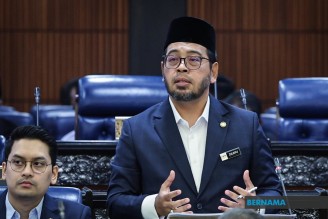
The government has committed to comprehensive restructuring of Tabung Haji following damaging revelations about the institution's management over the past decade, outlining a detailed reform agenda during a marathon special sitting of Parliament that consumed more than 10 hours of debate. The overhaul represents a significant acknowledgment of systemic failures that brought Malaysia's premier hajj savings fund to the brink of collapse, requiring a government bailout to protect millions of depositors who had entrusted their pilgrimage savings to the institution.
Amendments to the Tabung Haji Act 1955 will form the legislative backbone of these reforms, with Minister in the Prime Minister's Department (Religious Affairs) Dr Zulkifli Hasan explaining how the government plans to implement recommendations from the Royal Commission of Inquiry during the parliamentary session. A specially convened task force, chaired by Tabung Haji chairman Tan Sri Abdul Rashid Hussain and including Bank Negara Governor Datuk Seri Abdul Rasheed Ghaffour and Securities Commission chairman Datuk Mohammad Faiz Azmi, has been tasked with translating the RCI's findings into actionable policy proposals.
Central to the reform strategy is a clear division of regulatory responsibility that separates the institution's investment portfolio from its religious and pilgrim-support functions. Under the proposed framework, the Securities Commission will assume direct oversight of Tabung Haji's fund management and investment activities, while the Minister in the Prime Minister's Department (Religious Affairs) will retain responsibility for hajj pilgrimage operations. This bifurcated approach reflects recognition that the institution's previous structure allowed investment decisions to be insulated from adequate market-based scrutiny, a weakness the RCI investigation exposed as contributing significantly to the crisis.
The magnitude of the financial disaster narrowly averted emerged starkly during parliamentary proceedings, with ministers revealing that Tabung Haji's losses had approached RM13 billion before government intervention. Finance Minister II Datuk Seri Amir Hamzah Azizan disclosed that without the timely bailout, the government faced potential liability exposure of approximately RM74.5 billion in 2018 had panic withdrawals spiralled beyond the institution's capacity to meet redemptions. This hypothetical scenario underscores not merely a corporate governance failure but a systemic risk to depositor confidence that threatened millions of Malaysian Muslims saving for the Islamic pilgrimage.
Among the 14 problematic investments that precipitated the crisis, seven resulted in complete losses of capital, demonstrating a pattern of severely flawed due diligence and investment appraisal across multiple projects. Particularly troubling was Tabung Haji's indirect exposure to 1Malaysia Development Bhd through its investment in Putrajaya Perdana Bhd, entangling Malaysia's principal hajj savings vehicle in the wider 1MDB scandal that has consumed national attention and damaged international confidence in Malaysian institutions. This cross-contamination illustrated how inadequate investment governance created pathways for problematic capital allocation to proliferate across multiple institutional portfolios.
Key legislative changes will include explicit prohibitions against active politicians serving on Tabung Haji's board of directors, addressing a structural vulnerability that allowed political considerations to influence investment decisions and governance priorities. Profit distributions, known as hibah, will henceforth be calculated exclusively from audited accounts rather than projected or unverified earnings figures, closing a loophole that previously enabled unrealistic distribution promises. Every material decision affecting the institution will be measured against a single standard: the interests of the Muslim community, establishing a clear governance principle that prioritises depositor welfare and religious mission above other considerations.
Several MPs advanced additional proposals during the extended debate, with Aminolhuda Hassan from Sri Gading suggesting the establishment of a unified regulatory authority for large non-bank financial institutions. This proposal would consolidate supervisory oversight of major funds including the Employees Provident Fund, Permodalan Nasional Bhd, the Retirement Fund Incorporated, the Armed Forces Fund Board, and Tabung Haji under a common governance framework. The proposition reflects a broader concern that Malaysia currently lacks a single regulator capable of conducting prudential supervision, assessing systemic risk, and exercising governance oversight across the non-bank financial sector, leaving gaps that permit individual institution failures to metastasize into broader financial stability threats.
Bentong MP Young Syefura Othman raised concerns about Tabung Haji's structural dependence on income from UJSB sukuk, which the RCI Report identified as contributing nearly 26 per cent of annual institutional income. This concentration represents a significant revenue vulnerability, as reliance on a single sukuk instrument exposes the institution to refinancing risks and limits income diversification. The government indicated willingness to address this structural imbalance, though specific measures to reduce this dependency remain under development.
The Royal Commission of Inquiry, established in 2021 with members formally appointed in January 2022, investigated institutional management and operations spanning 2014 through 2020. Its 211-page report, released publicly on July 29, enumerated 25 distinct recommendations for operational and governance improvement. Notably, by July 30, Tabung Haji had already implemented 75 per cent of these recommendations, suggesting the institution has begun self-corrective measures even before formal legislative amendments take effect. This proactive implementation demonstrates institutional recognition of the severity of governance failures and the imperative for rapid remediation to restore depositor confidence.
Finance Minister II Amir Hamzah's emphatic declaration that the MADANI Government would conceal nothing despite painful revelations signals a commitment to transparency that contrasts with patterns of institutional opacity that previously characterised Tabung Haji's operations. His assurance that accountability will be pursued without discrimination or political favour, with comprehensive investigations and stringent consequences for those found culpable, establishes a performance standard against which the government's reform sincerity will be measured by Malaysian Muslims and the broader public. The challenge ahead lies in translating these parliamentary pledges into sustained institutional transformation that fundamentally reshapes how Tabung Haji operates, prevents similar crises, and restores the trust of millions of depositors.

