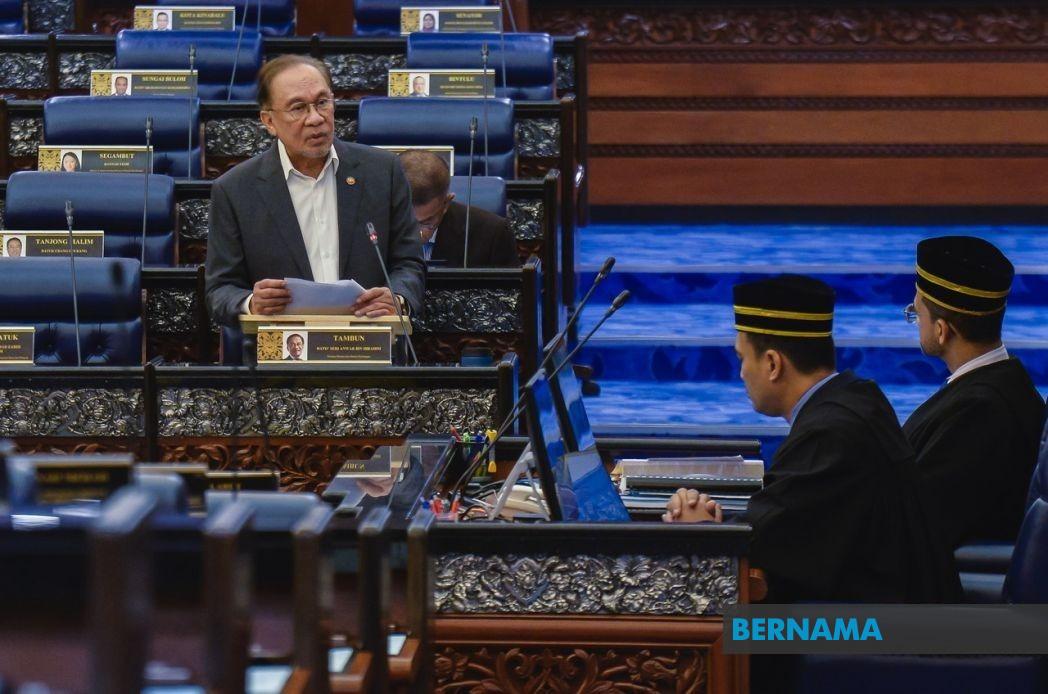
Prime Minister Datuk Seri Anwar Ibrahim has committed to investigating claims that petrol station operators incurred substantial financial losses during the recent overhaul of Malaysia's fuel subsidy system. Speaking in Parliament on July 7, Anwar acknowledged the concerns raised by Ipoh Timur MP Howard Lee Chuan How, who highlighted that station proprietors allegedly lost between RM40,000 and RM50,000 each during the transition period to the enhanced subsidy mechanism.
The government's shift towards a more targeted approach to fuel subsidies represents a significant policy recalibration aimed at improving the efficiency of public spending while protecting lower-income households. Under this new framework, subsidies for RON95 petrol and diesel are calibrated to benefit eligible consumers more directly, reducing the blanket subsidisation that previously benefited all buyers regardless of income level. However, this transition has created operational challenges for the retail petrol station network, which serves as the crucial interface between national fuel policy and daily consumer access.
Anwar, who holds the dual portfolio of Prime Minister and Finance Minister, indicated that Datuk Seri Amir Hamzah Azizan, the Second Finance Minister, would take the lead in gathering comprehensive information from oil companies and relevant stakeholders. This decision to delegate the investigative responsibility reflects the complexity of the issue, which involves multiple layers of the petroleum supply chain and requires detailed financial analysis to verify operator claims. The Prime Minister's willingness to commission a formal review signals recognition that the transition period may have created unintended hardships in the retail sector.
The targeted subsidy programme for RON95 petrol and diesel has been presented as a cornerstone of the administration's fiscal strategy, designed to balance budgetary constraints with social welfare objectives. By concentrating subsidy benefits on qualifying consumers—typically identified through their identification numbers or at point of sale through digital systems—the government aims to reduce fiscal leakage and redirect resources towards more vulnerable populations. Yet the operational transition to this system has imposed costs on petrol station operators who must adapt their systems, train staff, and manage customer confusion during the implementation period.
Anwar emphasised that the government values the cooperation extended by oil companies and petrol station operators in rolling out the new subsidy mechanism. Without industry collaboration, executing such a substantial policy shift across thousands of retail outlets nationwide would be logistically impossible. The Prime Minister's framing of the issue as one requiring dialogue rather than confrontation suggests an attempt to maintain cordial relations with the petroleum sector while addressing legitimate grievances about financial exposure during the transition.
The specific allegations of RM40,000 to RM50,000 in losses per operator warrant careful scrutiny because they establish a pattern of financial distress across the network. If these figures are representative, aggregate losses across Malaysia's petrol station infrastructure could reach tens of millions of ringgit. Such losses might stem from several sources: increased operational costs associated with system upgrades, inventory management difficulties during the transition, reduced sales volume due to consumer uncertainty, or margin compression if pricing mechanisms were not recalibrated appropriately during changeover.
From a Malaysian economic perspective, the health of the petrol retail sector holds broader significance. Petrol stations function not merely as fuel distribution points but as essential community infrastructure, with many offering convenience store services, car wash facilities, and employment for thousands of workers. Station operators are typically small and medium-sized enterprise operators who lack the capital buffers of major oil corporations, making them particularly vulnerable to sudden policy transitions. Their financial stability directly affects employment levels and the accessibility of fuel retail services in both urban and rural areas.
The government's approach of initiating discussions with oil companies rather than immediately implementing compensation measures reflects fiscal prudence but also highlights the tension between policy reform and stakeholder management. Oil majors such as Petronas, Shell, and Caltex operate through various franchise and partnership arrangements with independent operators, creating complex contractual relationships that determine who bears transition costs. Determining fair allocation of these losses requires understanding these layered relationships and the obligations each party assumed when the subsidy mechanism was changed.
For Malaysian consumers, these behind-the-scenes negotiations have direct relevance because they influence long-term petrol station viability and service quality. If operators suffer sustained losses without compensation, some stations may reduce operating hours, defer maintenance, or eventually exit the market, potentially creating fuel supply gaps in less profitable geographic areas. Conversely, the government must balance addressing operator losses against its broader fiscal objectives, as excessive compensation could undermine the cost-saving rationale for moving to targeted subsidies in the first place.
The Prime Minister's invitation for stakeholders to propose solutions reflects an understanding that optimal policy outcomes often emerge through collaborative problem-solving rather than unilateral government action. Second Finance Minister Amir Hamzah will likely explore several pathways: verifying actual losses through detailed financial audits, determining whether losses were temporary or structural, identifying whether any parties failed to meet their transition obligations, and evaluating whether targeted support mechanisms—such as technical assistance funds or temporary margin adjustments—might address grievances more efficiently than blanket compensation.
Regionally, Malaysia's experience with fuel subsidy reform carries significance for neighbouring countries also grappling with balancing fiscal sustainability against social welfare provision. Indonesia, Thailand, and the Philippines have all implemented targeted subsidy programmes with varying degrees of success and disruption. Malaysia's transparent handling of operator concerns through parliamentary discussion and high-level investigation demonstrates a commitment to evidence-based policymaking, even when acknowledging that implementation has created unintended costs.
The timeline for the Second Finance Minister's investigation remains unspecified, but the parliamentary commitment creates accountability for follow-up action. Petrol station operators and industry associations will likely monitor developments closely, with their representatives possibly presenting detailed loss documentation to substantiate claims. The government's receptiveness to this evidence will determine whether the broader subsidy reform programme retains industry credibility as it matures.

