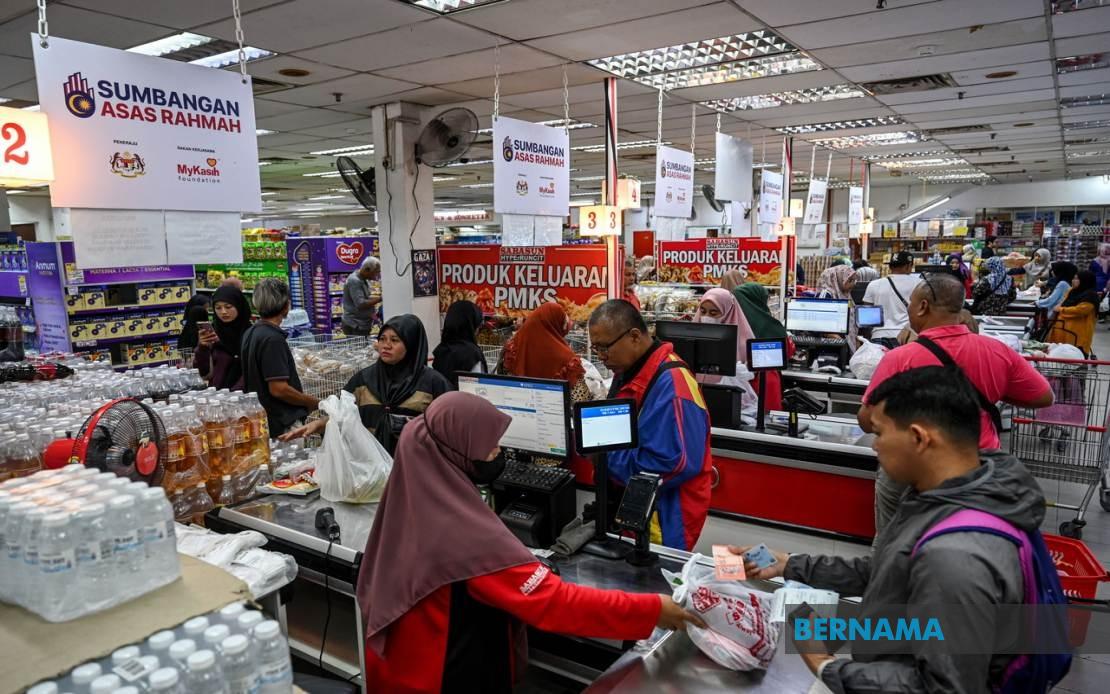
Prime Minister Datuk Seri Anwar Ibrahim has signalled that the MADANI administration is actively exploring ways to expand its flagship cash assistance programmes, contingent upon improved economic conditions. Speaking at a community engagement programme in Ipoh on July 19, Anwar indicated that both the Sumbangan Tunai Rahmah (STR) and Sumbangan Asas Rahmah (SARA) schemes could see enhanced payouts, with the Finance Ministry already deliberating the feasibility of such increases with Treasury officials.
The announcement comes at a critical juncture for Malaysia's cost-of-living challenges, where both urban and rural households continue grappling with inflation pressures. STR and SARA represent the government's primary direct income support mechanisms, designed to provide immediate relief to qualifying lower-income Malaysians. By signalling openness to enhancement, Anwar has acknowledged the persistent squeeze on household budgets, even as the economy shows signs of stabilisation.
During his remarks at the MADANI KITA Together programme organised by the Malaysian Volunteer Corps Department (RELA), Anwar emphasised that discussions with Treasury Secretary-General Tan Sri Johan Mahmood Merican had already commenced regarding potential enhancement pathways. This suggests the initiative is not merely rhetorical positioning but reflects substantive engagement between the Prime Minister's office and the fiscal authorities responsible for budget allocation and economic projections.
The timing of such deliberations points towards the upcoming national budget, which traditionally serves as the government's primary instrument for reallocating resources and signalling policy priorities. By framing potential assistance increases within the budget process, Anwar has tied the initiative to Malaysia's overall fiscal health and capacity, avoiding any impression of reckless spending commitments that could undermine currency stability or debt management objectives.
For Malaysian households already receiving STR and SARA benefits, the prospect of enhanced payments addresses a frequently articulated grievance that existing allocations have failed to keep pace with commodity and transport cost escalations. The current assistance levels, while meaningful, have faced persistent criticism from civil society organisations and opposition politicians who argue that benefit amounts have become eroded by inflation over successive years without corresponding upward adjustments.
Anwar's conditional framing—contingent upon economic performance—reflects the government's broader macroeconomic constraints. Malaysia's growth trajectory, external demand dynamics, and fiscal consolidation targets all influence available budgetary space for expanded social programmes. By anchoring the announcement to economic conditions, the Prime Minister has created flexibility that permits both expansion if conditions warrant and constraint if external shocks or domestic challenges necessitate fiscal discipline.
Beyond the STR and SARA enhancement discussion, Anwar also underscored the government's commitment to welfare provisions for security personnel, particularly RELA volunteers who undertake hazardous community protection duties. The allocation of RM3 million annually for RELA member welfare, which Anwar characterised as persistently insufficient, reflects recognition that non-military security volunteers require dedicated support mechanisms distinct from general public assistance schemes.
This dual emphasis—expanding mass social assistance while simultaneously addressing welfare for specific security sector contributors—demonstrates the government's attempt to balance universal safety nets with targeted provisions for those bearing particular burdens in maintaining national stability. RELA members, typically drawn from communities and serving voluntarily in disaster response and security operations, represent a constituency that generates political goodwill when their material circumstances improve.
The announcement also carries implications for Malaysia's broader social policy direction. Enhanced assistance to STR and SARA recipients signals continued reliance upon direct cash transfers rather than structural reforms in wage settings, employment practices, or cost-of-living determinants. This approach provides immediate relief but leaves underlying affordability challenges unaddressed, suggesting complementary policy initiatives addressing housing costs, transportation, and essential services remain necessary for durable poverty reduction.
For policymakers across Southeast Asia observing Malaysia's social protection mechanisms, the potential STR and SARA expansion demonstrates how governments navigate political pressure for welfare enhancement against fiscal sustainability imperatives. The conditional language—improvements contingent upon economic improvement—represents a common approach permitting governments to acknowledge citizen hardship without committing unsustainable expenditure trajectories during uncertain economic periods.
The involvement of senior Treasury officials in these deliberations, alongside the Finance Minister-Prime Minister's direct engagement, indicates this initiative enjoys high-level institutional backing. Such positioning increases the likelihood of meaningful allocation increases appearing in the budget framework rather than remaining aspirational statements lacking implementation mechanisms.
Moving forward, Malaysian households reliant upon these assistance schemes should monitor budget announcements carefully, as the translation of current consideration into concrete policy remains contingent upon Treasury forecasts and broader fiscal decisions. The government's willingness to discuss enhancement, however, signals recognition that existing assistance levels require periodic review to maintain relevance amid evolving economic pressures facing Malaysia's lower-income populations.

