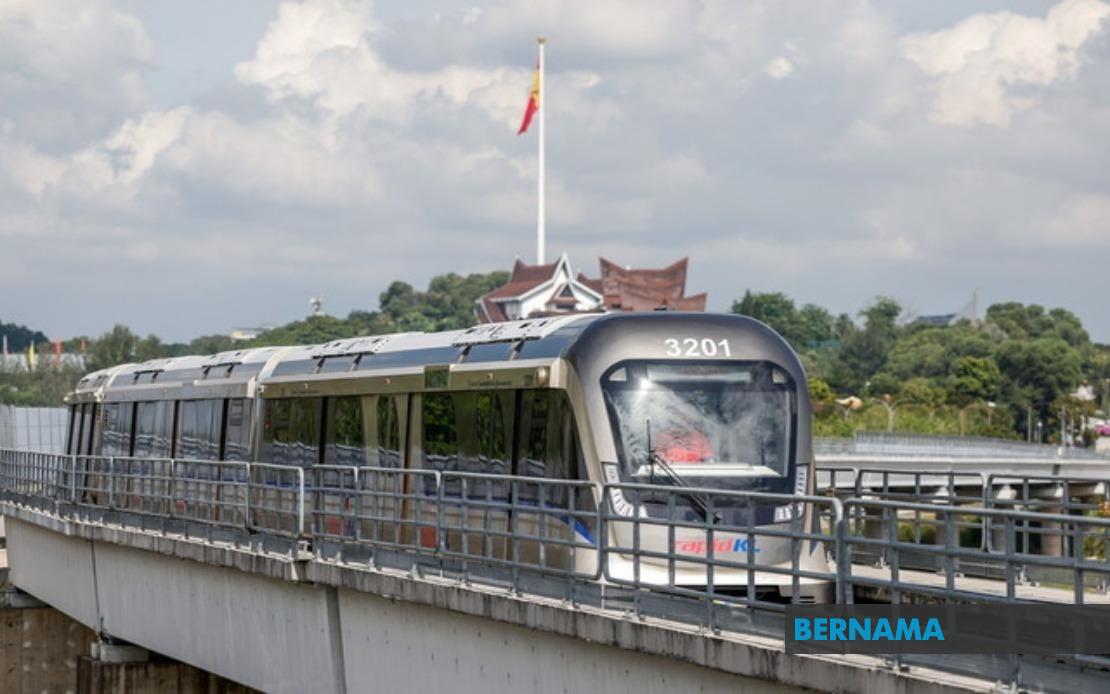
Transport Minister Anthony Loke announced today that the MADANI Government will seek a formal audience with Sultan Sharafuddin Idris Shah to provide comprehensive clarification regarding the troubled LRT3 Shah Alam Line project. The planned meeting comes in response to the Ruler's recent public remarks expressing concern over the project's escalating costs and persistent implementation delays that have plagued the initiative for several years.
Loke confirmed the government's intention to engage directly with the Sultan of Selangor during remarks made at a charity dinner in Kuala Lumpur. He acknowledged that the royal household's observations warrant serious consideration and that the administration respects the Ruler's input on major infrastructure initiatives affecting the state. The decision to seek this audience underscores the sensitivity surrounding a project that has become emblematic of broader challenges in Malaysia's transport infrastructure development.
The LRT3 project's trajectory reveals a complex history of political and operational disruptions. When the MADANI administration took office in 2018, the project was immediately suspended, remaining in limbo for over eighteen months. This initial halt was followed by an additional nineteen-month delay precipitated by the COVID-19 pandemic, with completion timelines slipping further into 2021 and beyond. These successive interruptions have fundamentally altered the project's original specifications and scope.
Sultan Sharafuddin highlighted critical modifications made to the project during these extended delays. Station designs were substantially downsized, reducing their capacity and functionality. The number of train carriages allocated to the line was reduced, limiting passenger capacity when the service eventually commences. Most significantly, five proposed stations along the alignment were entirely cancelled, effectively shrinking the network's geographical coverage and reducing accessibility for residents across multiple areas that had been promised connectivity.
The Ruler's remarks carried an important philosophical dimension, emphasizing that the LRT3 initiative should not be approached as a prestige project designed primarily to enhance government credentials. Instead, Sultan Sharafuddin framed the development as a fundamental service intended for genuine public benefit and the improvement of residents' daily lives. This distinction carries weight in Malaysian political discourse, where mega-projects sometimes attract criticism for prioritizing symbolic achievement over practical utility.
The government's proactive response demonstrates recognition that managing expectations around major infrastructure remains crucial for public confidence and political legitimacy. By agreeing to provide further briefing directly to the state's paramount ruler, the Ministry of Transport signals commitment to transparency and accountability regarding a project that has already consumed considerable public resources while failing to deliver promised benefits within original timelines.
Beyond the LRT3 situation, Loke outlined additional transport ministry initiatives aimed at facilitating electoral participation. Recognizing that outstation voters require accessible means to return to their constituencies, the government coordinated with Keretapi Tanah Melayu Berhad (KTMB) to expand service frequency on the Electric Train Service (ETS) connecting Kuala Lumpur and Johor Bahru. This enhanced frequency benefits not only those travelling directly between these major cities but also voters departing from Singapore who can now access additional ETS departures to secondary destinations including Segamat and Labis.
The transport expansion reflects broader electoral considerations surrounding the sixteenth Johor State Election scheduled for July 11. With 172 candidates contesting 56 state seats across the jurisdiction, the government anticipated that improved public transport accessibility would remove practical barriers deterring outstation residents from returning to fulfil their voting obligations. Early voting commenced on July 7, providing an alternative avenue for those unable to participate on the main polling day.
These measures represent a calculated attempt to boost electoral turnout among geographically dispersed voters while simultaneously addressing legitimate public complaints regarding transport connectivity. The emphasis on facilitating voter movement acknowledges that democratic participation fundamentally requires overcoming logistical obstacles that disproportionately affect those living and working outside their constituencies of registration.
The LRT3 situation extends beyond Selangor's borders, carrying implications for broader Southeast Asian infrastructure development patterns. Malaysia's experience with project delays and specification reductions mirrors challenges faced by neighbouring countries attempting to implement major transportation networks. The government's willingness to engage with state rulers on infrastructure accountability matters signals a potential institutional mechanism through which Southeast Asian monarchies can exercise meaningful oversight of executive-branch project management.
Looking forward, the scheduled royal audience represents a critical juncture for the MADANI administration. The government must balance acknowledgment of genuine delays and design modifications with credible assurances regarding remaining implementation milestones. The Sultan's evident dissatisfaction with project evolution suggests that future infrastructure decisions in Selangor may face heightened scrutiny from the royal household, potentially establishing precedent for enhanced state-level oversight of federal development initiatives across Malaysia's other sultanates.

